Famous landscape paintings can make a mountain, river, or sky feel instantly familiar. That recognition is only a beginning. The best landscapes are also decisions about what to include, who gets to look, and how paint can make weather or distance matter. A hay wagon in Suffolk, a train crossing the Thames, and a tree turning red at dusk do not ask the same thing of us. Their makers chose different ways to bring the outside world onto a flat surface.
This guide brings together twenty paintings by twelve artists. Constable, Turner, Friedrich, Monet, and Van Gogh are central, joined by Cézanne, Bierstadt, Seurat, Matisse, Morisot, Klimt, and Mondrian. Each short entry gives the story behind a work and a clue to its technique. Open any image or title for the full artwork article, with its collection record and more to see. The paintings here are spread across museums and countries; their subjects range from working harbors to invented mountain light.
How to look at a landscape
A landscape title tells you where to begin, though rarely where to end. The Hay Wain points to a wagon; Impression, Sunrise names a fleeting effect; The Park offers almost no location at all. Try finding the place where your eye first lands, then the route the painter makes you take. A bridge or path can carry you inward, while a wall, window, or dark bank may hold you close. In these paintings, viewpoint is part of the story: it determines how much of a place feels open, hidden, worked, or claimed.
Technique changes that story. Constable's shifting cloud studies inform a large studio canvas; Seurat's tiny marks make a harbor hover at dusk; Matisse's bright shutters turn the edge of a room into an event. Even a famous view is not a transparent report of what stood before an artist. Look for what has been selected, intensified, or left out. The museum record linked from each artwork page supplies a date and collection; the painting itself shows the choices those facts alone cannot describe.
Weather, distance, and the Romantic view
For these painters, landscape was never just a map. Rivers carried work, storms unsettled travel, and fog could hide more than it revealed. The weather has a role in each picture, even when a human figure seems to take the lead.
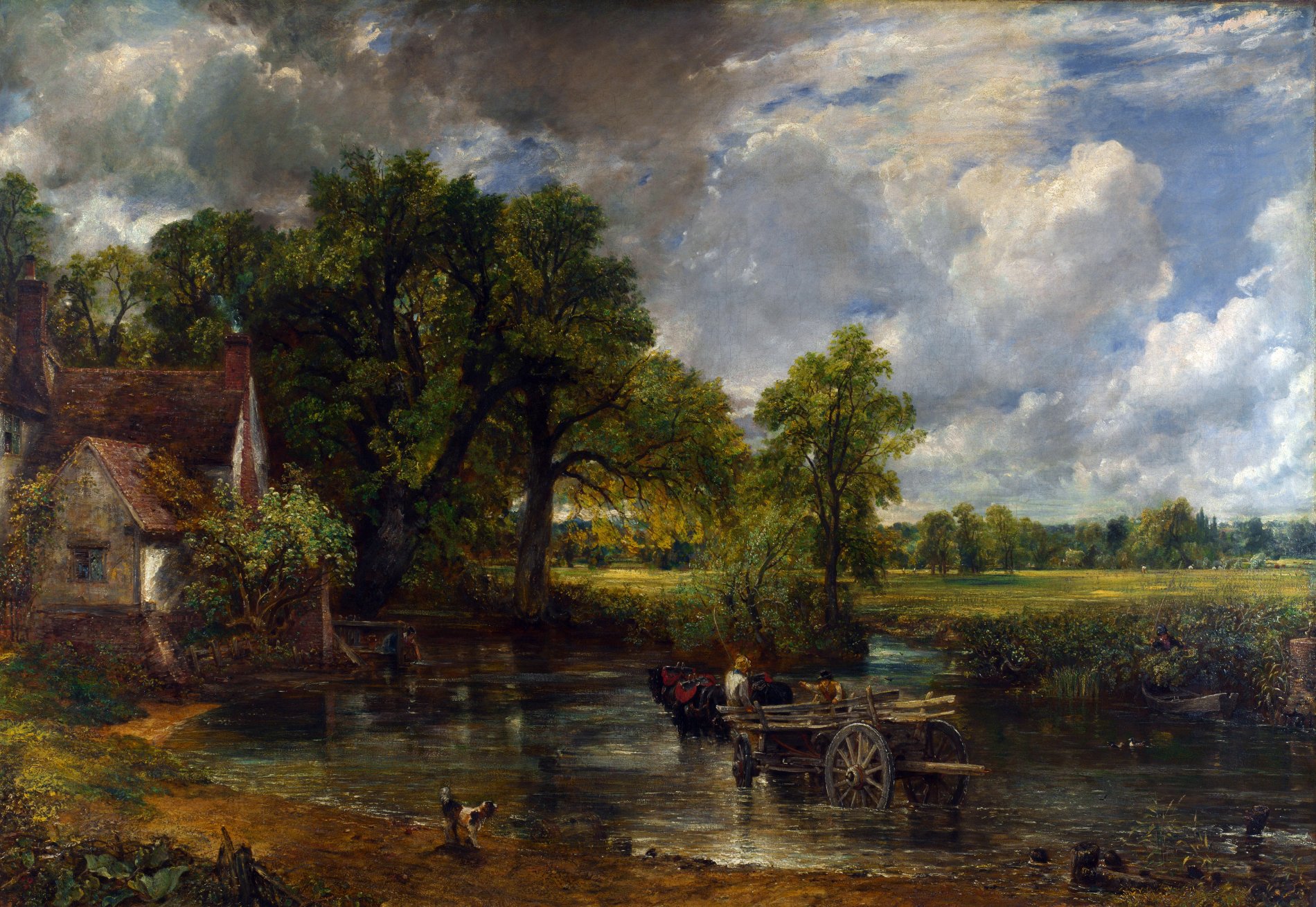
The Hay Wain
A wagon crosses the Stour near the mill owned by Constable's family. He painted the large canvas in London from years of studies of this Suffolk place. The shifting clouds and patches of light make the familiar view feel temporary, while the wagon and hayfield keep its working life visible. Constable's quick-seeming marks are part of a carefully composed route from the dark riverbank to the brighter distance.
Read the artwork story ↗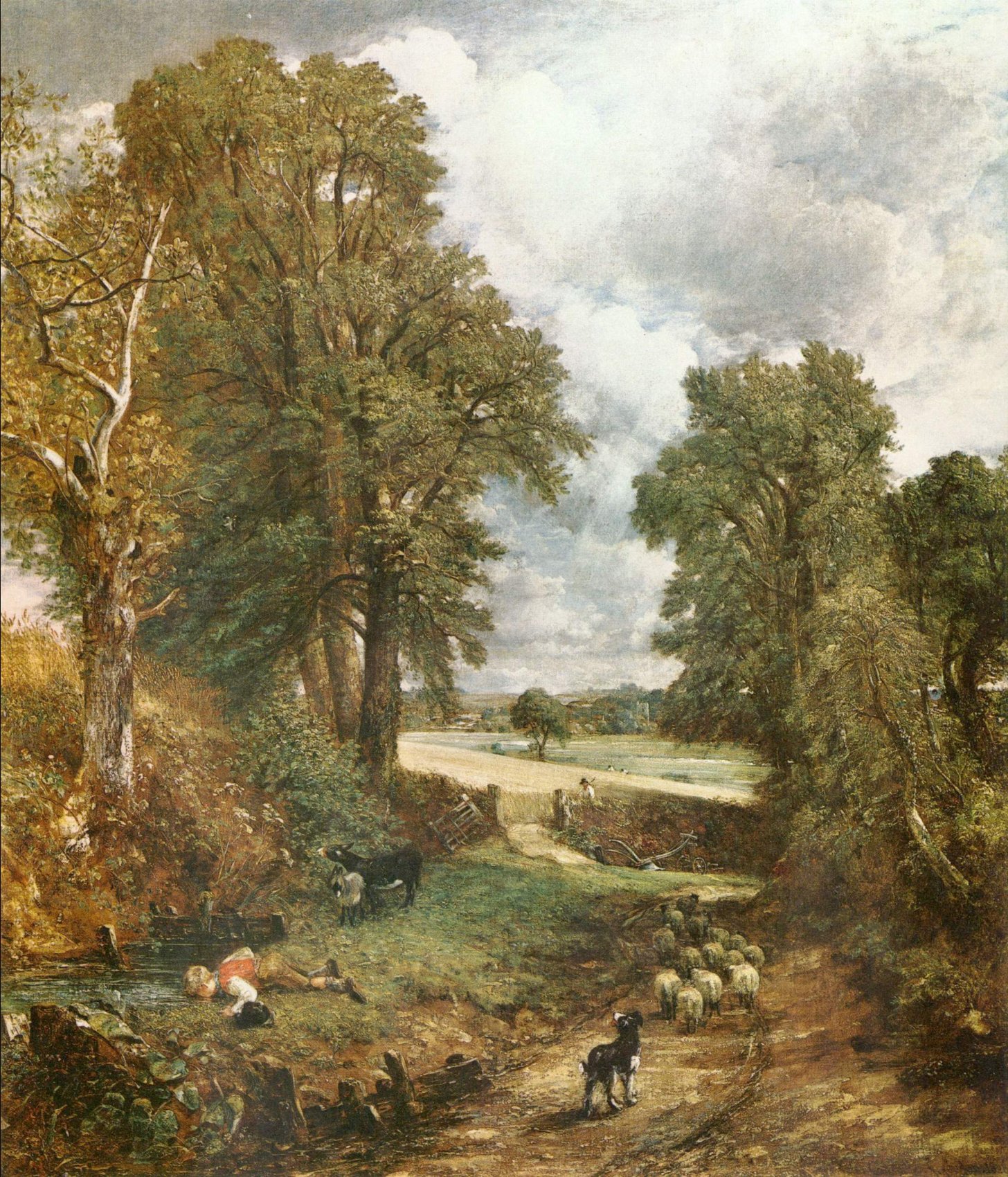
The Cornfield
A shepherd boy has stopped to drink while his sheep continue along a shaded lane. The path was familiar to Constable, but he invented much of the country beyond it. He painted this high-summer scene indoors during a London winter, building heat through the contrast between cool foreground shade and the cornfield ahead. The painting won praise in 1826 yet remained unsold, a reminder that today's beloved landscapes did not all meet instant success.
Read the artwork story ↗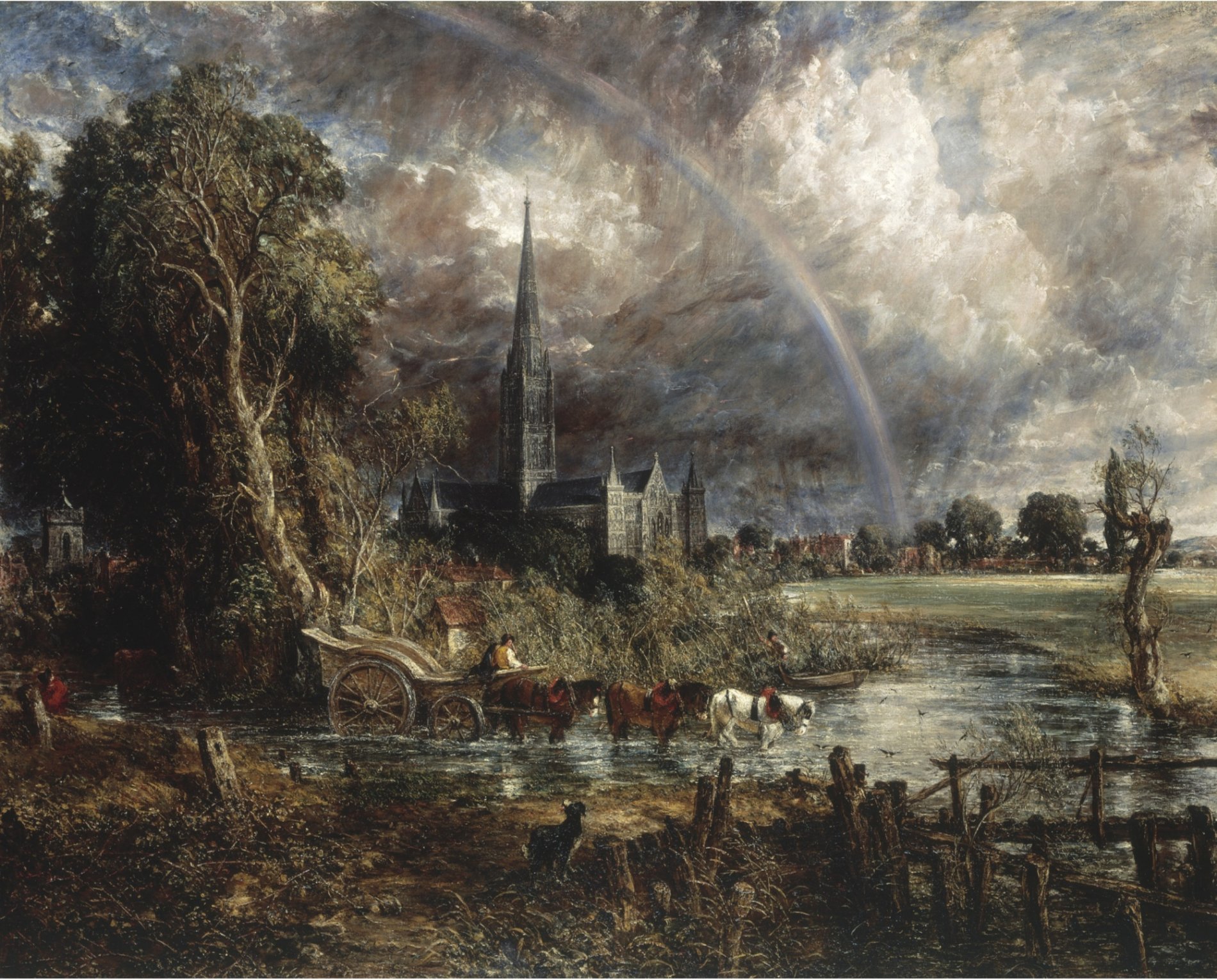
Salisbury Cathedral from the Meadows
Salisbury Cathedral appears beneath dark cloud and a rainbow in Constable's vast 1831 painting. The view often invites a reading through the death of his wife Maria, but the weather also belongs to his long artistic study of skies. The rainbow connects distant spire, river, and meadow without banishing the storm. Constable uses large changes of light to make a familiar building feel steady inside an unsettled world.
Read the artwork story ↗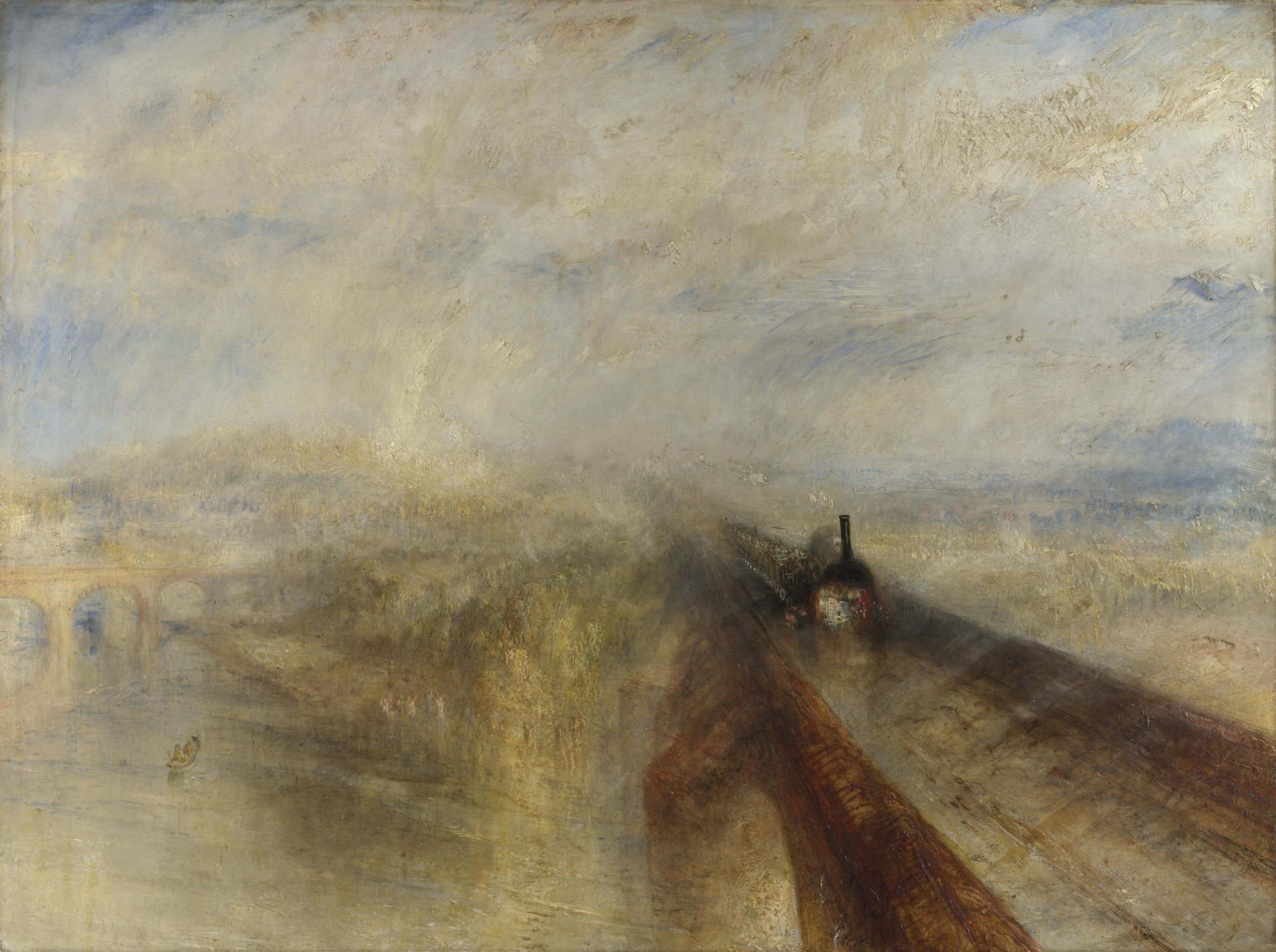
Rain, Steam, and Speed
A train rushes over Brunel's Maidenhead bridge into Turner's rain. The bridge and locomotive are identifiable, yet their outlines dissolve into steam and atmosphere. A tiny hare on the track offers a playful measure of natural speed against the machine. Turner makes the railway a bodily experience of motion rather than a clear illustration of technology: your eye races along the diagonal before it can settle on the river or distant land.
Read the artwork story ↗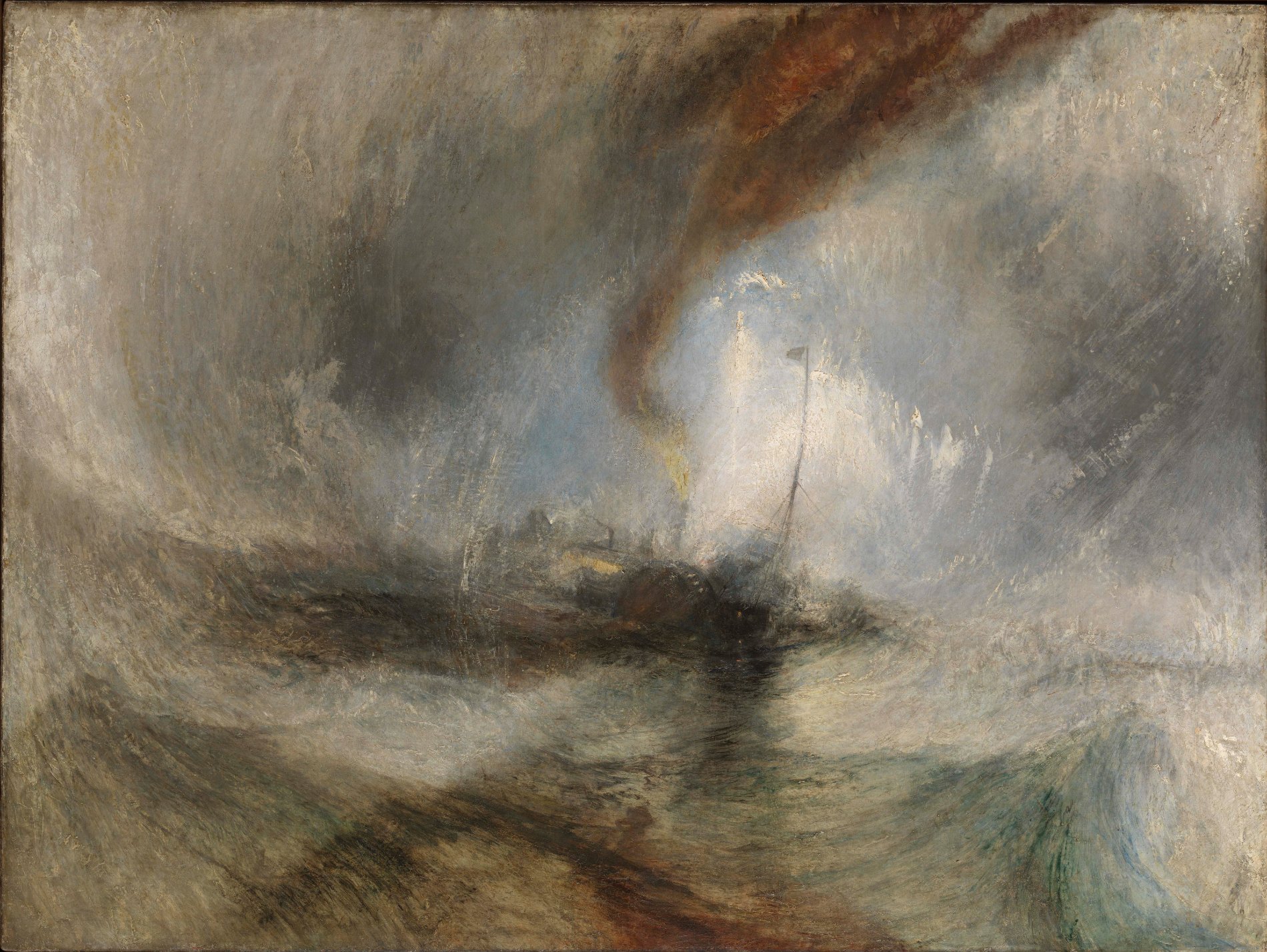
Snow Storm: Steam-Boat off a Harbour's Mouth
Turner's steam-boat struggles near a harbor mouth in an 1842 storm. A sounding lead in the original title hints that the crew cannot trust what lies beneath the water. The boat is almost swallowed by swirling browns, greys, and white, so we search for our bearings as its crew might. The oft-repeated tale that Turner tied himself to a mast is uncertain; the canvas's force is visible in its organized whirl of paint.
Read the artwork story ↗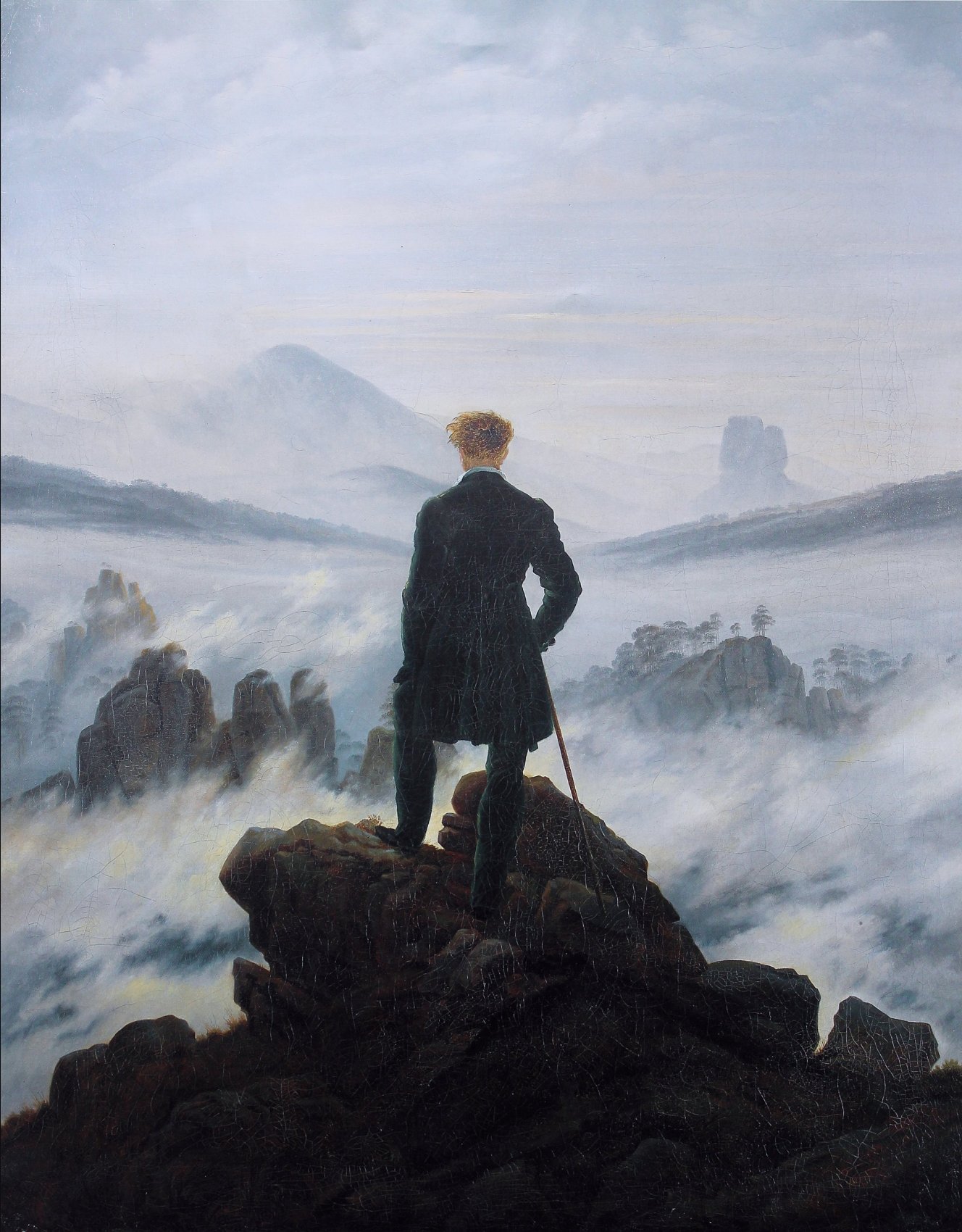
Wanderer above the Sea of Fog
Friedrich places a man on a rocky height and turns him away from us. We inherit his viewpoint, then discover that fog hides the paths and valleys below. The mountain shapes emerge in separate layers rather than one continuous panorama. This carefully built uncertainty keeps the picture from being a simple celebration of conquest. The wanderer has climbed above the clouds, but altitude has not given him complete knowledge.
Read the artwork story ↗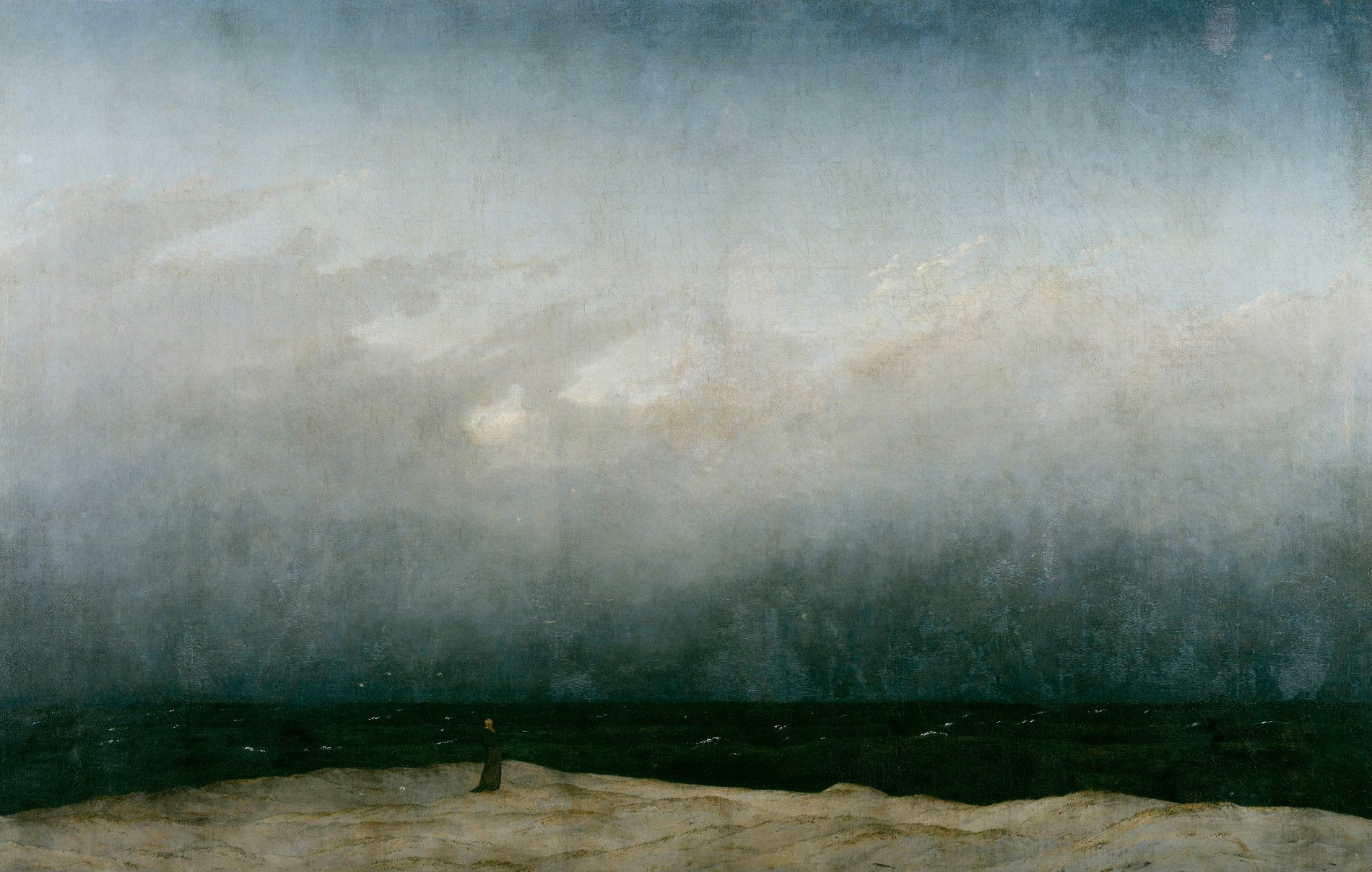
The Monk by the Sea
A monk stands on a narrow shore beneath an enormous sky. Friedrich reduced the scene to broad bands of land, sea, and air, leaving few landmarks for the eye to follow. Small changes of tone keep the apparently empty sky alive. Made between 1808 and 1810, the painting gives its tiny figure no clear answer from the horizon. Its unusual spareness makes a person, rather than a mountain, our measure of scale.
Read the artwork story ↗Light and color remake a place
A harbor at dawn, a field in summer, and a night sky at Saint-Rémy all begin with recognizable places. These artists let color and brushwork change how close, stable, or certain those places feel.
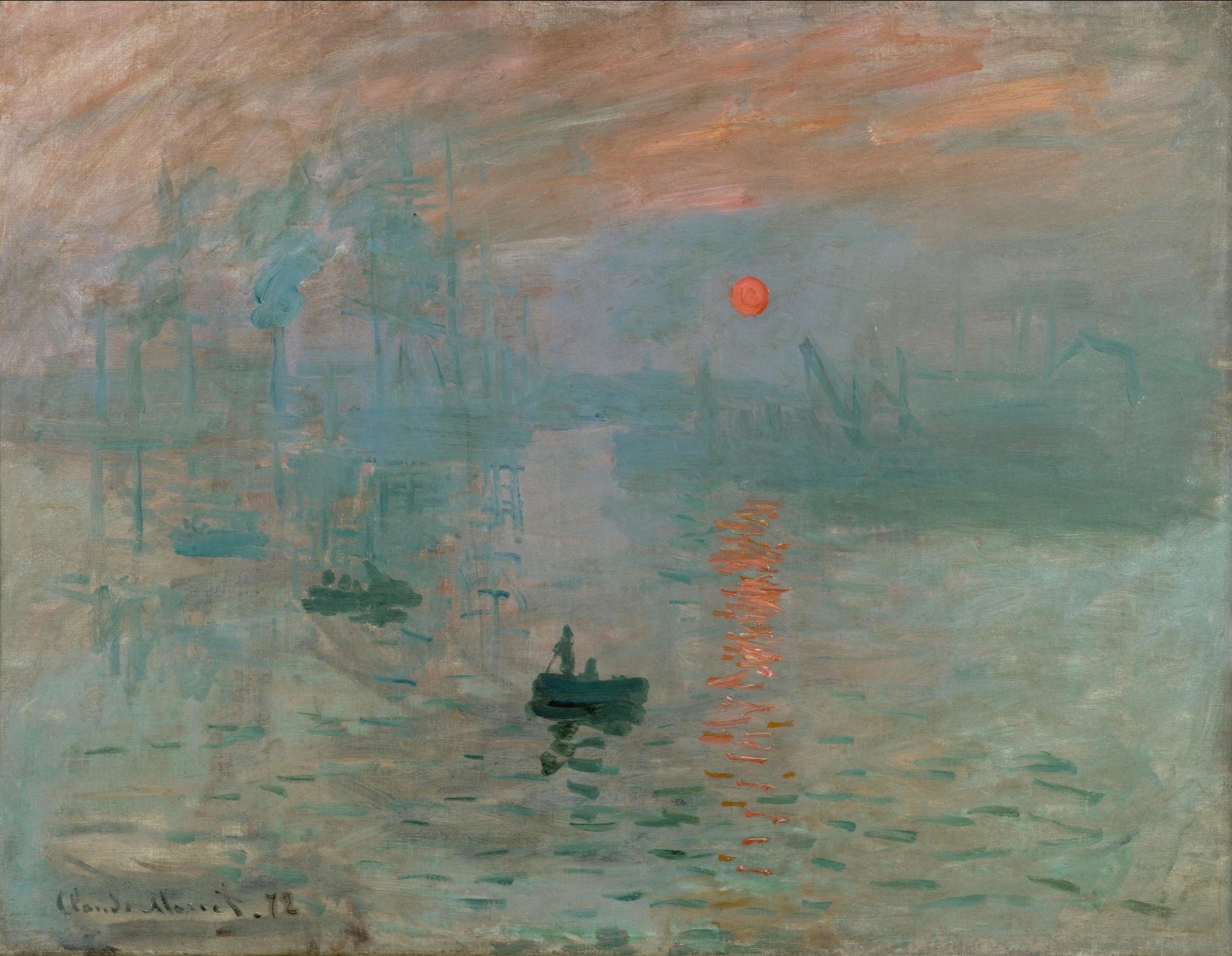
Impression, Sunrise
Monet looked across the working harbor of Le Havre in 1872, catching boats, cranes, and chimneys through early mist. A small orange sun organizes blue-grey water and air. Quick strokes make the port appear before our eyes rather than describe every structure. When the picture appeared in the 1874 independent exhibition, its title helped give Impressionism a name; the actual painting remains wonderfully specific about one damp morning.
Read the artwork story ↗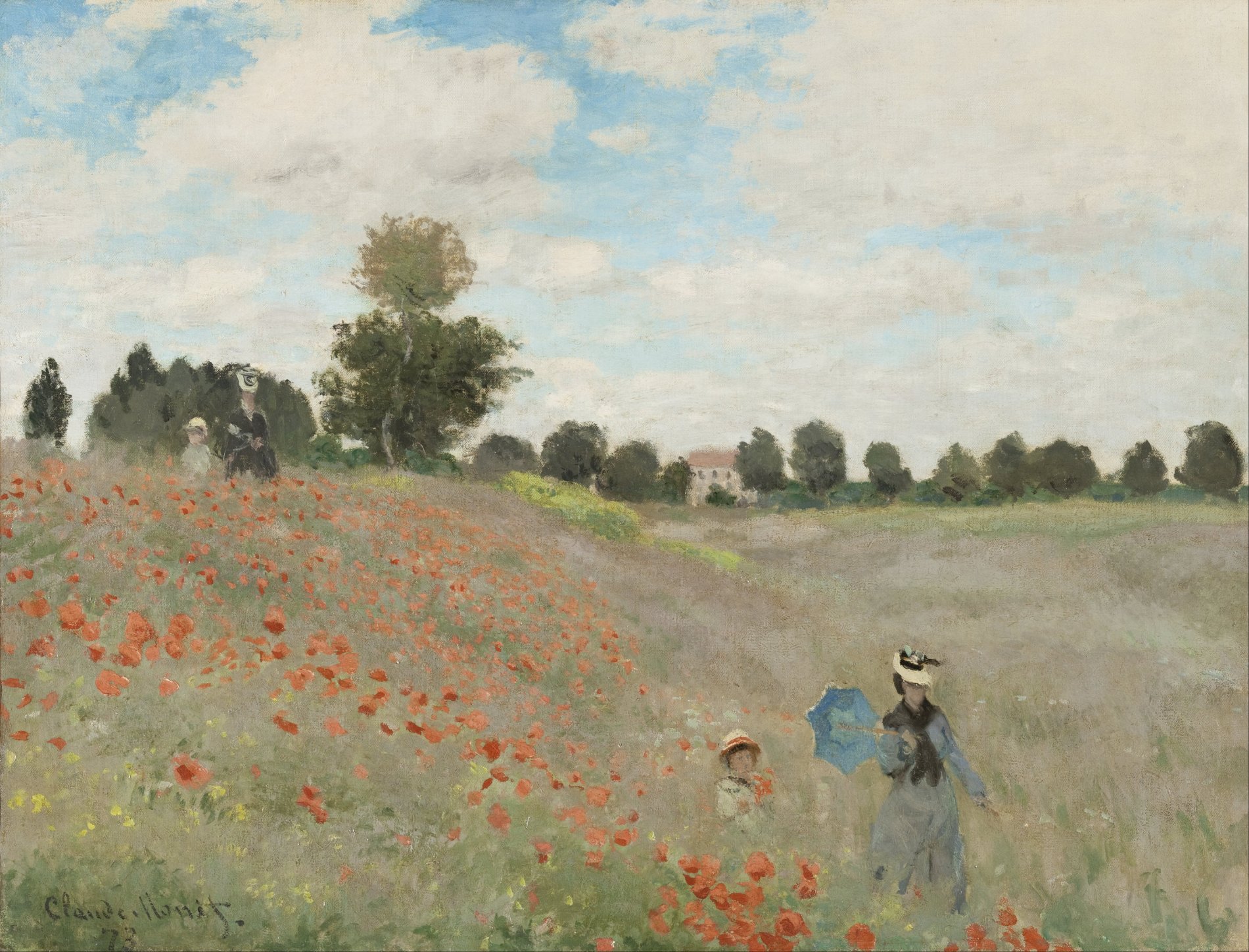
Poppies
Two pairs of walkers pass through a poppy field near Argenteuil. Monet scatters red marks along a diagonal slope instead of outlining every flower. Their size and spacing lead the eye toward distant figures and back to the nearer woman and child. Painted in 1873 and shown at the first Impressionist exhibition, Poppies turns a brief summer walk into a study of how color can make open air feel present.
Read the artwork story ↗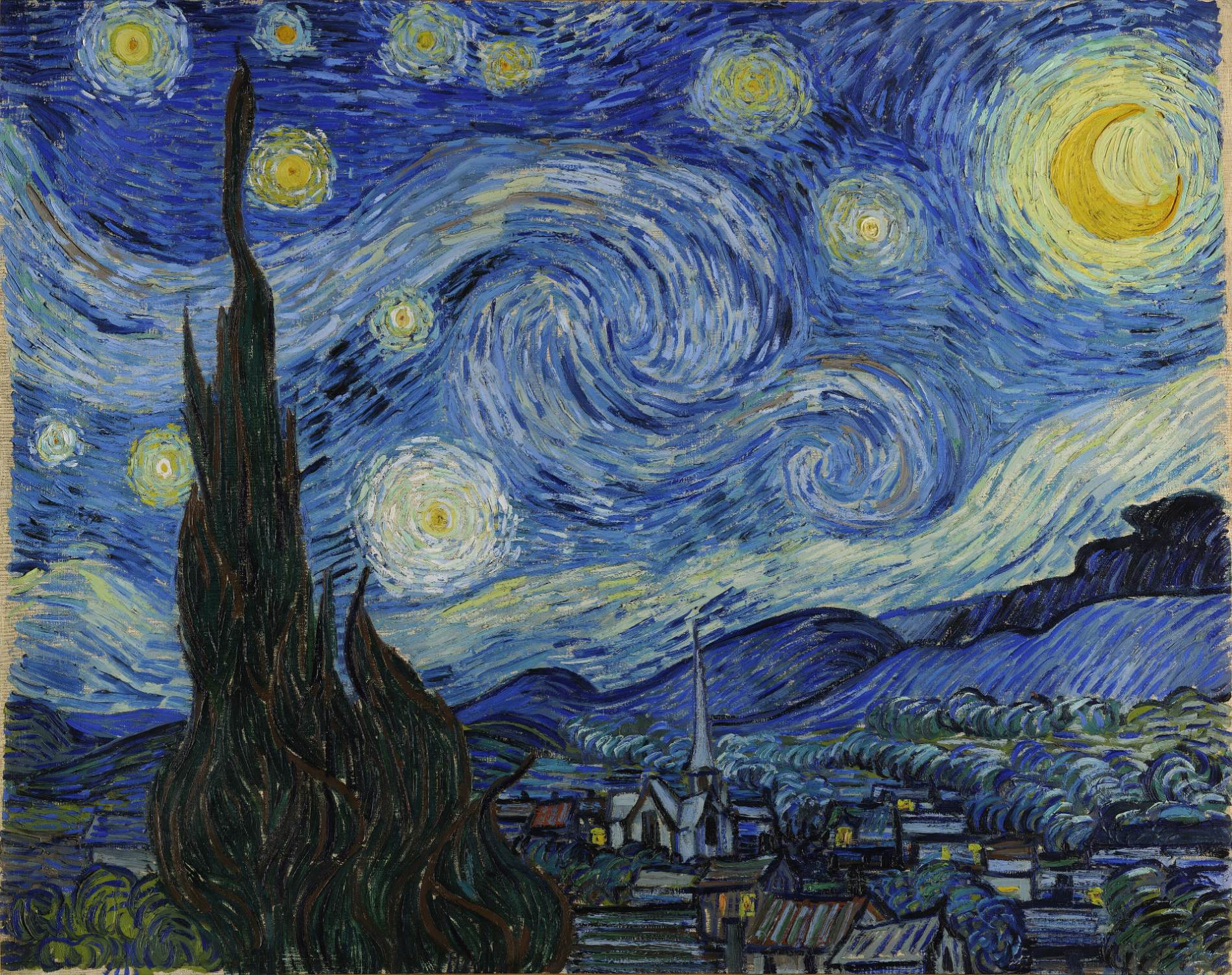
The Starry Night
Van Gogh based The Starry Night on the landscape around his Saint-Rémy asylum, then added a village that was not visible from his window. He painted the night image in daytime sessions. Thick blue currents, yellow halos, and a dark cypress give the canvas its restless rhythm. It is more than a symbol of the artist's illness: its observation, invention, and careful design keep sky and human settlement in conversation.
Read the artwork story ↗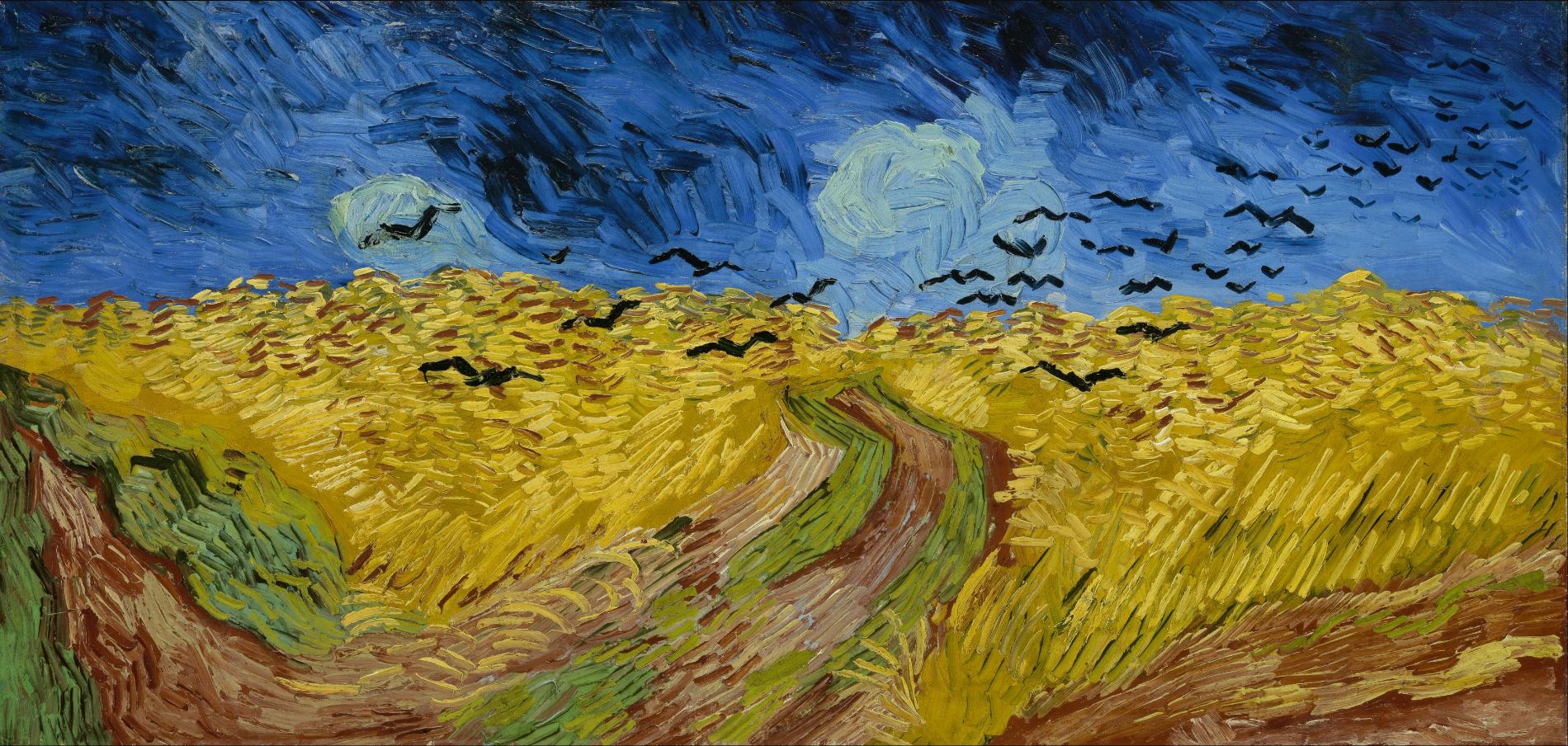
Wheatfield with Crows
Dark blue weather hangs over an Auvers wheatfield cut by three uncertain paths. Van Gogh painted it in July 1890, using fierce contrasts of yellow crop, red track, and green verge. Crows scatter across the low sky. It is often called his last painting, but the Van Gogh Museum says he made other works afterward. Its uneasy power needs no final-message myth; the field's color and unresolved routes do the work.
Read the artwork story ↗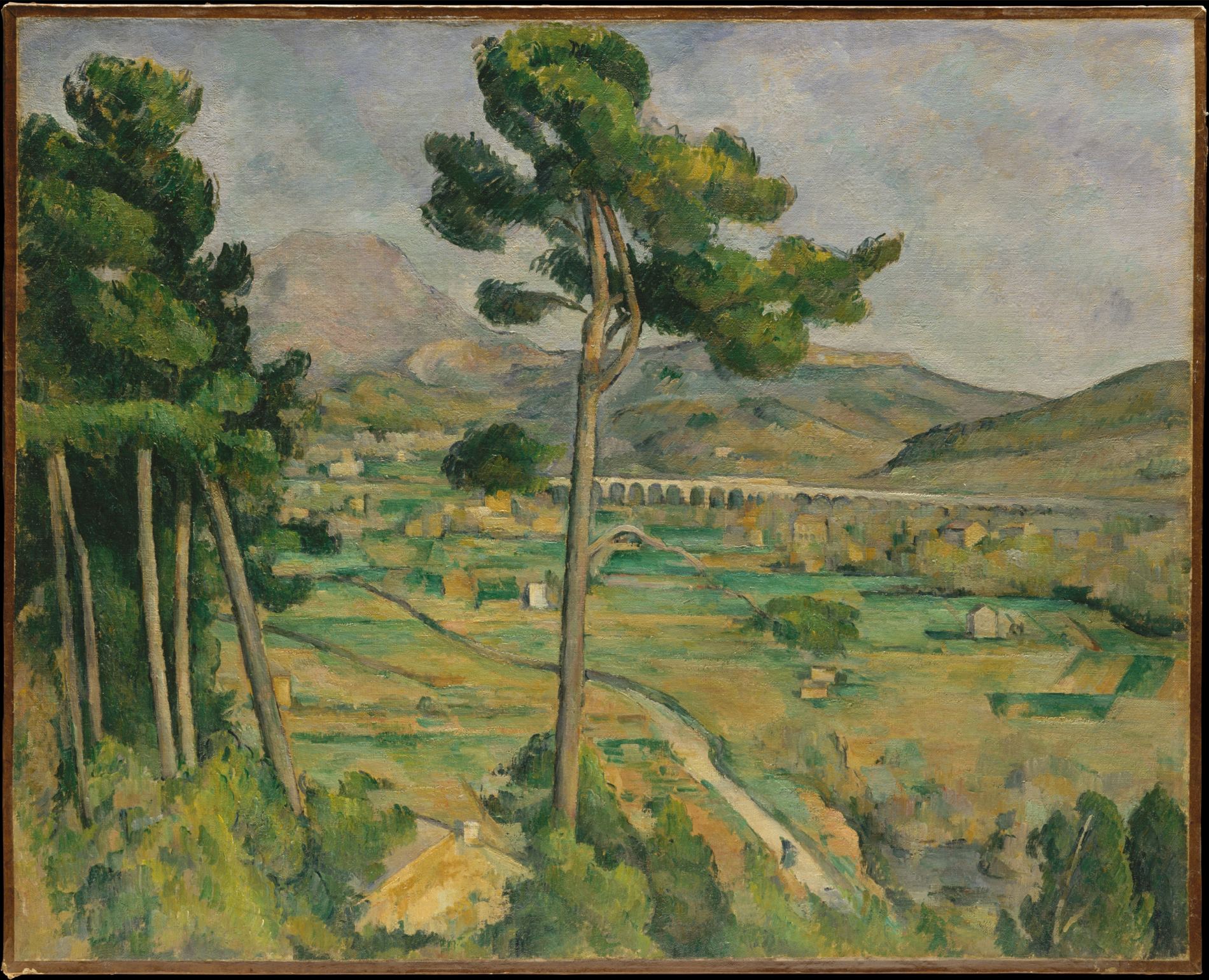
Mont Sainte-Victoire and the Viaduct
Near Aix-en-Provence, Cézanne looked across the Arc River valley to Mont Sainte-Victoire. A railway viaduct crosses the middle distance, linking a familiar mountain with a modern route through the land. Short marks of green and ochre build trees and fields, while the pale peak gathers shape from its neighboring colors. Cézanne returned to this region often; here he makes the valley feel durable without making it still.
Read the artwork story ↗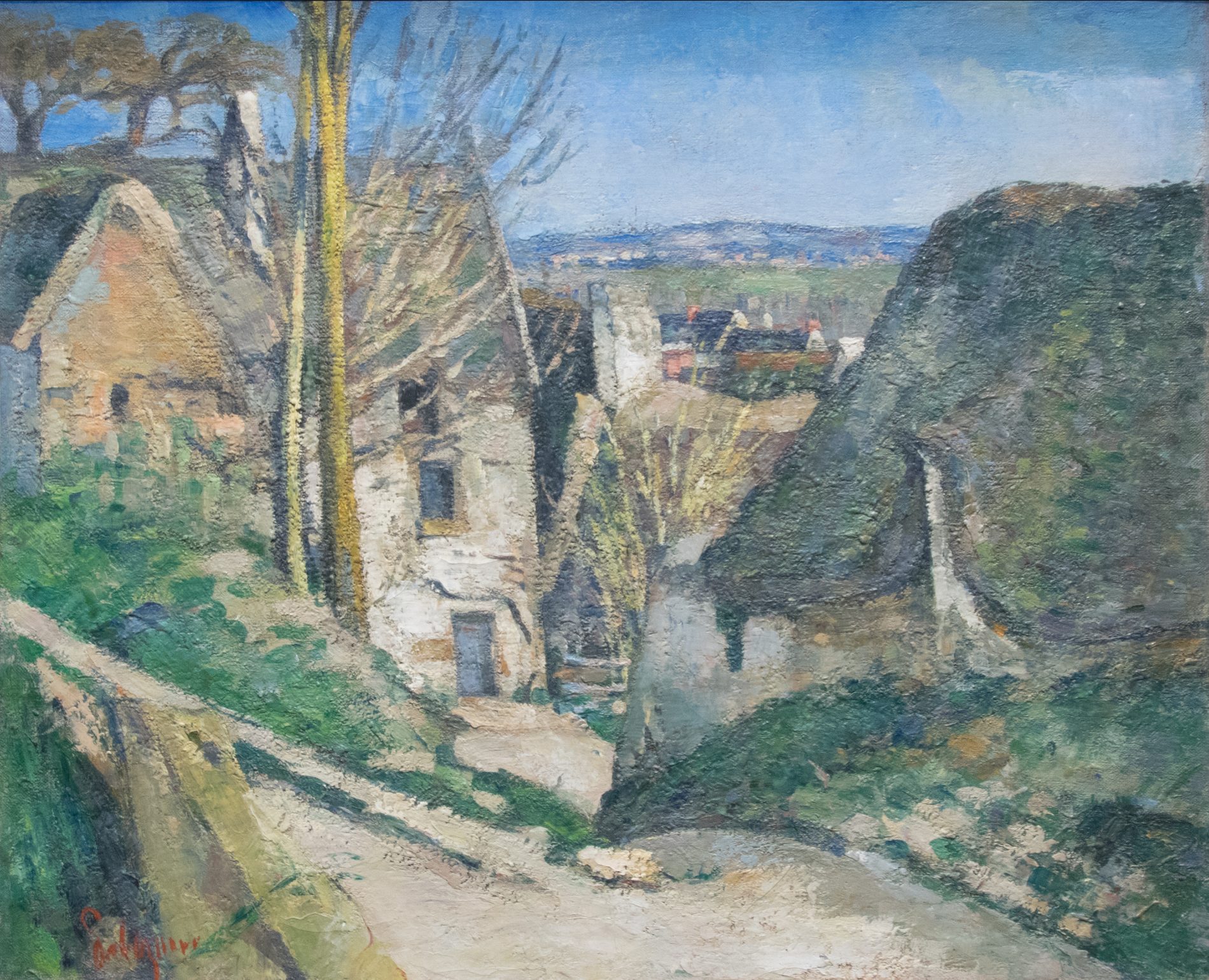
The House of the Hanged Man
The title hints at a drama, but Cézanne gives us an empty village road at Auvers-sur-Oise. Paths rise and fall between close-set houses, while thick strokes make walls, trees, and banks feel solid. Painted in 1873 and shown at the first Impressionist exhibition, this landscape uses a lighter palette while keeping Cézanne's taste for firm structure. Critics were puzzled; it became the first of his pictures sold to a collector.
Read the artwork story ↗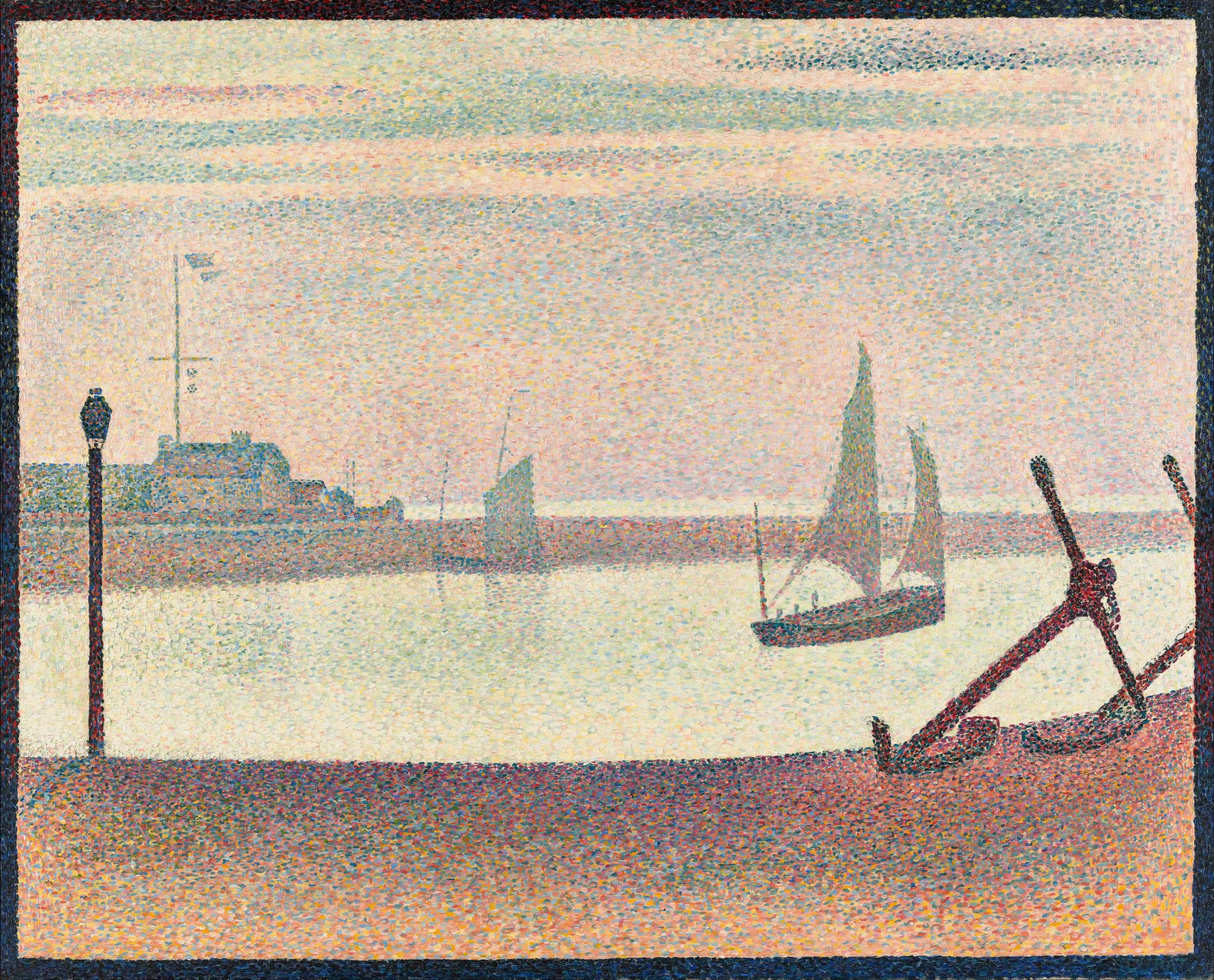
The Channel at Gravelines, Evening
Seurat quiets a working channel at Gravelines into bands of sky, water, and shore. Small vertical markers keep the harbor's practical purpose visible, while tiny touches of neighboring colors make the fading light shimmer. Painted in the summer of 1890, this late work uses the method later called Pointillism without turning the port into a diagram. Move close to see separate marks; step back and evening seems to gather between them.
Read the artwork story ↗Grand stages and unexpected frames
Scale is not always a matter of size. Bierstadt makes mountains theatrical; Matisse makes a small window feel expansive; Klimt and Mondrian find whole landscapes inside dense color and a single tree.
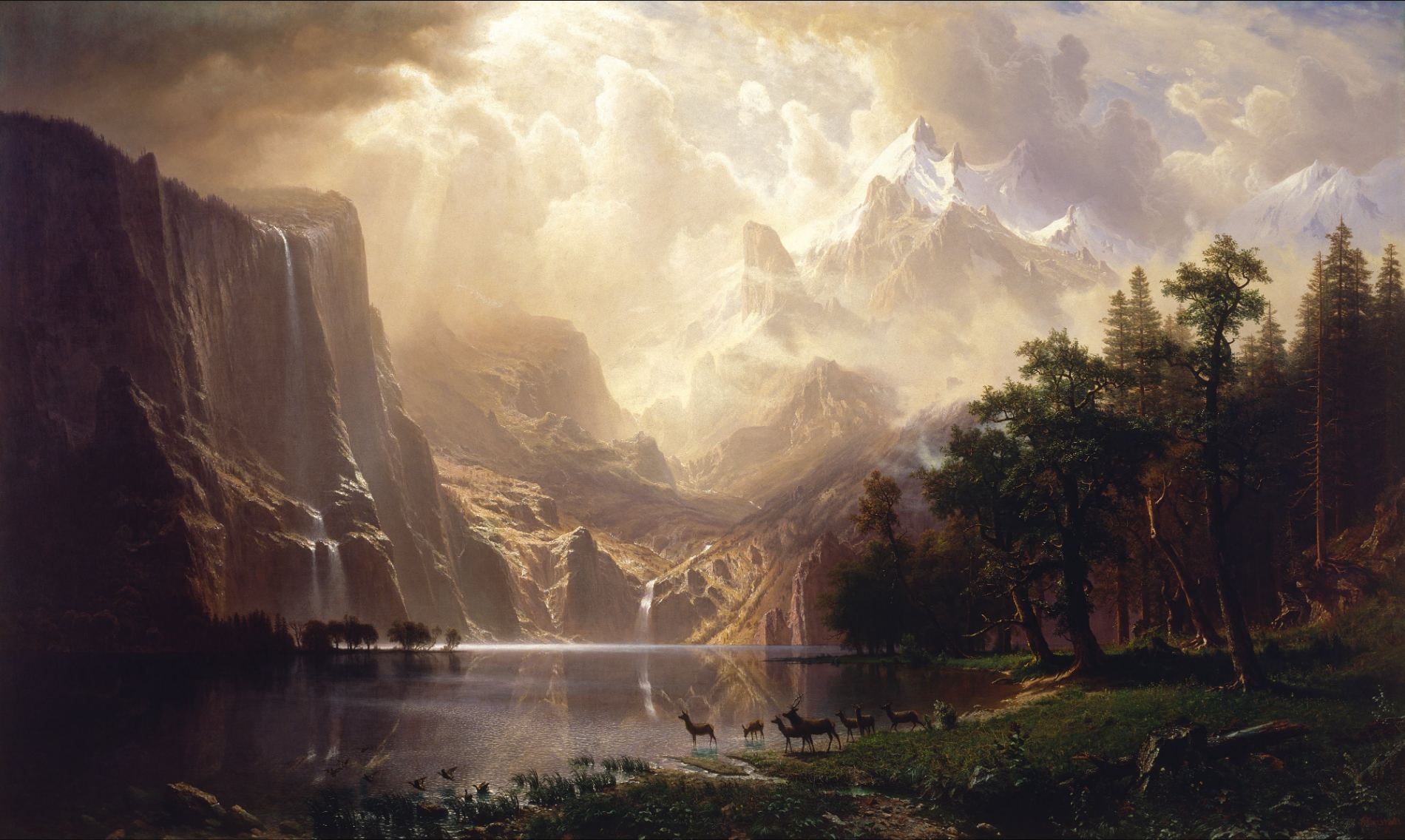
Among the Sierra Nevada, California
Bierstadt's 1868 Sierra Nevada canvas is nearly three metres wide. Dark cliffs and trees frame a lake washed in spectacular light, a composition meant to astonish exhibition audiences. The finished scene combines travel knowledge with studio arrangement. Its apparent emptiness also belongs to a nineteenth-century way of picturing the West that often ignored Indigenous presence. The painting's theatrical beauty and the assumptions behind it deserve to be seen together.
Read the artwork story ↗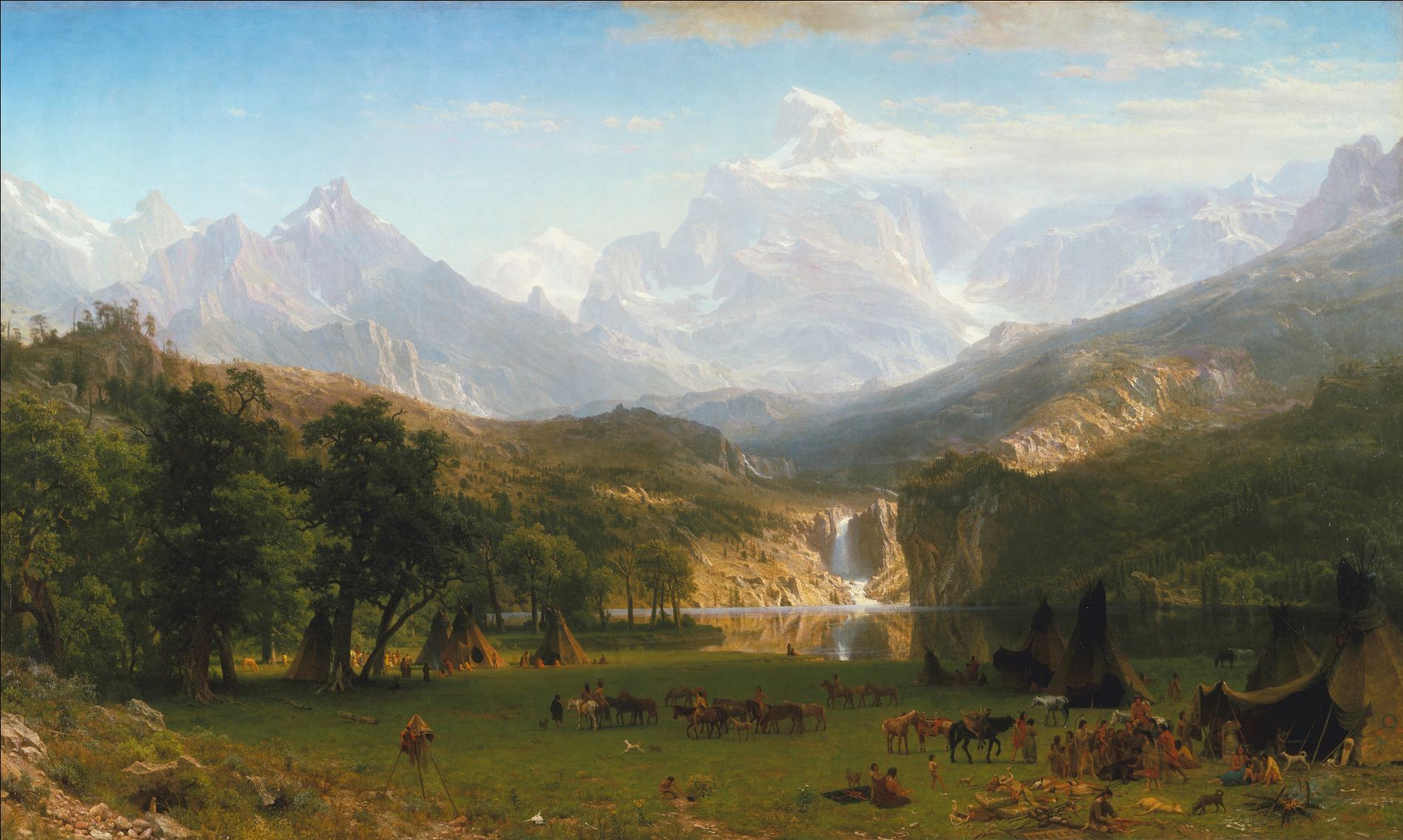
The Rocky Mountains, Lander's Peak
After joining a western survey expedition, Bierstadt painted this huge Rocky Mountain view in New York in 1863. Bright peaks and reflective water draw the eye past a Shoshone camp in the foreground. The scene's light and scale made a powerful advertisement for a region eastern audiences rarely knew firsthand. Looking back toward the people in the valley complicates the old frontier story without erasing the painting's formidable technique.
Read the artwork story ↗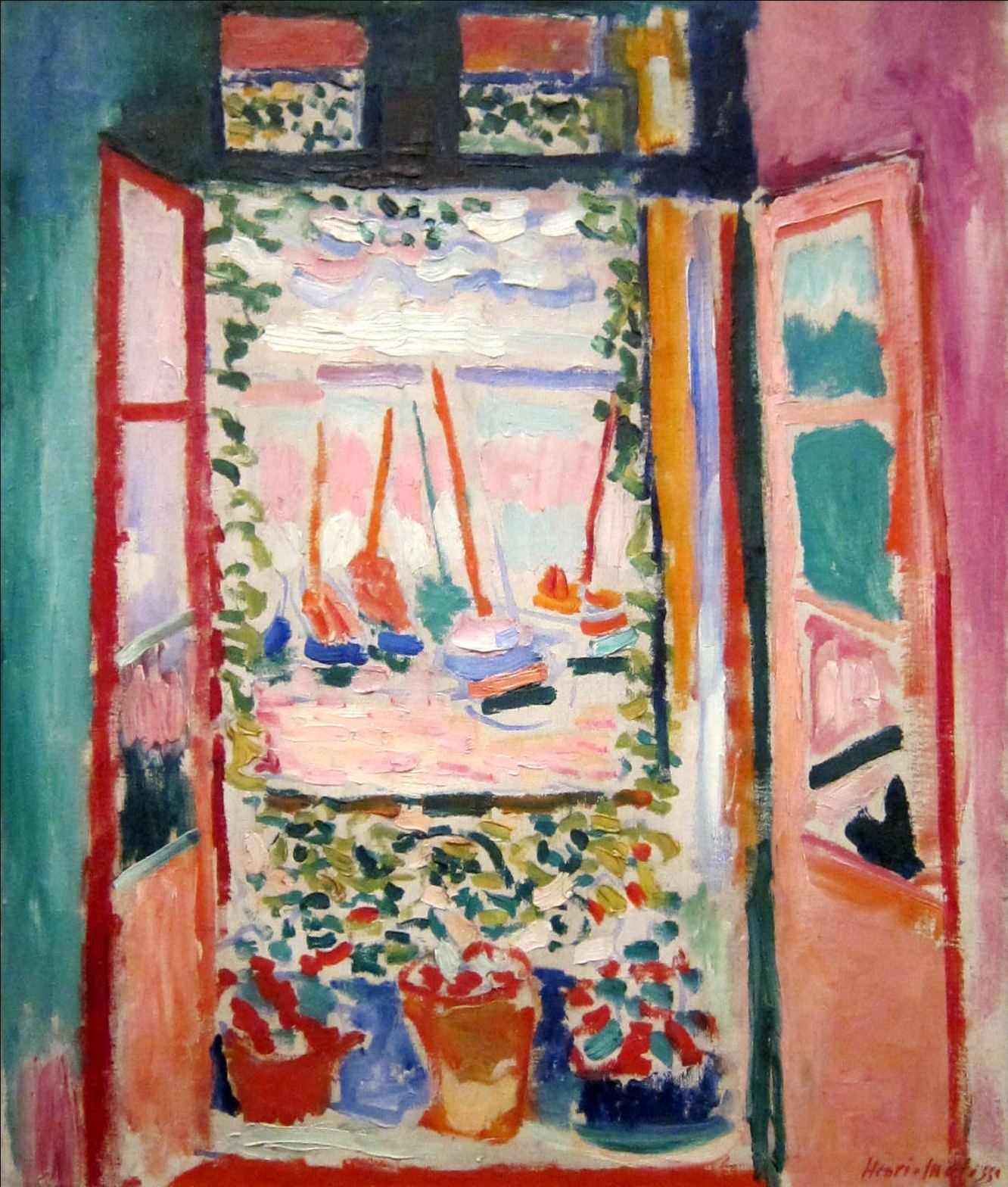
Open Window, Collioure
Matisse paints a Mediterranean harbor through a window whose shutters are as vivid as the boats outside. Pink, blue, green, and red do not behave like a neutral frame around scenery; they help create the view. Open Window, Collioure was painted in 1905, when his daring color would help define Fauvism. The landscape begins on the room's side of the sill, wherever one patch of paint makes another brighter.
Read the artwork story ↗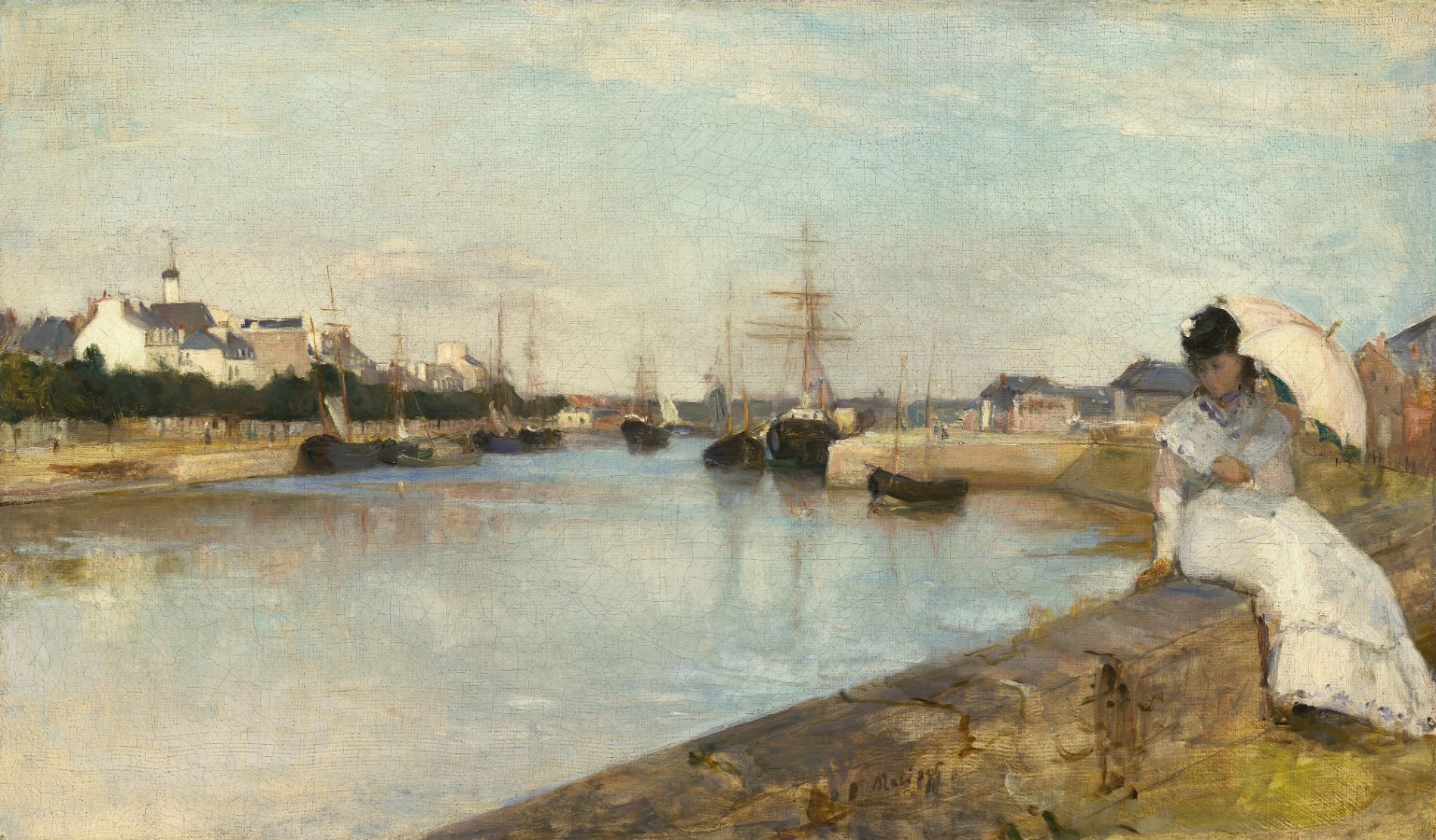
The Harbor at Lorient
A seated woman with a pale parasol pauses on a low wall, while ships and a far shore extend the scene behind her. Morisot painted Lorient in 1869, before Impressionism had a name. Her light, loose brushwork joins figure, stone, and shimmering water without giving any one complete control of the view. The harbor is a place of work and passage; the painting gives one person a quiet moment within it.
Read the artwork story ↗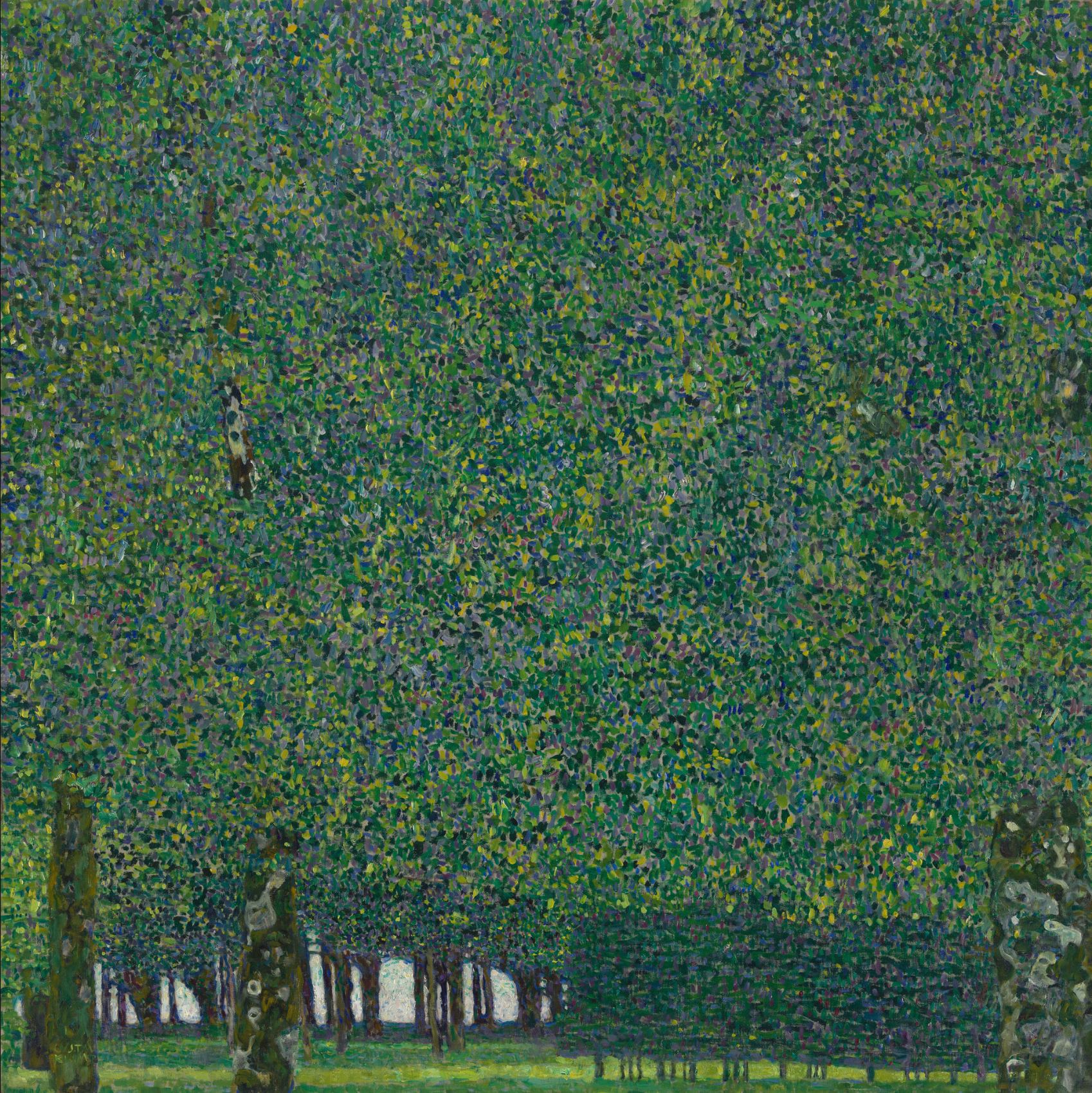
The Park
Klimt fills an almost square canvas with a canopy of tiny green and blue-green marks. Tree trunks and a small strip of grass prevent the surface from becoming a pure pattern, yet the foliage comes close. The Park shows another side of an artist often remembered for gold and figures. He used a square viewfinder outdoors, and this concentrated frame lets leaves and light create their own dense, almost woven design.
Read the artwork story ↗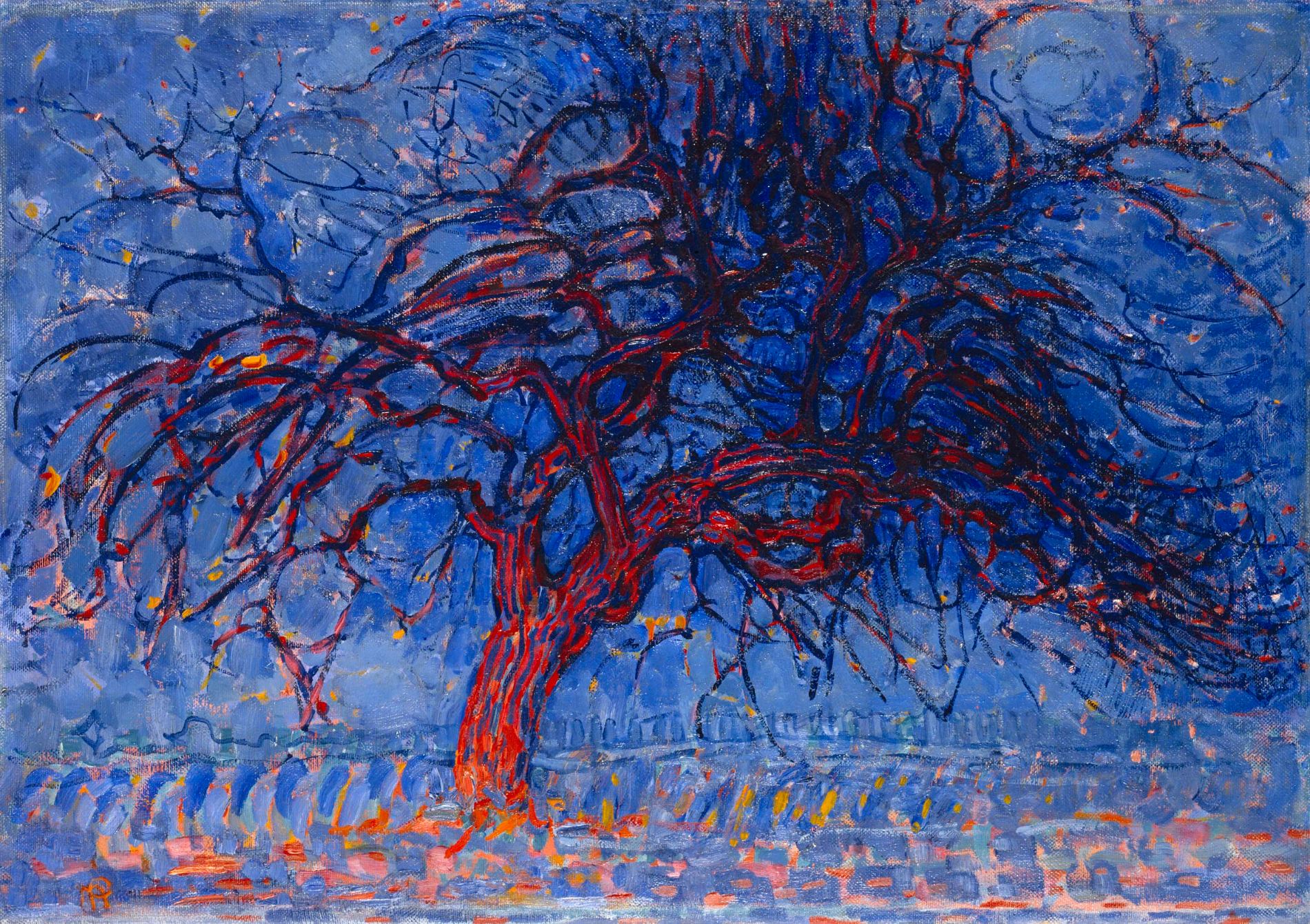
Evening: The Red Tree
Mondrian painted a single red tree spreading over a blue evening sky around 1908–1910. Its trunk and branches remain unmistakable, but the color and branching rhythm push beyond literal description. The canvas belongs to his long investigation of trees before his later abstract grids. Follow one red line until it divides, and the familiar landscape subject becomes a way to watch an artist think with color and form.
Read the artwork story ↗Keep looking
These twenty famous landscape paintings are connected by their attention to place, but they do not offer one idea of nature. Some landscapes are workplaces, some are stages for national ambition, and some are experiments in what paint can do when a tree or patch of sky takes over the frame. Their differences make the category useful. Place two beside each other and the choices become visible: where does the artist put a viewer, and what remains outside the view?
Choose one painting above and follow its link. The full artwork page gives more of its story and a route to the holding museum's record. Then return to the guide and try a work that seems unlike it. A small harbor and an immense mountain may have more in common than their first glance suggests: each was made by someone deciding how to make distance worth looking at again.