Feeling as a subject
Romantic artists explored feeling, imagination, history, and the power of nature. A landscape might suggest freedom, fear, memory, or the limits of human control. The movement crossed borders and media, taking very different forms in Friedrich’s quiet horizons, Turner’s weather, and Delacroix’s color. The usual period given for Romanticism is late 1700s–mid 1800s, but dates are guides to overlapping activity rather than firm doors that opened and shut everywhere at once. The term groups artists for the convenience of discussion. It cannot explain a work before we have looked at that work. A useful first move is to ask what problem the name makes visible: a new audience, a disputed subject, a way of organizing space, or a change in what artists thought images could do. Only then can we decide how well a particular painting, print, or design belongs within the account.
The world around the work
Romanticism unfolded amid revolution, industrialization, war, and changing ideas of national culture. It did not demand that artists reject reason; many studied nature closely while insisting that measurement alone could not exhaust human experience of it. Friedrich’s figures in northern landscapes, Turner’s changing skies, and Delacroix’s scenes of conflict give Romanticism several different voices. Their first audiences encountered works in exhibitions, collections, and printed forms that affected the pace of viewing. A quiet woodcut can invite a long pause; a large painted struggle presses action toward us. The term becomes richer when the works are allowed to disagree about what feeling should look like.
Weather and imagination
A small figure before an immense landscape, a ship engulfed by weather, or a crowded historical scene can all locate feeling in scale and movement. Friedrich’s deliberate silences, Turner’s atmospheric dissolves, and Delacroix’s color clashes refuse a single definition. Woman with Spider's Web Between Bare Trees makes these choices visible in a particular object. Its own composition, medium, and subject offer a more useful test of the movement than a checklist of traits. Compare it with another work in this guide and the differences in scale or handling begin to matter as much as the resemblance.
The landscape in history
Friedrich often turns the viewer toward what cannot be fully seen. Turner makes air, water, and technology collide on the canvas. Delacroix stages literature and history through expressive groups. Their shared interest lies less in a look than in the pressure an image can place on perception. Among the names readers may encounter are Caspar David Friedrich, J. M. W. Turner, Eugène Delacroix. Such lists help us begin, yet they can imply that artists acted as a single mind. A closer view reveals individual training, friendships, rivalries, access, and ambition. Two works made in the same decade may disagree about what an image owes its viewer. That disagreement is not a problem for the history; it is evidence that the label names a live conversation. Follow one artist into another period and the edges of the category become clearer still.
Artists within Romanticism
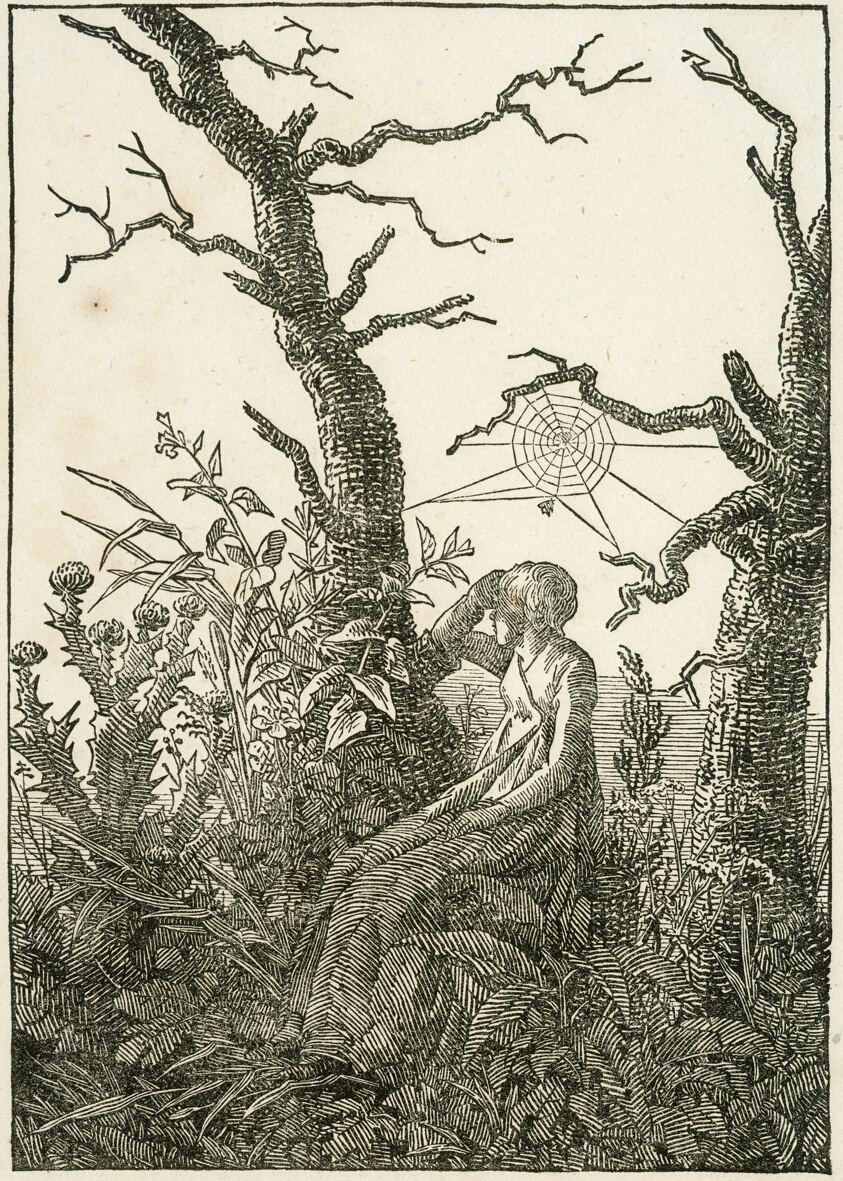
Friedrich placed small human figures before seas, mountains, and clouded horizons. His landscapes are carefully composed invitations to contemplate nature, mortality, and the limits of sight. A figure seen from behind often gives the viewer a position inside the image without resolving what the figure thinks. Empty space and an interrupted path can become expressive devices. Woman with Spider's Web Between Bare Trees gives that practice a concrete form. Friedrich places the woman among spare trunks and a delicate web, making the landscape feel like a place of reflection. The close details and open distance ask for different kinds of attention. Nothing in the setting offers a simple narrative, yet every element contributes to an atmosphere of pause.
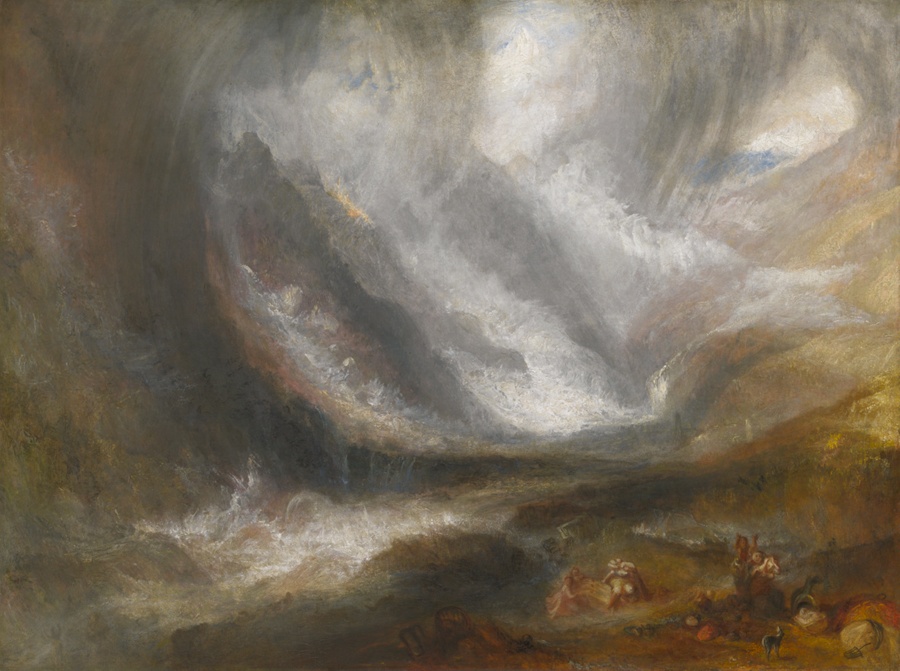
Turner transformed landscape and seascape into experiments with weather, light, and motion. Trained in watercolor and active at the Royal Academy, he traveled widely and studied both natural spectacle and modern industry. He could make a ship, bridge, or shoreline nearly disappear without abandoning the observed world. Layers of color and loose edges let atmosphere organize the scene. Valley of Aosta: Snowstorm, Avalanche, and Thunderstorm gives that practice a concrete form. Turner uses the mountain weather to put vision itself under pressure. Solid ground, moving snow, and cloud seem to trade places as the eye searches for a stable path. The work is a reminder that a landscape can represent an encounter with forces that resist clear description.
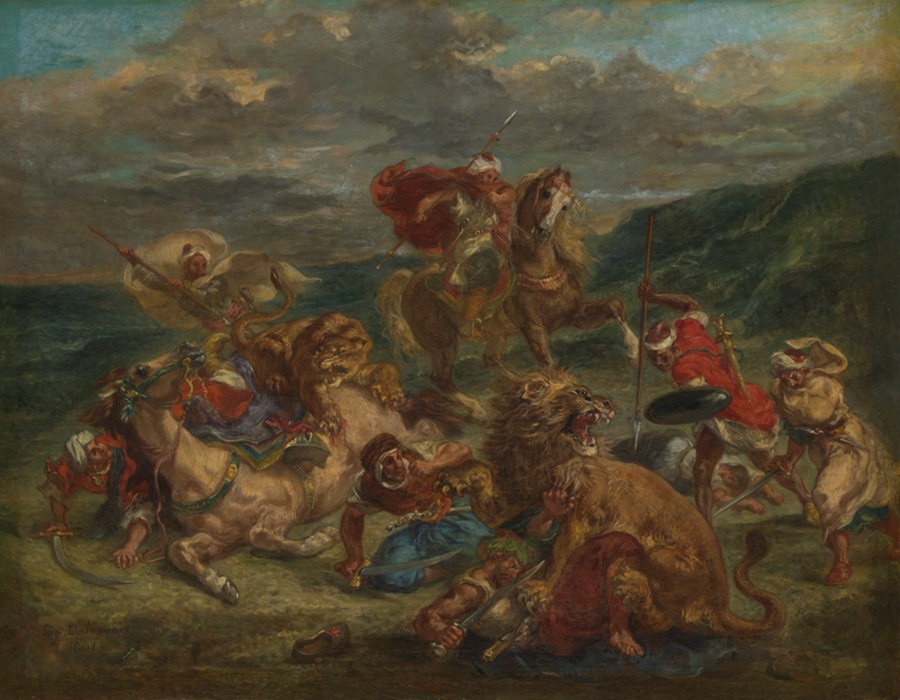
Delacroix used color and movement to make history painting feel urgent. He drew subjects from literature, politics, and travel, building scenes that pulse with contrasting hues and expressive brushwork. Contrasts of warm and cool color create much of the motion in his pictures. A crowded composition can feel coherent because the eye follows color and gesture through it. Lion Hunt gives that practice a concrete form. Delacroix organizes the hunt around movement and collision rather than a single calm viewpoint. Figures, horses, and animal bodies make the action difficult to separate into neat episodes. The tension between controlled composition and apparent chaos is part of the picture’s drama.
Romanticism in different materials
Watercolor made quick changes of atmosphere possible on paper, while a large oil canvas could turn a storm or political event into public spectacle. Reproductive prints helped such images travel. Turner’s watercolor can let atmosphere remain open where Delacroix’s oil painting holds colliding bodies with heavier color. Friedrich’s woodcut places pressure on the stark relation between dark line and pale paper. These processes do more than illustrate different subjects: they decide what can be blurred, layered, carved, or fixed. Set two of the works beside their object records and compare their dimensions. A scene that appears similarly dramatic on a screen may have made very different demands on its first viewer.
Lion Hunt is recorded as oil on canvas. Delacroix organizes the hunt around movement and collision rather than a single calm viewpoint. Figures, horses, and animal bodies make the action difficult to separate into neat episodes. The tension between controlled composition and apparent chaos is part of the picture’s drama. This particular object makes material decisions easier to see than a list of stylistic traits does. Follow its source record for the stated medium and dimensions, then return to the image to notice where that process leaves its mark. A movement takes on more than one form because people worked with different tools, surfaces, and intended audiences.
How Romanticism reached viewers
Romantic images traveled through exhibitions, illustrated books, prints, and growing networks of collectors. Turner’s watercolors could be encountered at a different scale and pace from a public oil painting; Delacroix’s crowded scenes pressed for attention in exhibition rooms. Friedrich’s quiet figures ask yet another kind of pause. Later reproductions made some images familiar far beyond their first audiences, but the original surfaces and dimensions still matter to how each work stages feeling.
Questions behind the label
The movement’s interest in distant places and peoples was entangled with empire and unequal power. Romantic freedom did not mean freedom for everyone. Its landscapes can also make land seem uninhabited or available, so viewers should ask whose presence a sublime view excludes. Calling every turbulent landscape Romantic risks making weather into a substitute for history. A storm can stage uncertainty, but Delacroix’s literary combat and Friedrich’s quiet grave ask other questions about story, memory, and belief. Artists also worked in particular political and social circumstances; the pictures cannot be reduced to a timeless mood. Name the visible choices that create feeling, then ask what contemporary subjects or audiences might have recognized in them.
Look closely with an actual work
Woman with Spider's Web Between Bare Trees offers one close-looking example. Friedrich's spare image brings a woman, bare trees, and a web together in a scene of fragile, unsettling stillness. Friedrich places the woman among spare trunks and a delicate web, making the landscape feel like a place of reflection. The close details and open distance ask for different kinds of attention. Nothing in the setting offers a simple narrative, yet every element contributes to an atmosphere of pause. Place it beside Valley of Aosta: Snowstorm, Avalanche, and Thunderstorm. Turner's alpine view lets storm and avalanche unsettle the apparent solidity of mountain scenery. Turner uses the mountain weather to put vision itself under pressure. Solid ground, moving snow, and cloud seem to trade places as the eye searches for a stable path. The work is a reminder that a landscape can represent an encounter with forces that resist clear description. Their source records give dates, media, and collections that can be checked. Those facts do not decide what either image means, but they keep the comparison tied to actual objects. Notice one visual decision that the two works share and one that belongs to only one artist. The result may support the movement name, complicate it, or do both at once.
What came after Romanticism
Later art inherited Romanticism’s confidence that a landscape or color field could carry an emotional charge. Modern viewers still meet its central tension: a picture may seem to offer direct feeling while being an exact and highly selective construction. Romantic imagery survives in popular ideas of the solitary artist and the sublime view, yet these artists also worked with commissions, exhibitions, study, and craft. Turner’s handling of light changed over time; Friedrich’s reputation rose and fell; Delacroix’s color continued to matter to later painters. Their later fame is a history of reception, not a summary of what each work meant when it was made. The most useful path back is through an actual object and its material record.