Lion Hunt in its time
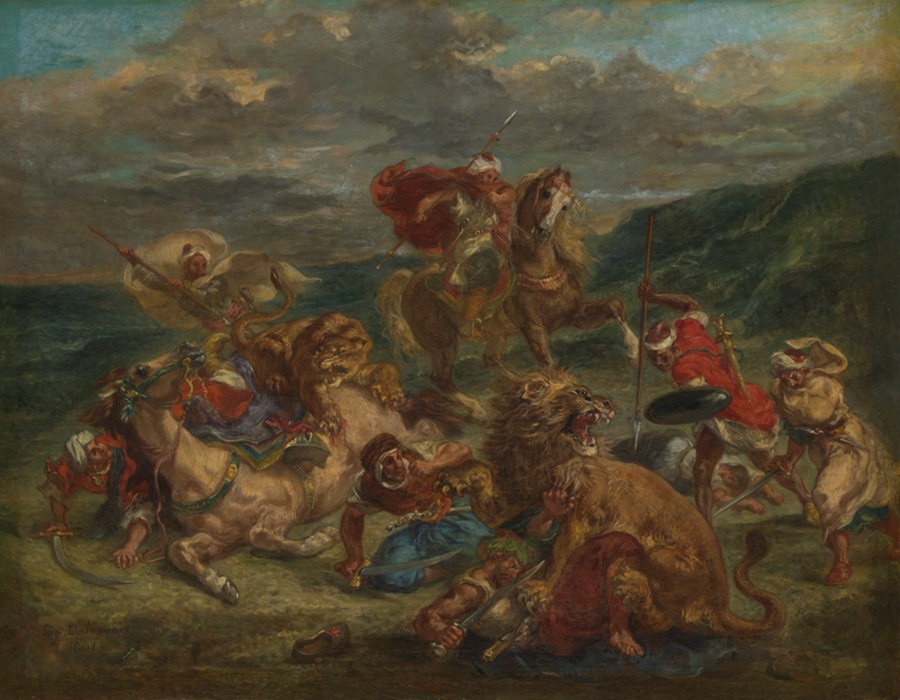
Delacroix stages the hunt as a knot of movement, bodies, and opposing forces rather than a calm report. Lion Hunt is dated 1860–61 and is held by Art Institute of Chicago. The source record names it “Lion Hunt.” The record identifies Lion Hunt; the image itself invites a slower look at how its parts meet.
The choices in the image
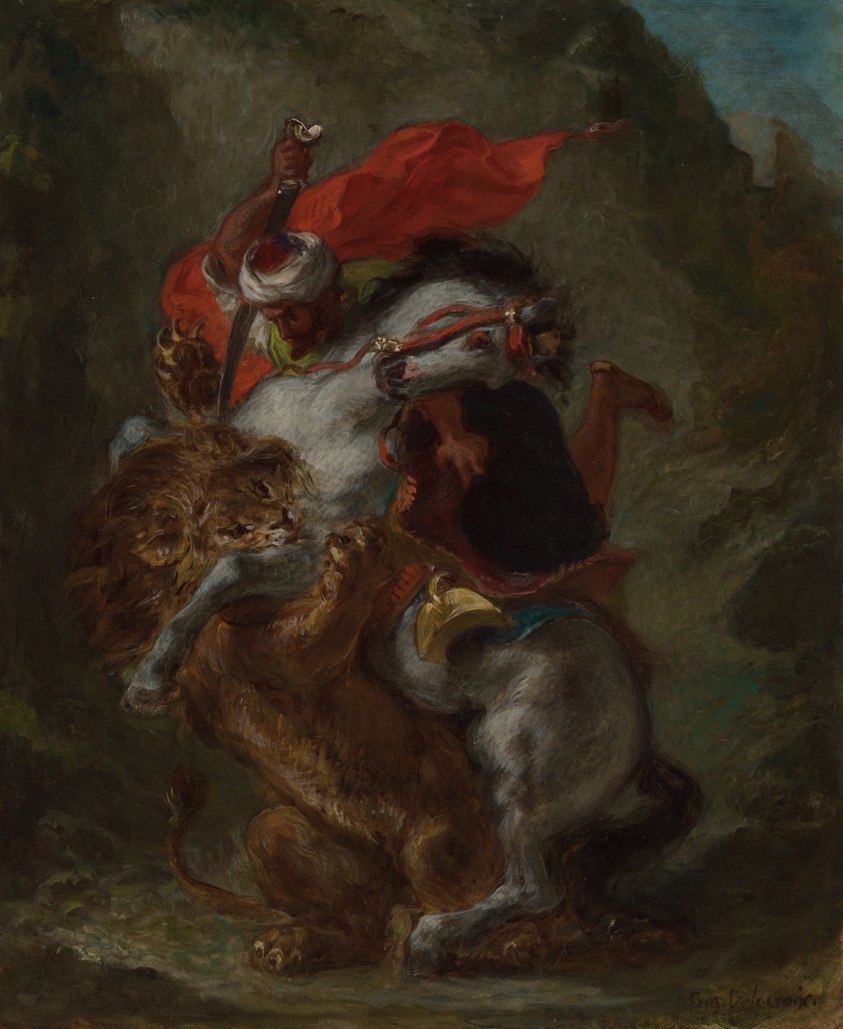
Delacroix organizes the hunt around movement and collision rather than a single calm viewpoint. Figures, horses, and animal bodies make the action difficult to separate into neat episodes. The tension between controlled composition and apparent chaos is part of the picture’s drama. Pause at the threshold between subject and setting in Lion Hunt. The two may be closely joined or held apart. That decision tells us something about how the maker wanted this scene to be encountered.
The material object
The collection records Lion Hunt as oil on canvas. The medium of Lion Hunt belongs in the story because a drawing, print, and painting offer different routes from a maker’s hand to a viewer. The linked record names this one precisely. In Lion Hunt, the recorded material is part of the encounter: it affects the scale, marks, and finish that the original object can hold. Look again at the strongest visual accent in Lion Hunt. The linked record supplies dimensions and materials that help place that detail within the whole work.
Eugène Delacroix and this work
Delacroix used color and movement to make history painting feel urgent. He drew subjects from literature, politics, and travel, building scenes that pulse with contrasting hues and expressive brushwork. There is no safe position from which to count the participants at a glance. Delacroix compresses movement until animal, horse, and human bodies seem to push against the picture’s limits. What Eugène Delacroix chose to make visible in Lion Hunt is only one part of a longer career, but it is a part worth examining on its own terms. For Eugène Delacroix, a visual effect was never an abstract signature floating free of materials and purpose. Its subject, medium, and visible emphasis may seem consistent with other works, or they may reveal a different route. The present work has its own conditions of making, documented in the record linked beside it. A biography becomes more convincing when actual objects are allowed to disagree with a tidy summary. Lion Hunt belongs to Eugène Delacroix’s longer practice, and the other works in this collection let you test what changed from one subject to another.
The world around Lion Hunt
Delacroix worked within the institutions of French history painting while seeking subjects in literature, politics, religion, and travel. His diaries reveal a painter deeply attentive to other arts. Lion Hunt has been seen under different conditions since 1860–61. Its first setting shaped its audience; the linked record documents the object as it is known today. Read the documented title and medium for Lion Hunt beside the image; the record can settle object details while leaving interpretation open.
Image and object record
Art Institute of Chicago identifies Lion Hunt as a work by Eugène Delacroix from 1860–61 and records its medium as oil on canvas. The collection credits the object to Potter Palmer Collection. Follow the linked object record for its catalogue entry and any further notes on its history.