The Combat of the Giaour and Hassan in its time
Delacroix stages a violent literary encounter through the motion of horses and bodies, testing how painting can hold action together. The Combat of the Giaour and Hassan is dated 1826 and is held by Art Institute of Chicago. The source record names it “The Combat of the Giaour and Hassan.” Knowing where The Combat of the Giaour and Hassan belongs helps; it also leaves open the question of how the maker organized what we see.
The choices in the image
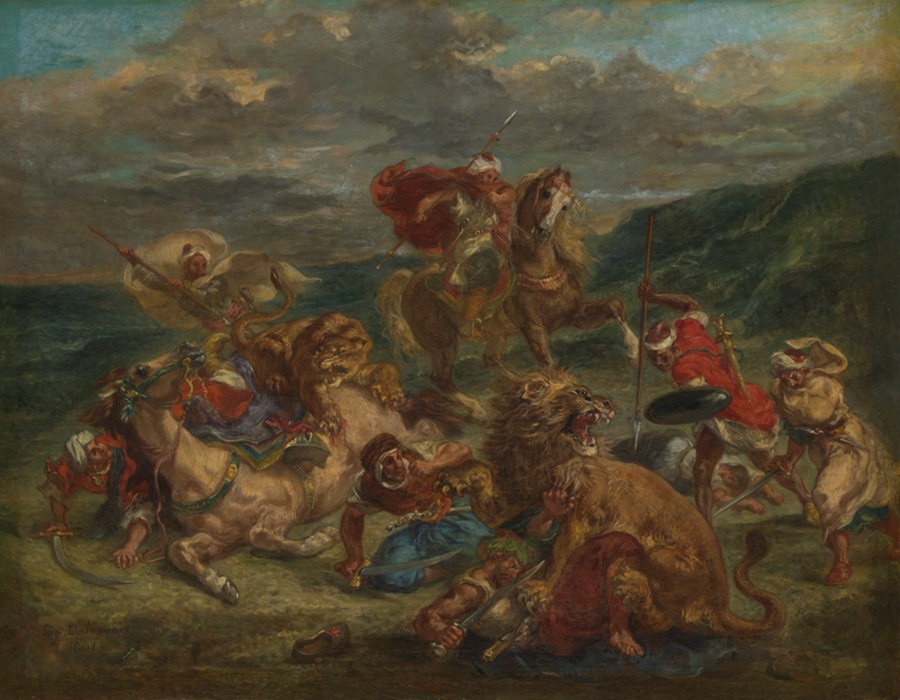
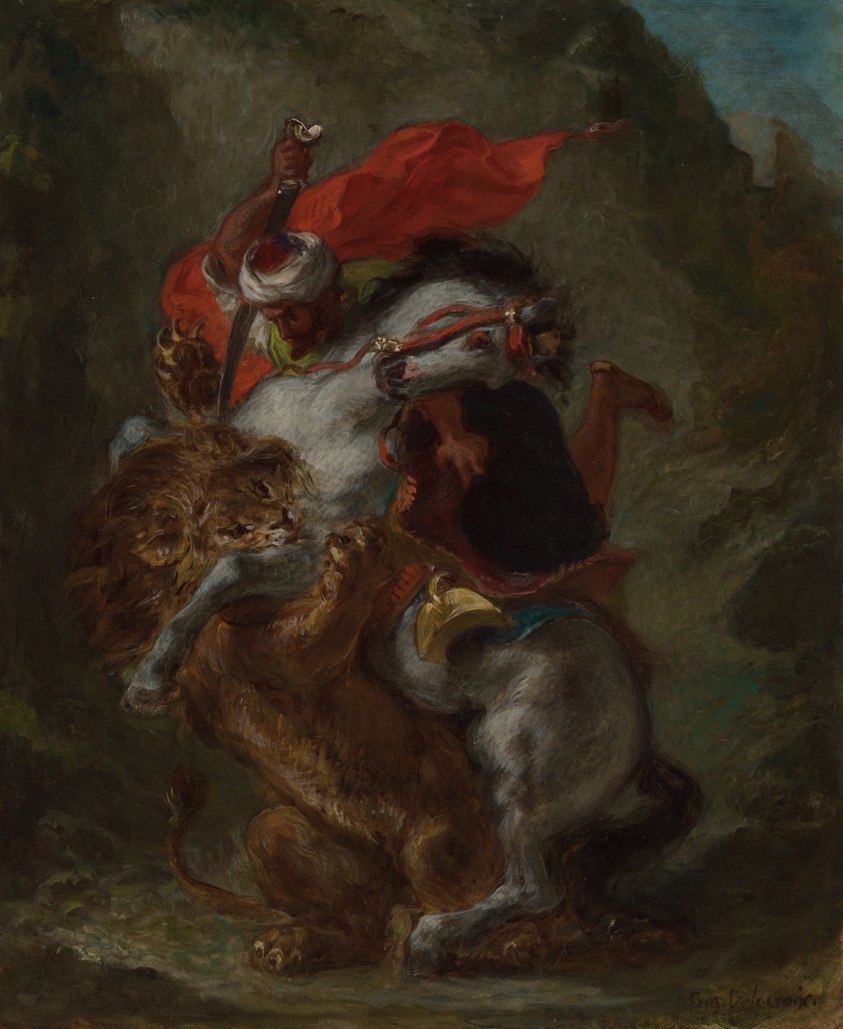
Riders, horses, and fallen figures meet in a compressed rush. Delacroix makes the struggle readable through opposing gestures and light rather than a calm, centered account of the literary scene. Pause at the threshold between subject and setting in The Combat of the Giaour and Hassan. The two may be closely joined or held apart. That decision tells us something about how the maker wanted this scene to be encountered.
What the medium can tell us
The collection records The Combat of the Giaour and Hassan as oil on canvas. The medium of The Combat of the Giaour and Hassan belongs in the story because a drawing, print, and painting offer different routes from a maker’s hand to a viewer. The linked record names this one precisely. The material description for The Combat of the Giaour and Hassan matters because an image seen at screen size can conceal how it was first made and handled. The image of The Combat of the Giaour and Hassan invites another look at its arrangement; its collection entry gives the material description and further details about the work.
Eugène Delacroix and this work
Liberty Leading the People ties a political moment to a symbolic figure without becoming a simple report. Paintings shaped by his North African journey demand attention to colonial power as well as visual discovery. The literary story supplies a conflict, but Delacroix makes its force visible through opposed bodies and restless horses. The viewer must piece the event together inside an arrangement built for motion. What Eugène Delacroix chose to make visible in The Combat of the Giaour and Hassan is only one part of a longer career, but it is a part worth examining on its own terms. That combination matters more than a quick description of the artist’s usual style. Its subject, medium, and visible emphasis may seem consistent with other works, or they may reveal a different route. The present work has its own conditions of making, documented in the record linked beside it. The pace of The Combat of the Giaour and Hassan deserves attention; another work by Eugène Delacroix may move the eye quite differently. For Eugène Delacroix, The Combat of the Giaour and Hassan was one particular solution among many. A second work can show which decisions were revisited and which were left behind.
The world around The Combat of the Giaour and Hassan
Later painters admired his handling of color. That influence is part of the story, but his works also ask how historical events and other cultures are staged for an audience. A viewer first meeting The Combat of the Giaour and Hassan in 1826 may have known its subject and setting differently. That distance is one reason to keep both the image and its documented record in view. A record helps place The Combat of the Giaour and Hassan in a collection. The details you notice in the image can then lead to more precise questions.
Image and object record
Art Institute of Chicago identifies The Combat of the Giaour and Hassan as a work by Eugène Delacroix from 1826 and records its medium as oil on canvas. The collection credits the object to Gift of Bertha Palmer Thorne, Rose Movius Palmer, Mr. and Mrs. Arthur M. Wood, and Mr. and Mrs. Gordon Palmer. Follow the linked object record for its catalogue entry and any further notes on its history.