Paris outside the Salon
The Impressionists made changing light, modern leisure, and everyday experience central to painting. Their independent exhibitions challenged the authority of the official Paris Salon. Open brushwork and unusual cropping varied from artist to artist; the group included Monet’s outdoor studies, Degas’s rehearsal rooms, and Morisot’s intimate scenes. The usual period given for Impressionism is 1870s–1880s, but dates are guides to overlapping activity rather than firm doors that opened and shut everywhere at once. The term groups artists for the convenience of discussion. It cannot explain a work before we have looked at that work. A useful first move is to ask what problem the name makes visible: a new audience, a disputed subject, a way of organizing space, or a change in what artists thought images could do. Only then can we decide how well a particular painting, print, or design belongs within the account.
The world around the work
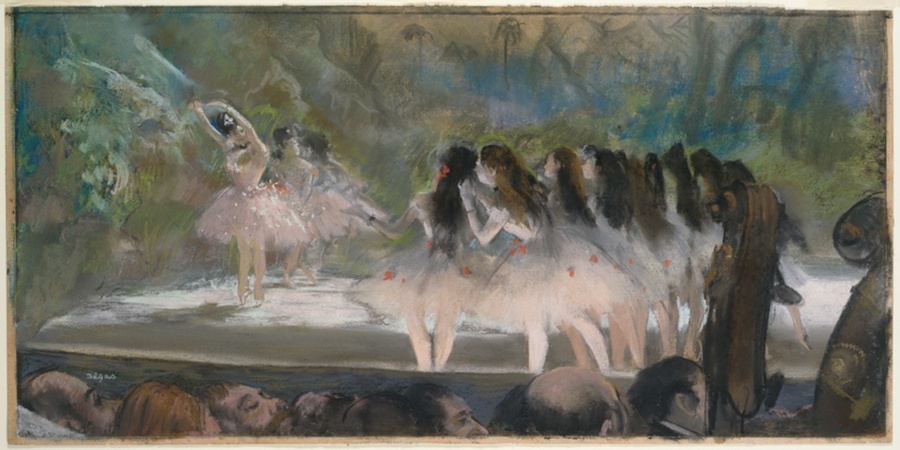
Independent exhibitions in Paris from 1874 challenged the official Salon, but the participating artists did not sign up to one style. Their present was shaped by rail travel, new leisure spaces, photography, urban redevelopment, and changing markets for pictures. The independent exhibitions gave artists a way to address Paris outside the official Salon, but joining them did not erase personal aims. Monet’s outdoor study, Degas’s rehearsal scene, Morisot’s interior, and Cassatt’s high viewpoint carried different understandings of the present. Critics and buyers met those works in a city changing through rail travel, new leisure spaces, and new visual media. The exhibition history matters because the pictures were part of an argument about who could define finished art.
Light as a moving subject
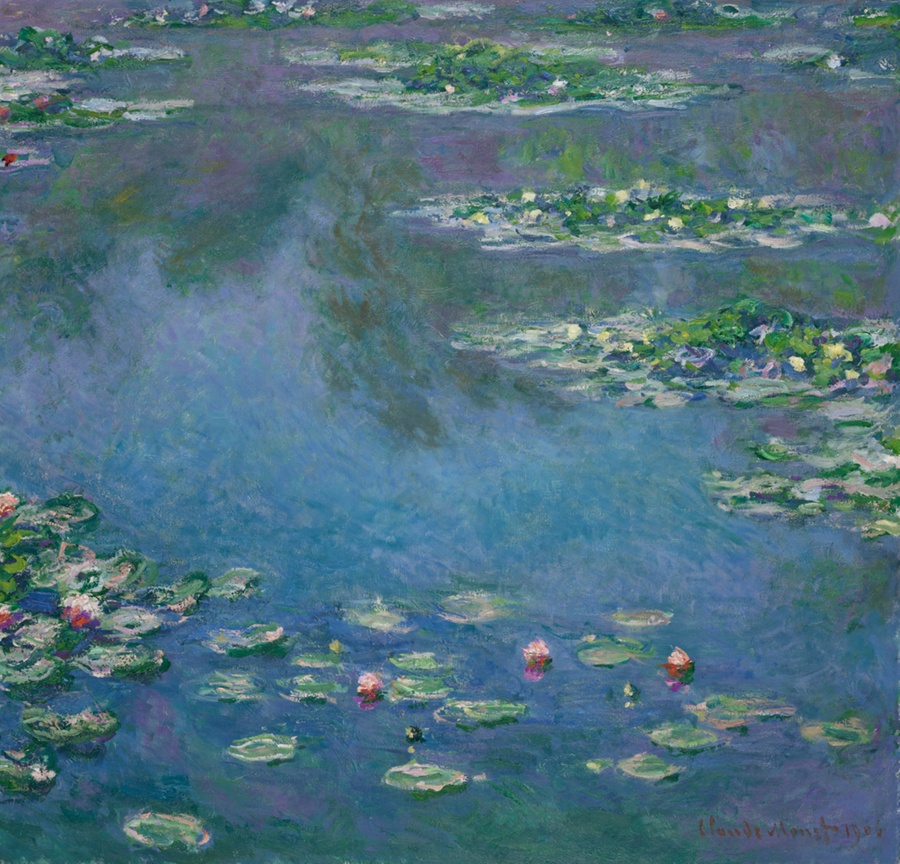
Broken color can suggest shifting light, while cropping can make a scene feel glimpsed. Monet pursued changing outdoor conditions; Degas often reconstructed observed moments indoors. Morisot and Cassatt made intimate settings formally daring rather than marginal. Water Lilies makes these choices visible in a particular object. Its own composition, medium, and subject offer a more useful test of the movement than a checklist of traits. Compare it with another work in this guide and the differences in scale or handling begin to matter as much as the resemblance.
Artists who disagreed productively
Monet’s series examine how a motif changes through time. Degas makes rehearsal and work visible beneath performance. Morisot’s open marks and Cassatt’s firm design show that modernity could be explored in spaces women could enter and depict. Among the names readers may encounter are Claude Monet, Berthe Morisot, Mary Cassatt, Edgar Degas. Such lists help us begin, yet they can imply that artists acted as a single mind. A closer view reveals individual training, friendships, rivalries, access, and ambition. Two works made in the same decade may disagree about what an image owes its viewer. That disagreement is not a problem for the history; it is evidence that the label names a live conversation. Follow one artist into another period and the edges of the category become clearer still.
Artists within Impressionism
Monet pursued the changing appearance of the visible world across more than six decades. Early support from Eugène Boudin encouraged him to paint outdoors, and friendships with Renoir, Sisley, and others helped form the group later called the Impressionists. Small shifts in light, weather, and season change the apparent structure of a subject. Repeating a motif was a disciplined method, not an admission that one canvas had failed. Water Lilies gives that practice a concrete form. Monet reduces the garden pond to a shifting field of reflected light and floating forms. The horizon disappears, leaving the viewer to move between surface, depth, and sky without a fixed starting point. Repeated visits to this subject let Monet test how changing conditions alter what can be seen.
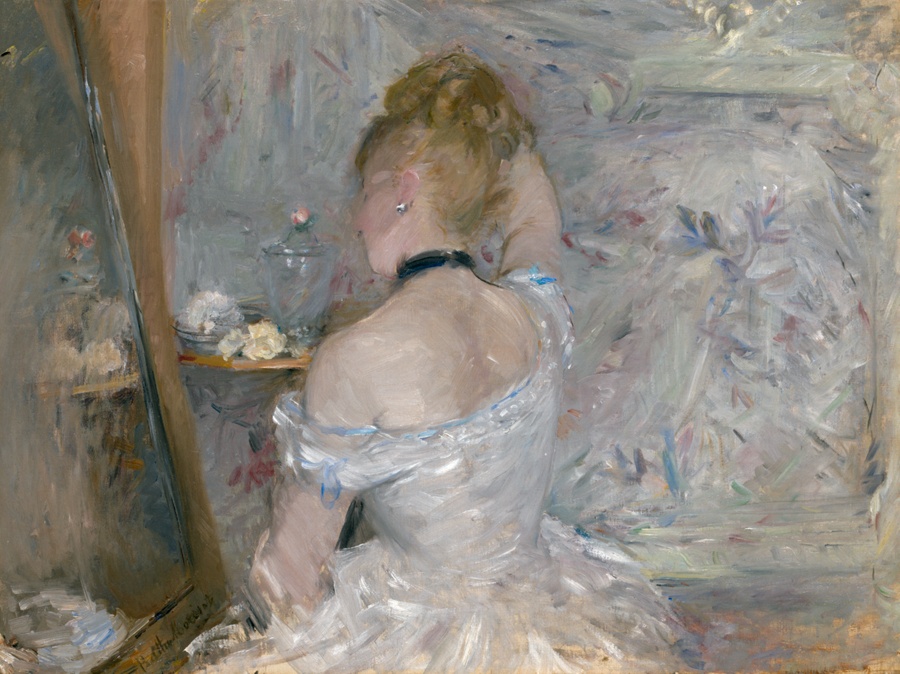
Morisot was a founding participant in the Impressionist exhibitions and a painter of remarkable speed and sensitivity. Her domestic and outdoor scenes use broken brushwork and open edges to suggest experience in motion. Quick marks, open edges, and unusual cropping make a settled room or garden feel momentary. Her pictures often hold a tension between a figure’s presence and the space around her. Woman at Her Toilette gives that practice a concrete form. Morisot treats a private moment through light marks and an open surface. The mirror and figure create a scene about looking, but the person does not become a posed display for the viewer. The looseness of the paint is carefully placed within an intimate, spatially complex image.
Cassatt built a career in Paris and exhibited with the Impressionists. Her pictures of women and children are often intimate, yet their structure is daring: unusual viewpoints, bold color, and patterned surfaces. Bold patterns and unexpected angles complicate the apparent ease of her scenes. Japanese prints helped her think about flat areas, cropping, and the relation of figures to their surroundings. The Child's Bath gives that practice a concrete form. Cassatt views the figures from above, drawing attention to the shared act of washing. Patterned textiles and tilted shapes hold the composition together while the gestures of adult and child make it feel personal. The work joins formal experiment to a subject drawn from daily care.
Impressionism in different materials
Portable paints and smaller canvases supported outdoor study, but a studio still mattered for selection and revision. Pastel, drawing, and printmaking expanded the group’s range beyond the familiar oil landscape. Portable paint and small canvases helped some artists work outdoors, yet an Impressionist picture was not necessarily made in a single hurried session. Degas used drawing and pastel to examine bodies and viewpoints; Cassatt pursued demanding printed processes; Morisot’s open marks could be as deliberate as Monet’s repeated studies of light. Compare the recorded media of the works shown here. Their materials reveal a group experimenting through several kinds of labor rather than one shared brushstroke.
The Child's Bath is recorded as oil on canvas. Cassatt views the figures from above, drawing attention to the shared act of washing. Patterned textiles and tilted shapes hold the composition together while the gestures of adult and child make it feel personal. The work joins formal experiment to a subject drawn from daily care. This particular object makes material decisions easier to see than a list of stylistic traits does. Follow its source record for the stated medium and dimensions, then return to the image to notice where that process leaves its mark. A movement takes on more than one form because people worked with different tools, surfaces, and intended audiences.
How Impressionism reached viewers
The independent Impressionist exhibitions brought the group before a public without relying entirely on the official Salon. Reviews, sales, and friendships shaped the venture, but the artists had different audiences and careers. Monet’s outdoor studies, Degas’s rehearsal scenes, and Morisot’s interiors did not become famous in the same way or at the same time. Their later life in museums and reproductions can make the early risk easy to forget. Exhibition history restores that sense of an experiment still in progress.
Questions behind the label
The myth of effortless painting conceals planning, revision, and financial struggle. Access to cafés, streets, and studios was uneven. These conditions influenced what each artist could see and where their pictures could be shown. The label often brings to mind sunny gardens, leaving city work, domestic space, and uneven access less visible. Morisot and Cassatt could paint and exhibit within limits shaped by gender and social position. Degas’s dancers occupy a world of rehearsals and paid performance. Monet’s garden was a cultivated place repeatedly studied, not an untouched patch of nature. Those differences should remain in the guide, since they explain why the painters did not all find modernity in the same subjects.
Look closely with an actual work
Water Lilies offers one close-looking example. Monet's pond becomes an expanse of reflected sky, floating leaves, and shifting patches of color. Monet reduces the garden pond to a shifting field of reflected light and floating forms. The horizon disappears, leaving the viewer to move between surface, depth, and sky without a fixed starting point. Repeated visits to this subject let Monet test how changing conditions alter what can be seen. Place it beside Woman at Her Toilette. Morisot makes a private interior lively through open brushwork, pale light, and the sitter's absorbed gesture. Morisot treats a private moment through light marks and an open surface. The mirror and figure create a scene about looking, but the person does not become a posed display for the viewer. The looseness of the paint is carefully placed within an intimate, spatially complex image. Their source records give dates, media, and collections that can be checked. Those facts do not decide what either image means, but they keep the comparison tied to actual objects. Notice one visual decision that the two works share and one that belongs to only one artist. The result may support the movement name, complicate it, or do both at once.
What came after Impressionism
Impressionism later became so popular that its former strangeness can disappear. The visible mark, fragmentary frame, and attention to a passing hour were proposals about what a finished artwork might be, not merely ways to make a scene look pretty. Impressionism became so admired that its first reception can seem almost impossible to recover. Reviews of the independent shows were mixed, sales uncertain, and the careers of participants did not move together. Museums and reproductions later turned individual paintings into familiar symbols of the whole movement. Spend time with one work’s date, medium, and exhibition history; it brings back the specific experiment inside the celebrated label.