An image suggests more than it states
Symbolist artists often asked an image to suggest more than it plainly described. Dreams, myth, memory, and psychological states could enter a portrait or landscape through color and pattern. Klimt’s work in Vienna joined intimate figures to ornament and made the surface itself part of the meaning. The usual period given for Symbolism is c. 1880–1920, but dates are guides to overlapping activity rather than firm doors that opened and shut everywhere at once. The term groups artists for the convenience of discussion. It cannot explain a work before we have looked at that work. A useful first move is to ask what problem the name makes visible: a new audience, a disputed subject, a way of organizing space, or a change in what artists thought images could do. Only then can we decide how well a particular painting, print, or design belongs within the account.
The world around the work
Symbolism connected artists and writers who resisted the idea that an image should only record visible appearances. The label covers different countries and practices, with no one exhibition or technique able to contain all of them. Klimt’s ornamented figures and De Morgan’s allegorical scenes ask images to hold ideas that cannot be described by a single visible event. Their careers developed in different artistic and social circles. A viewer may recognize a figure, a wing, or a vessel before deciding what it represents. The image’s suggested meanings depend on arrangement, material, and audience as much as a list of symbols. Symbolism becomes more useful when it leads to that patient looking.
Myth, ornament, and psychology
A symbol may be deliberately legible or remain suggestive. Klimt’s figures sit among gold, pattern, and flattened space, so portrait and ornament seem to question one another. The surface asks a viewer to notice the act of interpretation itself. The Angel of Death makes these choices visible in a particular object. Its own composition, medium, and subject offer a more useful test of the movement than a checklist of traits. Compare it with another work in this guide and the differences in scale or handling begin to matter as much as the resemblance.
Different routes through a symbol
Klimt’s role in Vienna’s artistic changes shows how Symbolist interests could meet design, public decoration, and portraiture. Evelyn De Morgan approached suggestion through allegorical figures and charged encounters. Their methods differ even where both ask an image to mean more than it states. Among the names readers may encounter are Gustav Klimt, Evelyn De Morgan. Such lists help us begin, yet they can imply that artists acted as a single mind. A closer view reveals individual training, friendships, rivalries, access, and ambition. Two works made in the same decade may disagree about what an image owes its viewer. That disagreement is not a problem for the history; it is evidence that the label names a live conversation. Follow one artist into another period and the edges of the category become clearer still.
Artists within Symbolism
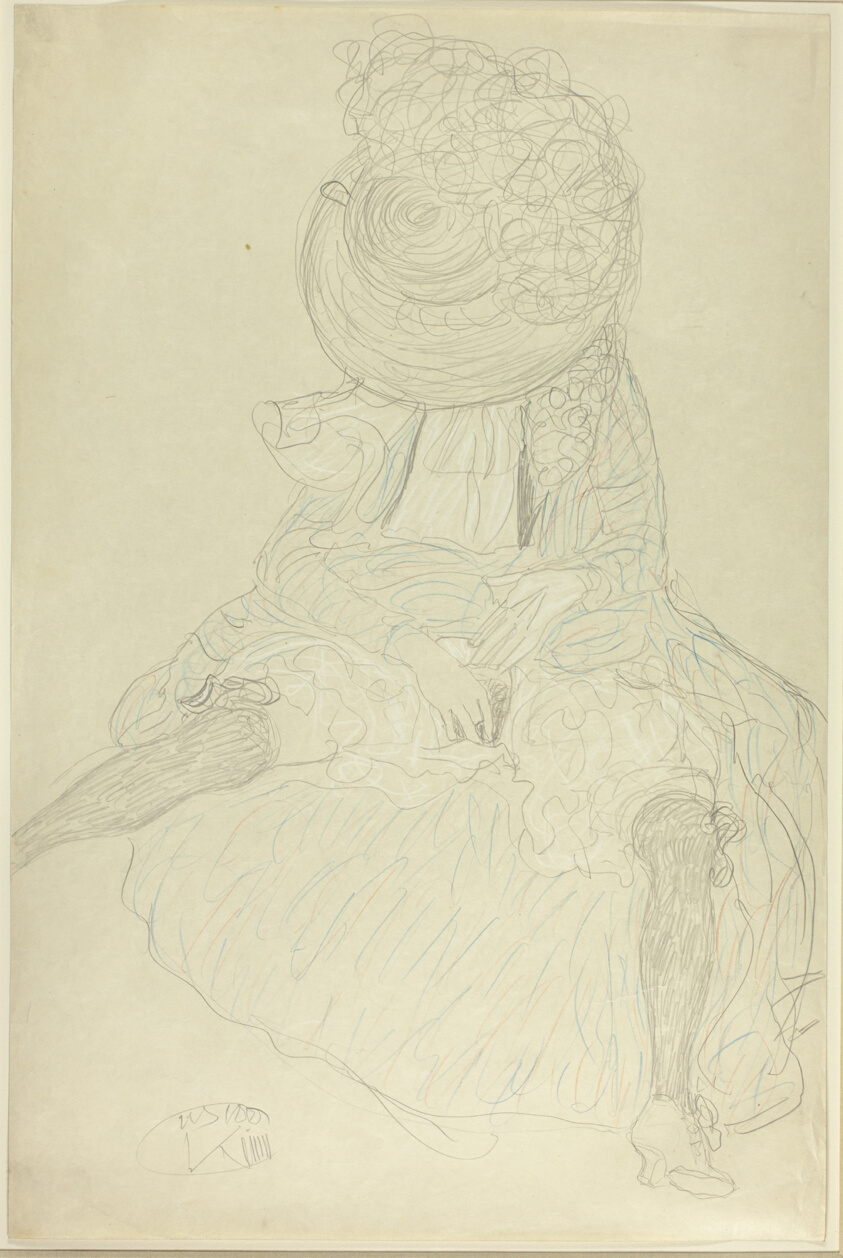
Klimt moved from decorative commissions toward paintings that blend portraiture, ornament, and symbolism. As a founder of the Vienna Secession, he helped create new exhibition space for artists beyond academic institutions. Gold, pattern, and flattened areas can surround a carefully observed face. The friction between a person and ornament makes his portraits more searching than their luxury first suggests. Seated Woman with Hat gives that practice a concrete form. Klimt brings the figure and her hat into a setting where ornament competes with description. The sitter is present, yet pattern refuses to behave as a quiet background. That interplay helps explain how Klimt could make portraiture both an image of a person and an experiment in decorative form. His drawn figure also shows that a suggestion of mystery could begin with observed weight and posture.
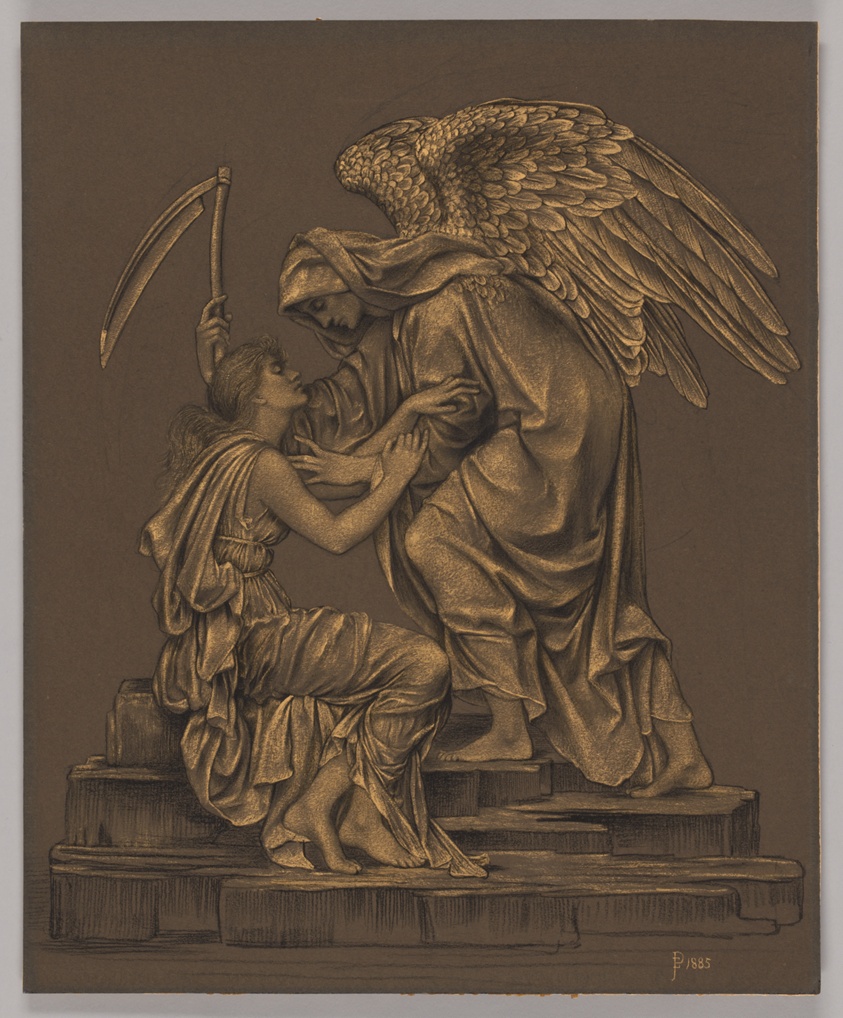
Evelyn De Morgan worked in painting and drawing at a time when women faced barriers to training and public recognition. Her allegorical figures address love, captivity, death, and spiritual change. Close to the later Pre-Raphaelite world, she developed a distinct symbolic language rather than simply repeating its conventions. A symbolic image need not conceal a single code. She used bodies, gestures, and carefully chosen materials to make an encounter feel emotionally precise while leaving its larger meaning open. The Angel of Death gives that practice a concrete form. A seated woman reaches toward the draped angel, whose wing and scythe fill the upper space. Gold paint catches against the dark paper and black pastel, giving the meeting both physical weight and an otherworldly quality. The closeness of the two figures resists a single reading of death as either comfort or threat.
Mystery can be an artistic choice, but it can also become a way to avoid talking about patrons, bodies, gender, and money. A close reading keeps those material circumstances present while allowing the image’s meanings to stay open. The artists shown in this guide offer a starting point, not a complete roll call. The surviving objects and records have their own uneven histories: some were preserved and studied closely, while others disappeared from view. That imbalance is one reason to keep looking beyond a short list of celebrated names.
Symbolism in different materials
Painting, drawing, poster design, and decorative work carried Symbolist ideas through different spaces. Gold leaf and a paper sketch address the eye and the body in very different ways. Klimt’s drawings let us see how a body could be studied before a finished decorative surface was built. De Morgan’s pastel and gold in The Angel of Death create another relation between material and meaning: the gold catches light while dark paper gives the figures weight. Compare those processes rather than treating ornament and allegory as interchangeable signs of mystery. Each work makes a physical object of an idea and asks for a different kind of attention.
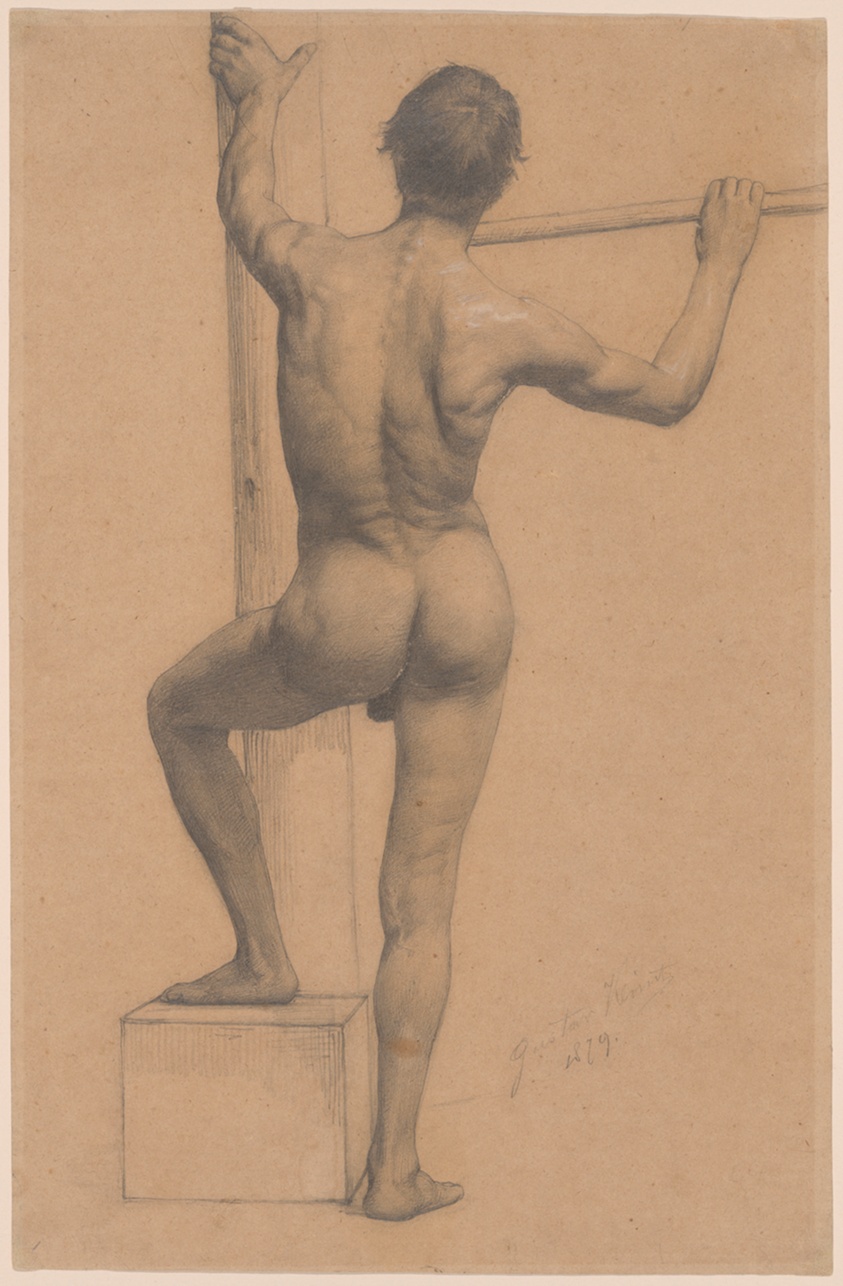
Male Nude with Left Foot on a Pedestal is recorded as graphite and white heightening on brown wove paper. The figure's raised leg and outstretched arms make balance the drawing's central problem. White highlights and graphite let Klimt test weight against the brown paper. In this guide, the study lets a symbolic ambition be traced back to a body observed on paper. This particular object makes material decisions easier to see than a list of stylistic traits does. Follow its source record for the stated medium and dimensions, then return to the image to notice where that process leaves its mark. A movement takes on more than one form because people worked with different tools, surfaces, and intended audiences.
How Symbolism reached viewers
Symbolist works reached viewers through exhibitions, illustrated publications, collectors, and the decorative spaces of private life. Klimt’s public commissions and portraits occupied different settings; De Morgan’s allegories moved through another social and artistic world. A symbol in a printed image can travel easily, while a painted surface may hold effects that reproduction flattens. Asking who first encountered the image and where keeps its dreamlike subject connected to real choices about audience and display.
Questions behind the label
Mystery can be an artistic choice, but it can also become a way to avoid talking about patrons, bodies, gender, and money. A close reading keeps those material circumstances present while allowing the image’s meanings to stay open. Symbols can tempt viewers to look for a secret dictionary in which each object has one fixed meaning. De Morgan’s angel may suggest fear, comfort, or passage, while Klimt’s patterns can both reveal and conceal a sitter. A work’s title may offer a route into it without exhausting the experience. Asking what the image visibly does and what its first viewers could have known is more revealing than assigning a rigid translation to every detail.
Look closely with an actual work
The Angel of Death offers one close-looking example. De Morgan draws a winged, scythe-bearing figure leaning toward a seated woman, using gold against black pastel to make mortality both imposing and intimate. A seated woman reaches toward the draped angel, whose wing and scythe fill the upper space. Gold paint catches against the dark paper and black pastel, giving the meeting both physical weight and an otherworldly quality. The closeness of the two figures resists a single reading of death as either comfort or threat. Place it beside Seated Woman with Hat. Klimt's drawing studies a seated figure through posture, line, and the concealed expression beneath a hat. Klimt brings the figure and her hat into a setting where ornament competes with description. The sitter is present, yet pattern refuses to behave as a quiet background. That interplay helps explain how Klimt could make portraiture both an image of a person and an experiment in decorative form. Their source records give dates, media, and collections that can be checked. Those facts do not decide what either image means, but they keep the comparison tied to actual objects. Notice one visual decision that the two works share and one that belongs to only one artist. The result may support the movement name, complicate it, or do both at once.
What came after Symbolism
Later art inherited Symbolism’s confidence in mood and suggestion. Its legacy is visible when a familiar object carries more than a literal role without becoming a puzzle with one hidden answer. Later reproductions have made Klimt’s gold especially familiar, sometimes turning a complex surface into a decorative shorthand. De Morgan’s reputation has also changed as histories of women artists and British art widened. Those afterlives affect which works are now placed under Symbolism and why. Follow a specific object’s material and source record, then return to the relationships among its figures and signs. The art remains open without becoming vague.