Male Nude in its time
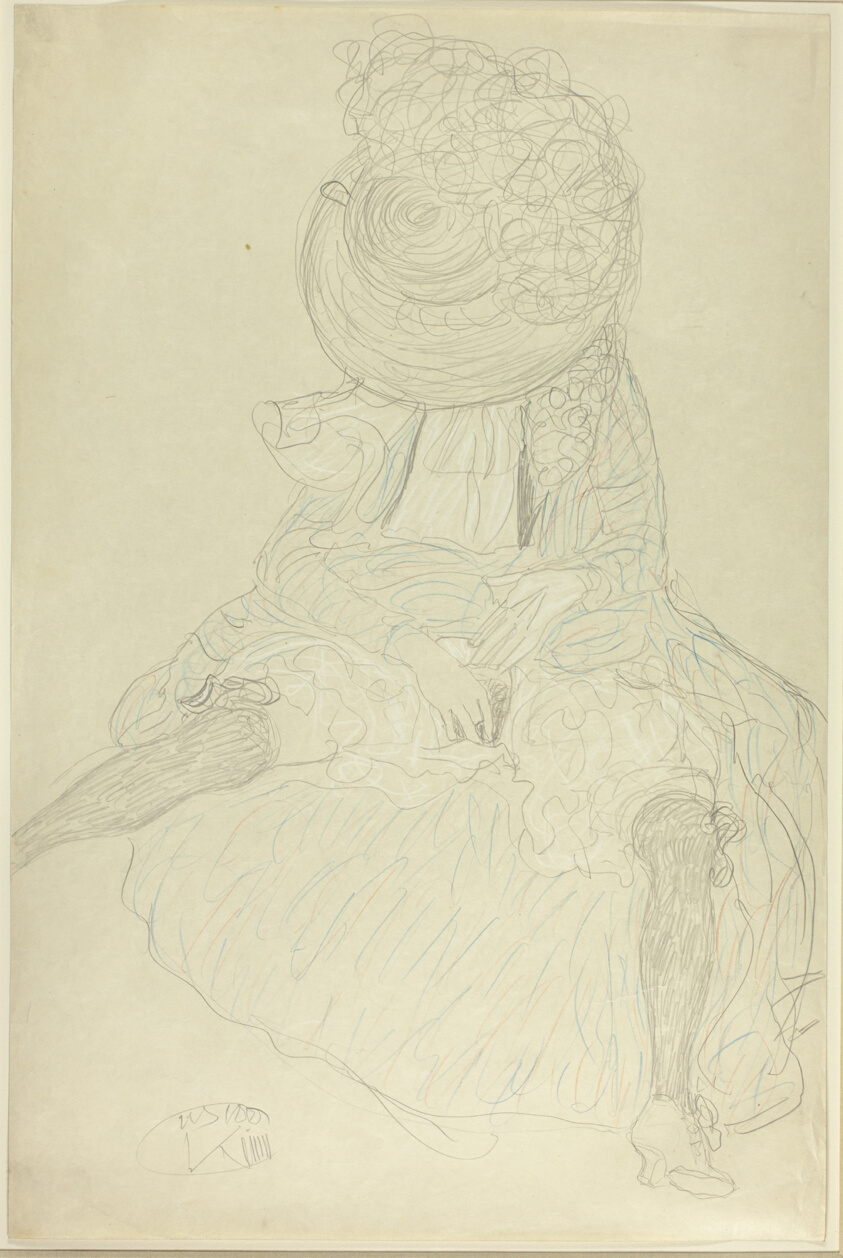
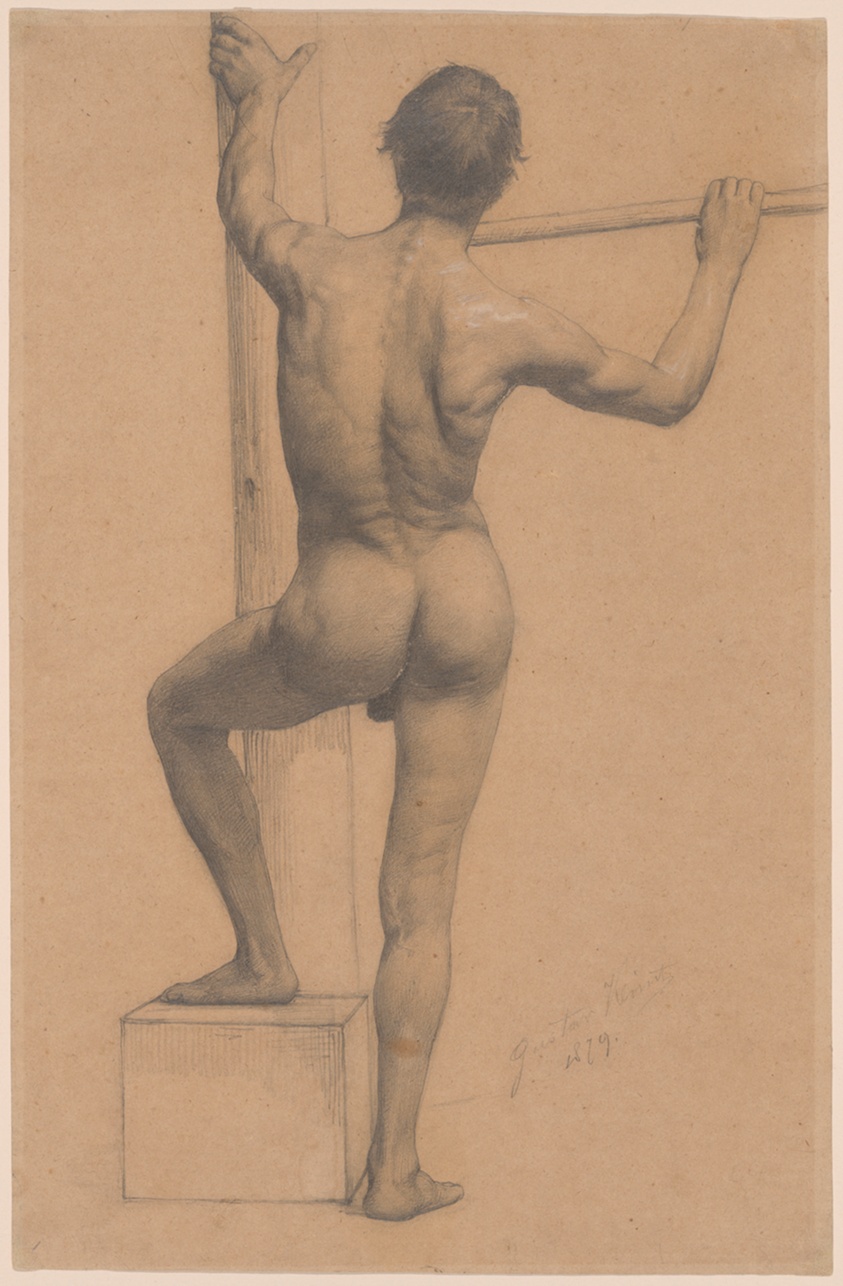
Klimt studies a male body through graphite and erasure, showing the disciplined drawing behind his better-known decorative works. Male Nude is dated January 29, 1880 and is held by Art Institute of Chicago. The source record names it “Male Nude.” The record identifies Male Nude; the image itself invites a slower look at how its parts meet.
The choices in the image
Erasure and changes of graphite pressure remain visible around the standing body. Those traces make revision part of the viewer's experience rather than hiding it behind a polished surface. Pause at the threshold between subject and setting in Male Nude. The two may be closely joined or held apart. That decision tells us something about how the maker wanted this scene to be encountered.
The surface of the work
The collection records Male Nude as various graphite pencils, with erasing and stumping, on cream laid paper. The medium of Male Nude belongs in the story because a drawing, print, and painting offer different routes from a maker’s hand to a viewer. The linked record names this one precisely. In Male Nude, the recorded material is part of the encounter: it affects the scale, marks, and finish that the original object can hold. Look again at the strongest visual accent in Male Nude. The linked record supplies dimensions and materials that help place that detail within the whole work.
Gustav Klimt and this work
The Kiss and the portrait of Adele Bloch-Bauer I show different uses of a glittering surface: one stages an embrace, the other a sitter within a dense field of symbols and design. Graphite pressure and erasure remain visible around the standing figure. Klimt’s revisions are part of the drawing, making this sheet a record of looking and adjustment. What Gustav Klimt chose to make visible in Male Nude is only one part of a longer career, but it is a part worth examining on its own terms. Male Nude benefits from a slower encounter. Its subject, medium, and visible emphasis may seem consistent with other works, or they may reveal a different route. Then follow another work by the artist and see whether a similar concern survives a change of subject. Treating each object as a fresh decision makes room for change, experiment, and the practical conditions under which an artist worked. Male Nude belongs to Gustav Klimt’s longer practice, and the other works in this collection let you test what changed from one subject to another.
The world around Male Nude
His fame is often reduced to gold, but the work also belongs to debates about desire, public decoration, portraiture, and the boundaries between fine and applied art. Male Nude has been seen under different conditions since January 29, 1880. Its first setting shaped its audience; the linked record documents the object as it is known today. Read the documented title and medium for Male Nude beside the image; the record can settle object details while leaving interpretation open.
Image and object record
Art Institute of Chicago identifies Male Nude as a work by Gustav Klimt from January 29, 1880 and records its medium as various graphite pencils, with erasing and stumping, on cream laid paper. The collection credits the object to Gift of Dorothy Braude Edinburg to the Harry B. and Bessie K. Braude Memorial Collection. Follow the linked object record for its catalogue entry and any further notes on its history.