Vienna at a turning point
Klimt moved from decorative commissions toward paintings that blend portraiture, ornament, and symbolism. As a founder of the Vienna Secession, he helped create new exhibition space for artists beyond academic institutions. Gustav Klimt (1862–1918) worked in Austria. Klimt’s early decorative commissions gave way to a central role in the Vienna Secession. The group created new spaces for artists at a time of argument over academic taste. A life is easier to understand when its objects stay close. The linked works let Gustav Klimt’s choices appear in several forms, not only in a familiar story.
Ornament around the figure
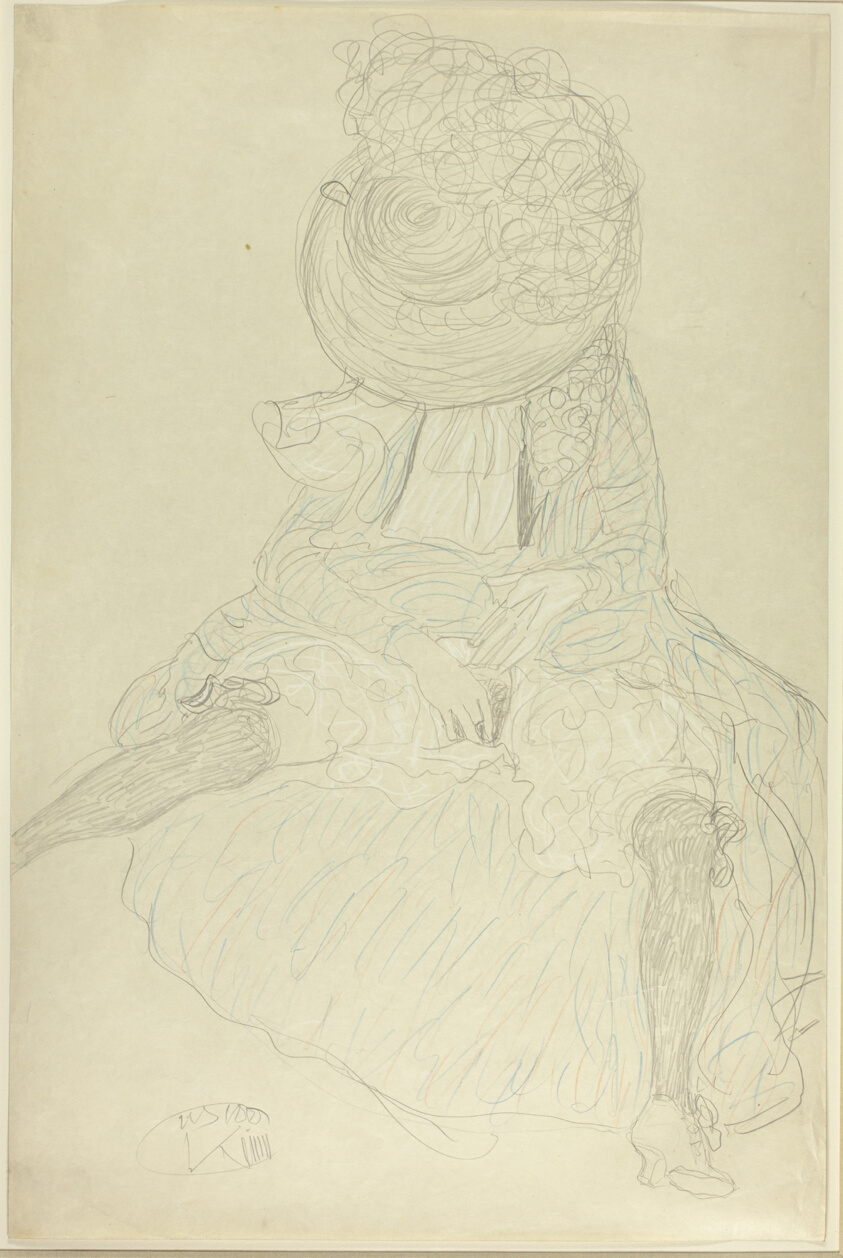
Gold, pattern, and flattened areas can surround a carefully observed face. The friction between a person and ornament makes his portraits more searching than their luxury first suggests. The method is visible in Seated Woman with Hat, but it is worth looking at the other linked objects before calling it a fixed style. Gustav Klimt had room to revise a familiar solution.
Portraits and allegories
The Kiss and the portrait of Adele Bloch-Bauer I show different uses of a glittering surface: one stages an embrace, the other a sitter within a dense field of symbols and design. Look at the projects through the material objects that survive. Seated Woman with Hat records one moment of making, not a complete account of Gustav Klimt’s intention. Its subject and visible form can be set beside the other works on this page. One may ask for close private attention; another may have been made to address a broader audience. Those conditions make the differences meaningful, even when a shared hand or concern remains easy to recognize.
Symbolism and its limits
Gustav Klimt is associated with Symbolism. Symbolist artists often asked an image to suggest more than it plainly described. Dreams, myth, memory, and psychological states could enter a portrait or landscape through color and pattern. Klimt’s work in Vienna joined intimate figures to ornament and made the surface itself part of the meaning. Use the movement as a route into Gustav Klimt’s world, then allow Seated Woman with Hat to complicate the route. The date and medium attach the work to a real moment of making. Its subject and arrangement may answer a shared question in a way no other artist chose. This is how a broad term can serve close looking without replacing it.
A closer look at Seated Woman with Hat
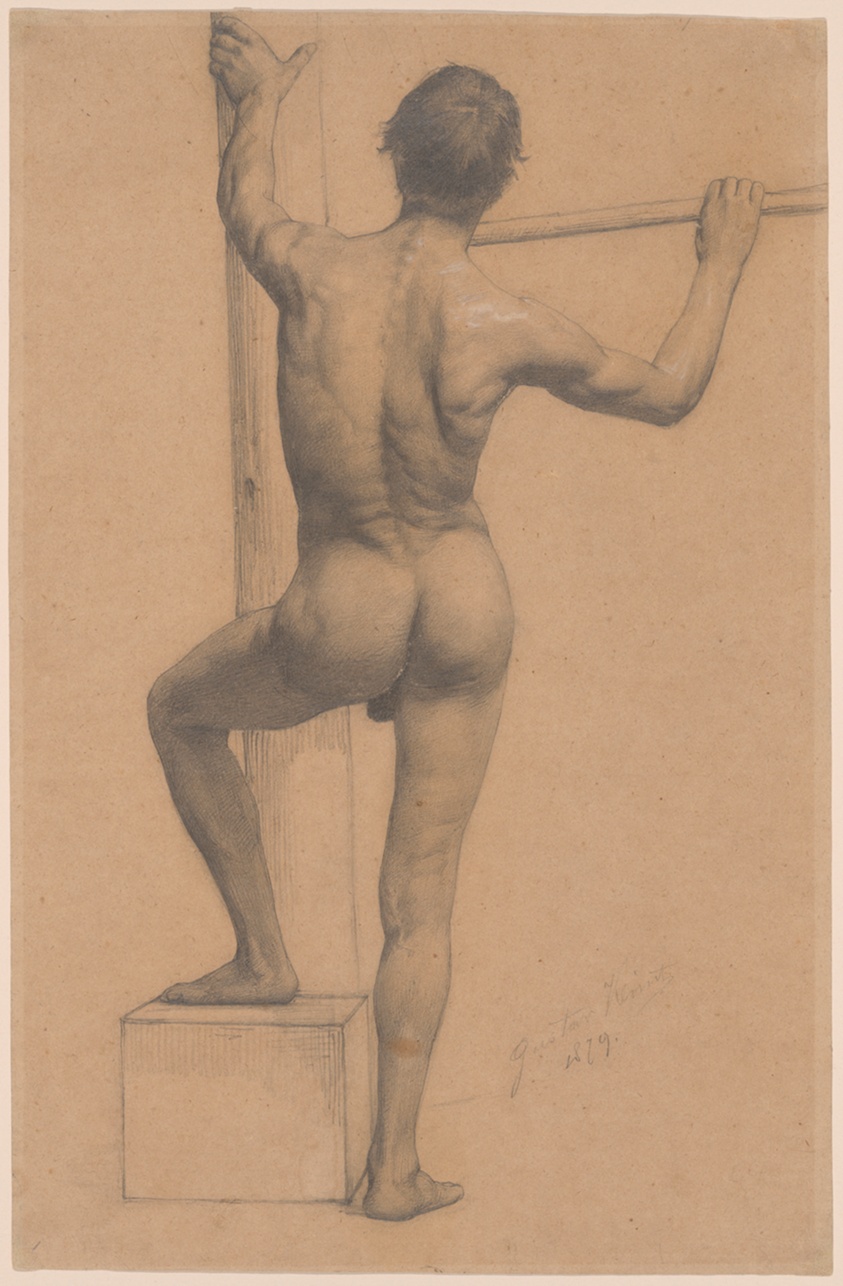
Klimt's drawing studies a seated figure through posture, line, and the concealed expression beneath a hat. Klimt brings the figure and her hat into a setting where ornament competes with description. The sitter is present, yet pattern refuses to behave as a quiet background. That interplay helps explain how Klimt could make portraiture both an image of a person and an experiment in decorative form. Now set it beside Male Nude with Left Foot on a Pedestal. Klimt studies a standing male figure in graphite and white highlights, recording pose and balance before ornament enters the picture. The figure's raised leg and outstretched arms make balance the drawing's central problem. White highlights and graphite let Klimt test weight against the brown paper. Both works are linked below this profile, with their own object records and images. They reward comparison because they show Gustav Klimt making different decisions, sometimes with a different material, even when a familiar concern carries across the two.
Looking past the gold
Gold leaf, flat pattern, and richly worked surfaces make many of his pictures instantly recognizable. Beneath the decoration are complex questions about desire, identity, and the relationship between a person and the designs that surround them. His fame is often reduced to gold, but the work also belongs to debates about desire, public decoration, portraiture, and the boundaries between fine and applied art. A third work, Male Nude, complicates any account built from a single celebrated picture. Klimt studies a male body through graphite and erasure, showing the disciplined drawing behind his better-known decorative works. Erasure and changes of graphite pressure remain visible around the standing body. Those traces make revision part of the viewer's experience rather than hiding it behind a polished surface. Fame draws attention to certain pictures, but this additional object widens the view. Gustav Klimt’s work remains open to new comparisons as collections and records are studied.
Seated Woman with Hat puts a partly hidden face beside economical line. The two male nude studies shift the emphasis toward balance, graphite pressure, and revision. These sheets make the discipline of drawing unusually visible within a career often introduced through gold and ornament. Looking at them alongside a portrait keeps Klimt’s decorative reputation connected to the effort of finding a pose and organizing a body.
Explore Symbolism ↗