
Design leaves the gallery
Art Nouveau carried sinuous lines and organic pattern across posters, architecture, jewelry, furniture, and painting. Its designers wanted art to live in everyday spaces as well as galleries. Mucha’s graphic work and Klimt’s ornament show two distinct expressions of this ambition. The usual period given for Art Nouveau is c. 1890–1910, but dates are guides to overlapping activity rather than firm doors that opened and shut everywhere at once. The term groups artists for the convenience of discussion. It cannot explain a work before we have looked at that work. A useful first move is to ask what problem the name makes visible: a new audience, a disputed subject, a way of organizing space, or a change in what artists thought images could do. Only then can we decide how well a particular painting, print, or design belongs within the account.
The world around the work
Art Nouveau grew across cities and media around 1900, taking different names and forms in different countries. Industrial production, illustrated magazines, department stores, and new urban spaces gave designers opportunities to bring visual art into daily life. Art Nouveau lived in streets and interiors as well as exhibition rooms. Mucha’s posters spoke to passersby who might give them only a glance; Klimt’s decorative portraits invited a different, slower attention. Printed advertisements, books, furniture, and architecture carried curving forms to audiences far beyond painting collectors. Their shared interest in design did not erase the difference between a commercial commission and a unique object made for a particular room.
The curve across different media
Curving lines often borrow from stems, hair, waves, or bodies, yet they also serve practical design. A border can lead the eye to a name on a poster; a stair rail can guide a body through a building. Ornament is doing work. Zodiaque makes these choices visible in a particular object. Its own composition, medium, and subject offer a more useful test of the movement than a checklist of traits. Compare it with another work in this guide and the differences in scale or handling begin to matter as much as the resemblance.
Posters, interiors, and patrons
Mucha’s theatrical posters made repeated printed images part of city experience. Klimt’s paintings and decorative projects show another route, where pattern presses against portrait and figure. Their relationship is suggestive, not evidence of one shared studio method. Among the names readers may encounter are Gustav Klimt, Alphonse Mucha. Such lists help us begin, yet they can imply that artists acted as a single mind. A closer view reveals individual training, friendships, rivalries, access, and ambition. Two works made in the same decade may disagree about what an image owes its viewer. That disagreement is not a problem for the history; it is evidence that the label names a live conversation. Follow one artist into another period and the edges of the category become clearer still.
Artists within Art Nouveau
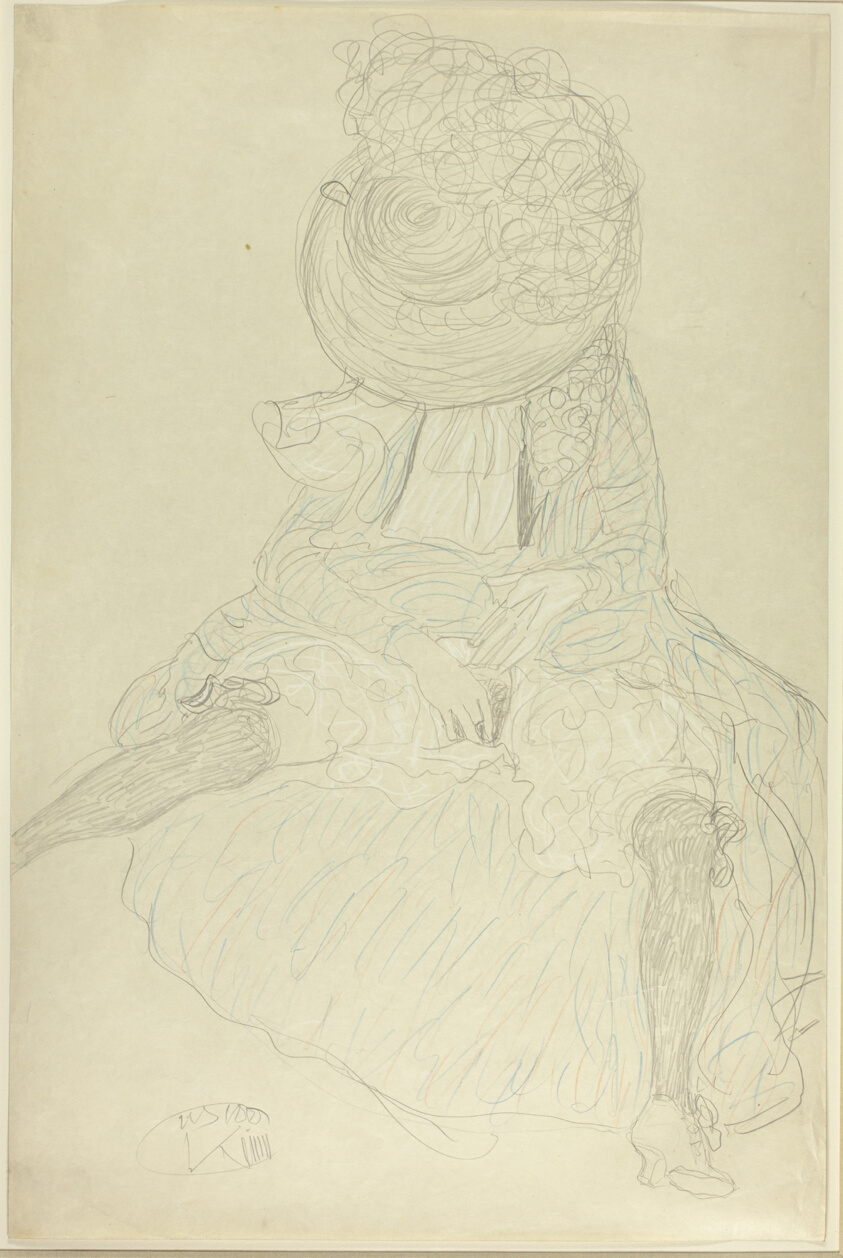
Klimt moved from decorative commissions toward paintings that blend portraiture, ornament, and symbolism. As a founder of the Vienna Secession, he helped create new exhibition space for artists beyond academic institutions. Gold, pattern, and flattened areas can surround a carefully observed face. The friction between a person and ornament makes his portraits more searching than their luxury first suggests. Seated Woman with Hat gives that practice a concrete form. Klimt brings the figure and her hat into a setting where ornament competes with description. The sitter is present, yet pattern refuses to behave as a quiet background. That interplay helps explain how Klimt could make portraiture both an image of a person and an experiment in decorative form. The drawings bring the labor beneath a finished decorative surface into view.
Mucha’s posters made the streets of Paris a place for elegant, theatrical graphic art. His flowing lines, stylized flowers, and halo-like ornaments became signatures of Art Nouveau. Long, flowing contour connects hair, flowers, clothing, lettering, and frame. A poster has to arrest a passerby’s glance while continuing to reward a closer look. Zodiaque gives that practice a concrete form. Mucha arranges the face, hair, ornaments, and zodiac signs within a circular design. The image works as graphic art intended to be reproduced and seen beyond a gallery. Its elegance depends on the balance between an individual figure and a repeatable printed composition.
The movement’s beautiful surfaces were shaped by commerce and class. Objects designed for daily use were not equally affordable, and ideals of femininity often turned women into decorative types. Looking at makers and audiences complicates the celebration of style. The artists shown in this guide offer a starting point, not a complete roll call. The surviving objects and records have their own uneven histories: some were preserved and studied closely, while others disappeared from view. That imbalance is one reason to keep looking beyond a short list of celebrated names.
Art Nouveau in different materials
A poster had to combine text and image at street scale. A piece of jewelry, a chair, and a building asked the same flowing line to work through very different materials and bodily experiences. A lithograph printed in many copies has a different social life from a drawing or canvas. Mucha had to organize figure, lettering, and ornament so a poster could work at a distance and remain rewarding up close. Klimt could use graphite to solve the weight of a body before surrounding figures with pattern in finished work. These examples show why line and surface mattered across the movement. The materials were not interchangeable vehicles for one decorative look.
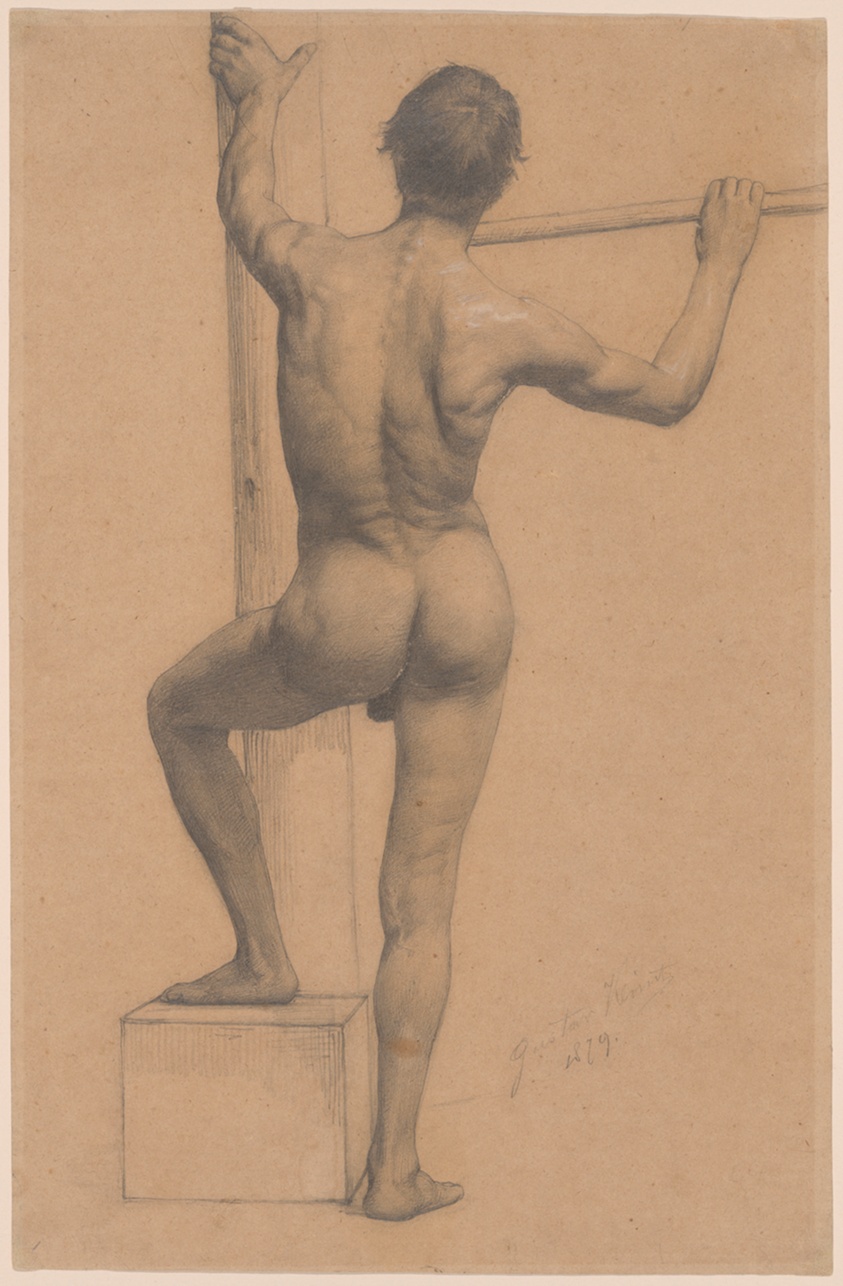
Male Nude with Left Foot on a Pedestal is recorded as graphite and white heightening on brown wove paper. The figure's raised leg and outstretched arms make balance the drawing's central problem. White highlights and graphite let Klimt test weight against the brown paper. Seen here, the drawing makes fluent line a practical achievement rather than a decorative effect alone. This particular object makes material decisions easier to see than a list of stylistic traits does. Follow its source record for the stated medium and dimensions, then return to the image to notice where that process leaves its mark. A movement takes on more than one form because people worked with different tools, surfaces, and intended audiences.
How Art Nouveau reached viewers
Art Nouveau often met its public outside a gallery. A poster had to catch someone walking down a street; an illustrated page might be held in the hand; furniture or architecture surrounded daily life. Mucha’s printed figures and Klimt’s decorative surfaces belong to this wider ambition even though they served different settings. Reproduction was central to the success of some designs, while other works depended on a particular room. The movement’s public was as varied as its materials.
Questions behind the label
The movement’s beautiful surfaces were shaped by commerce and class. Objects designed for daily use were not equally affordable, and ideals of femininity often turned women into decorative types. Looking at makers and audiences complicates the celebration of style. It is easy to reduce Art Nouveau to graceful curves and idealized figures. Ask where an image appeared, who paid for it, and who could see it. A poster’s scale and repeatability belong to its design; a commissioned interior reflects another set of resources and access. The movement’s ambition to bring art into daily life was real, but “daily life” meant different things to a street viewer, a buyer, and a wealthy patron.
Look closely with an actual work
Zodiaque offers one close-looking example. Mucha combines a woman's profile, ornate hair, and a zodiac circle in a design made for reproduction. Mucha arranges the face, hair, ornaments, and zodiac signs within a circular design. The image works as graphic art intended to be reproduced and seen beyond a gallery. Its elegance depends on the balance between an individual figure and a repeatable printed composition. Place it beside Seated Woman with Hat. Klimt's drawing studies a seated figure through posture, line, and the concealed expression beneath a hat. Klimt brings the figure and her hat into a setting where ornament competes with description. The sitter is present, yet pattern refuses to behave as a quiet background. That interplay helps explain how Klimt could make portraiture both an image of a person and an experiment in decorative form. Their source records give dates, media, and collections that can be checked. Those facts do not decide what either image means, but they keep the comparison tied to actual objects. Notice one visual decision that the two works share and one that belongs to only one artist. The result may support the movement name, complicate it, or do both at once.
What came after Art Nouveau
Its attempt to dissolve the boundary between fine and applied art still matters. Contemporary typography, interiors, and illustration repeatedly rediscover the force of a line that can unite image, object, and setting. Art Nouveau has had a long decorative afterlife. Posters are now reproduced on products and Klimt’s patterned paintings circulate far beyond their original settings. That familiarity can flatten a complex exchange among makers, printers, commissioners, and craftspeople. Return to a specific sheet’s printing method or a drawing’s marks to recover the work involved in producing the elegance that later audiences so easily recognize.