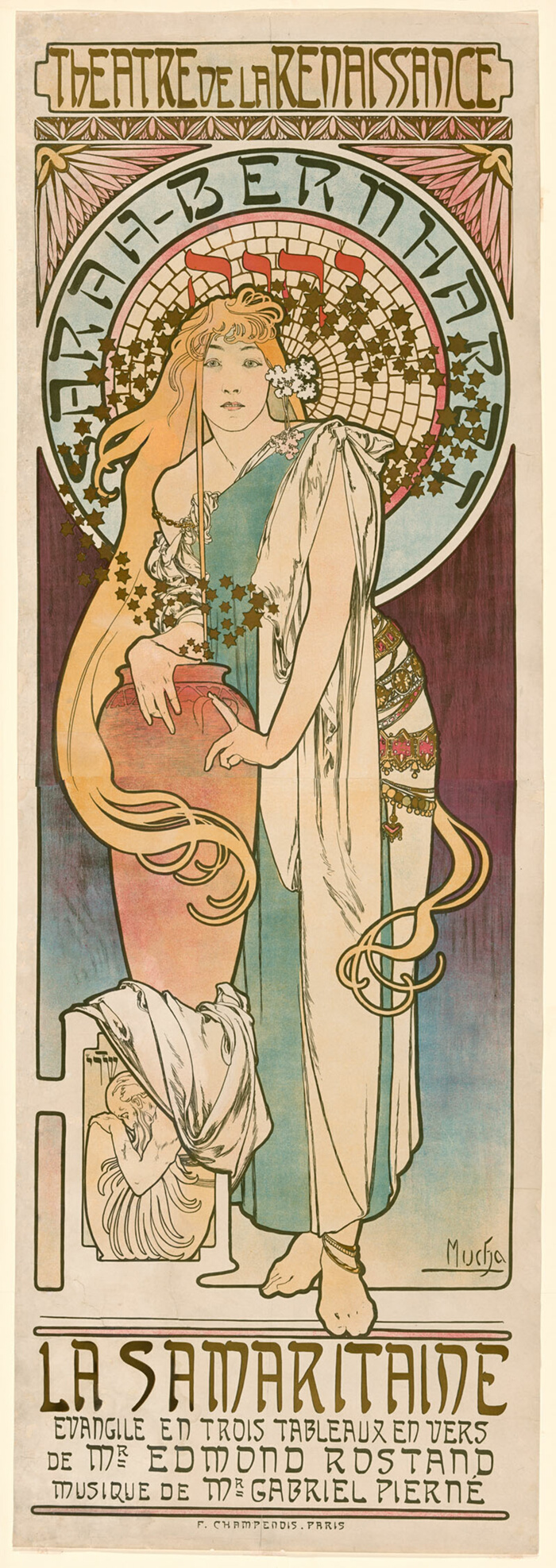
Zodiaque in its time
Mucha combines a woman's profile, ornate hair, and a zodiac circle in a design made for reproduction. Zodiaque is dated 1896–97 and is held by Art Institute of Chicago. The source record names it “Zodiaque ("La Plume").” Knowing where Zodiaque belongs helps; it also leaves open the question of how the maker organized what we see.
The choices in the image
Mucha arranges the face, hair, ornaments, and zodiac signs within a circular design. The image works as graphic art intended to be reproduced and seen beyond a gallery. Its elegance depends on the balance between an individual figure and a repeatable printed composition. Pause at the threshold between subject and setting in Zodiaque. The two may be closely joined or held apart. That decision tells us something about how the maker wanted this scene to be encountered.
Paint, paper, and process
The collection records Zodiaque as color lithograph from multiple stones on tan wove paper. The medium of Zodiaque belongs in the story because a drawing, print, and painting offer different routes from a maker’s hand to a viewer. The linked record names this one precisely. The material description for Zodiaque matters because an image seen at screen size can conceal how it was first made and handled. The image of Zodiaque invites another look at its arrangement; its collection entry gives the material description and further details about the work.
Alphonse Mucha and this work
Mucha’s posters made the streets of Paris a place for elegant, theatrical graphic art. His flowing lines, stylized flowers, and halo-like ornaments became signatures of Art Nouveau. The circular signs frame the profile without explaining it. Mucha balances a face with hair, ornament, and lettering so that the image can be read quickly from afar and slowly in detail. What Alphonse Mucha chose to make visible in Zodiaque is only one part of a longer career, but it is a part worth examining on its own terms. Its surface and arrangement hold decisions made for this image alone. Its subject, medium, and visible emphasis may seem consistent with other works, or they may reveal a different route. Then follow another work by the artist and see whether a similar concern survives a change of subject. Each work had its own audience and task, and each can change the story we tell about the career. For Alphonse Mucha, Zodiaque was one particular solution among many. A second work can show which decisions were revisited and which were left behind.
The world around Zodiaque
A commission for actress Sarah Bernhardt helped make Mucha’s Paris posters widely visible. The street and theater became important exhibition spaces for his graphic language. A viewer first meeting Zodiaque in 1896–97 may have known its subject and setting differently. That distance is one reason to keep both the image and its documented record in view. A record helps place Zodiaque in a collection. The details you notice in the image can then lead to more precise questions.
Image and object record
Art Institute of Chicago identifies Zodiaque as a work by Alphonse Mucha from 1896–97 and records its medium as color lithograph from multiple stones on tan wove paper. The collection credits the object to Mrs. Victor F. Lawson Collection. Follow the linked object record for its catalogue entry and any further notes on its history.