The Seasons in its time
Mucha organizes four seasons as a sequence of figures and decorative motifs, joining commercial printmaking to a coherent visual cycle. The Seasons is dated 1897 and is held by Art Institute of Chicago. The source record names it “The Seasons.” For The Seasons, the collection label is a starting point. The work’s arrangement asks for time beyond the facts of its title.
What appears at first glance
Four linked panels let Mucha vary the figure and foliage while preserving a common design. The work is both a sequence and a single decorative idea. One way into The Seasons is to notice what the image withholds. A face may turn away, an action may be incomplete, or a space may continue past the frame. Such openings allow the viewer to keep looking.
How it was made
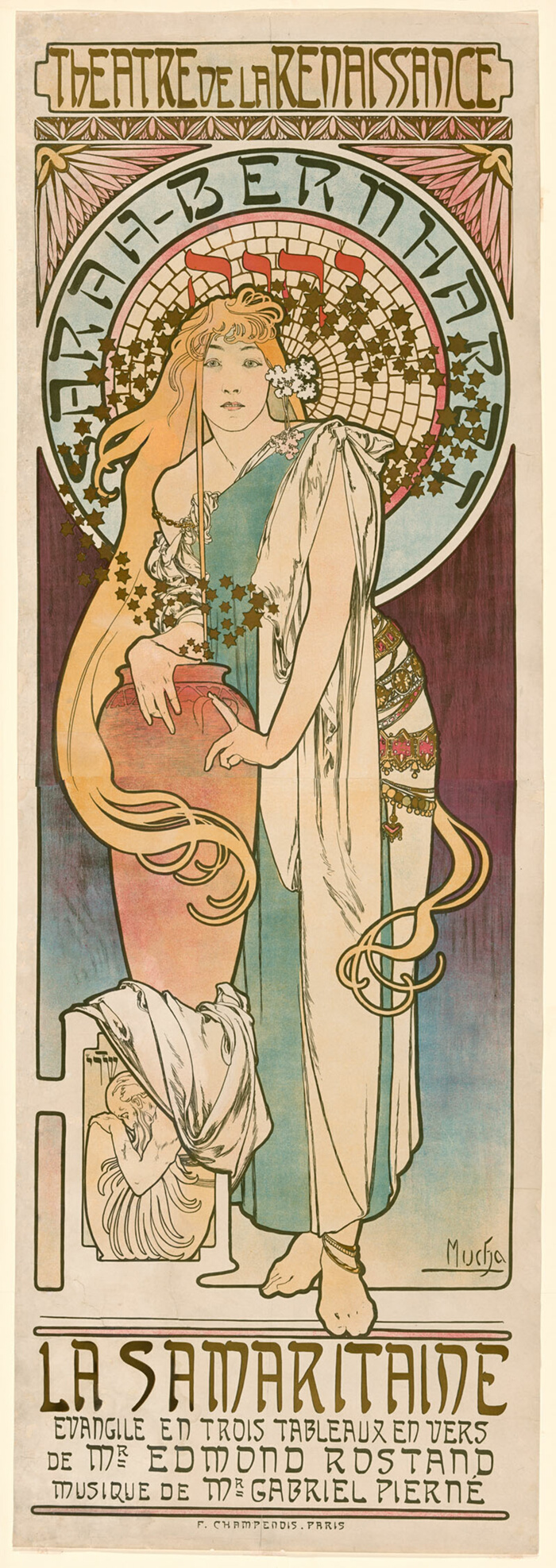
The collection records The Seasons as color lithograph on paper. Long, flowing contour connects hair, flowers, clothing, lettering, and frame. A poster has to arrest a passerby’s glance while continuing to reward a closer look. The medium named for The Seasons tells us about a physical object, including the surface on which its composition first took shape. A closer view of The Seasons may reveal decisions missed at first glance. The collection record helps place those decisions on a particular surface and scale.
Alphonse Mucha and this work
Commercial success gave him a wide audience, but his ambitions extended beyond advertising. He later devoted years to the Slav Epic, a series of monumental canvases about the histories and aspirations of Slavic peoples. Each season has its own figure and foliage, while the group retains a shared design. Mucha makes variation readable at a glance and gives the four panels a reason to be seen together. The public life of The Seasons can make it seem inevitable that Alphonse Mucha would have made it this way. The Seasons is valuable precisely because it gives that broad name a specific subject and set of visual choices. Another image by the same maker may use a related method toward another end, or change the method altogether. Notice which visual problem seems newly urgent here, and which one the artist has approached before. A biography becomes more convincing when actual objects are allowed to disagree with a tidy summary. Set The Seasons beside another work by Alphonse Mucha; the comparison can reveal a recurring interest handled through a different image.
The world around The Seasons
For The Seasons, 1897 is an anchor rather than a full explanation. The linked institution identifies the object, but its first setting and audience require further historical questions. For The Seasons, the date 1897 brings the image back into a specific career. The source record anchors the object while later viewers bring new questions to it. The linked entry for The Seasons gives verifiable object facts. Its composition still asks questions that a catalogue cannot answer by itself.
Image and object record
Art Institute of Chicago identifies The Seasons as a work by Alphonse Mucha from 1897 and records its medium as color lithograph on paper. The collection credits the object to Gift of Michael Searle. Follow the linked object record for its catalogue entry and any further notes on its history.