
La Samaritaine in its time
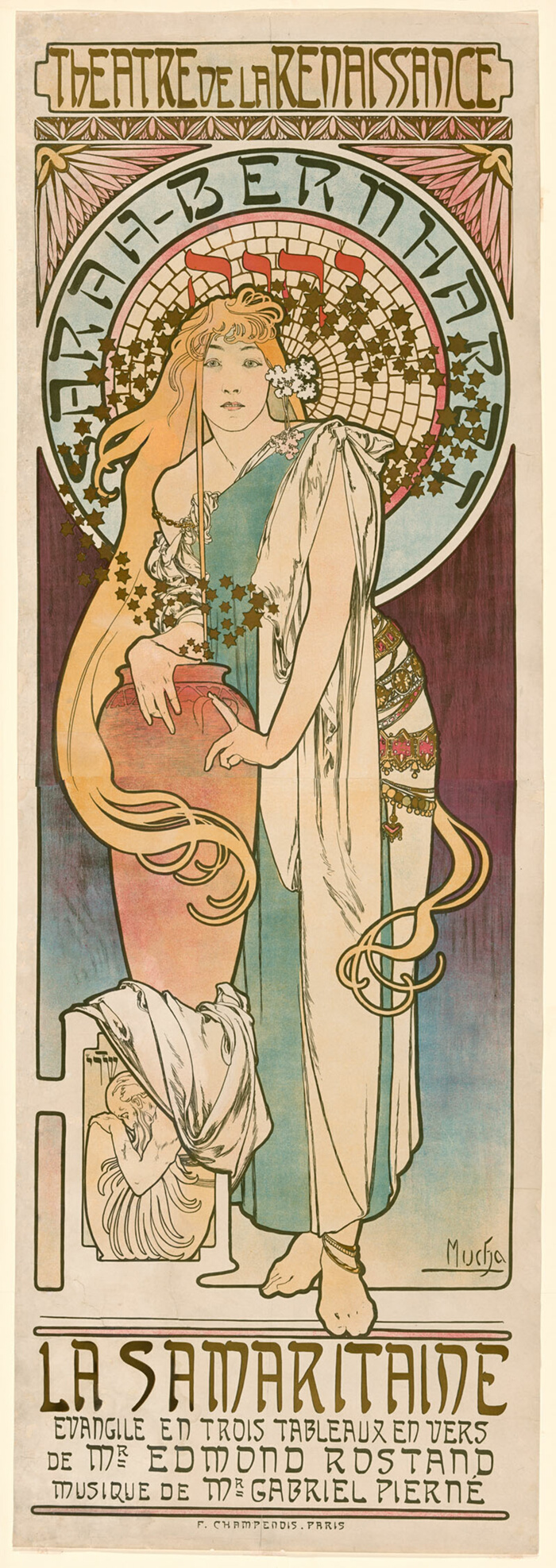
Mucha designs a theatrical poster for La Samaritaine, using a vertical figure and graphic ornament to catch attention at a distance. La Samaritaine is dated 1897 and is held by Art Institute of Chicago. The source record names it “La Samaritaine.” The listed facts locate La Samaritaine in history, while its visible choices give the viewer something to discover directly.
A closer view
The tall format makes a figure, lettering, and ornament work together at poster scale. Mucha has to hold a viewer's eye quickly while rewarding attention to the print's details. Try reading La Samaritaine from its outer edge inward. The first feature you noticed may no longer dominate. Artists can distribute attention so that a picture unfolds gradually rather than all at once.
The material object
The collection records La Samaritaine as color lithograph from multiple stones on paper. The stated materials of La Samaritaine limit what we can reasonably claim about its making. Follow the record for those details, then return to the image to look for their visible effects. Looking at La Samaritaine as an object means asking what the listed materials allow the artist to revise, repeat, or leave visible. Return to the image of La Samaritaine for the arrangement of forms, then use the source link to learn what kind of object carries them.
Alphonse Mucha and this work
Commercial designs brought recognition, yet the later Slav Epic shows a very different ambition: monumental historical paintings concerned with the experiences of Slavic peoples. The long poster asks for attention from a passerby. Mucha brings figure, lettering, and ornament into one vertical movement, then rewards a closer viewer with smaller decorative decisions. In La Samaritaine, the viewer meets a work rather than a shorthand for Alphonse Mucha. The subject may belong to a familiar part of the artist’s reputation, but the manner of showing it remains particular. Its subject, medium, and visible emphasis may seem consistent with other works, or they may reveal a different route. Ask what this subject allowed the artist to test here and which decisions depend on its particular size or material. The pace of La Samaritaine deserves attention; another work by Alphonse Mucha may move the eye quite differently. The choices visible in La Samaritaine make one part of Alphonse Mucha’s career tangible without reducing that career to a single signature look.
The world around La Samaritaine
His career resists a tidy division between advertising and serious art. It also asks how a style circulates when images can be reproduced and seen far beyond a gallery. The world of 1897 was the first setting for La Samaritaine. Its later life in collections and reproductions has changed how easily, and how often, people see it. The image of La Samaritaine and its source record belong together: one offers a close view, the other identifies the object and its material.
Image and object record
Art Institute of Chicago identifies La Samaritaine as a work by Alphonse Mucha from 1897 and records its medium as color lithograph from multiple stones on paper. The collection credits the object to Mrs. Victor F. Lawson Collection. Follow the linked object record for its catalogue entry and any further notes on its history.

