When form becomes the subject
Abstraction reduces, transforms, or releases recognizable subjects so that line, color, shape, and material can lead. It is a broad field, from Kandinsky’s lyrical compositions to Mondrian’s measured grids and later color field painting. Looking closely reveals how distinct these approaches are. The usual period given for Abstraction is 1900s onward, but dates are guides to overlapping activity rather than firm doors that opened and shut everywhere at once. The term groups artists for the convenience of discussion. It cannot explain a work before we have looked at that work. A useful first move is to ask what problem the name makes visible: a new audience, a disputed subject, a way of organizing space, or a change in what artists thought images could do. Only then can we decide how well a particular painting, print, or design belongs within the account.
The world around the work
Abstraction is a broad field, not a single movement born in one place. Some artists moved gradually away from recognizable subjects; others began with pattern, spiritual ideas, design, or the physical behavior of materials. Kandinsky’s energetic forms and Mondrian’s measured divisions of space show that abstraction did not have one visual aim. One picture can feel like a surge of lines and colors; another depends on carefully unequal intervals. Both make the relation among forms central, but neither is best understood as an absence of subject. Their pictures were made amid teaching, exhibitions, writing, and experiments with earlier landscapes. Those histories keep abstraction connected to work rather than a sudden escape from the visible world.
Two very different kinds of rhythm
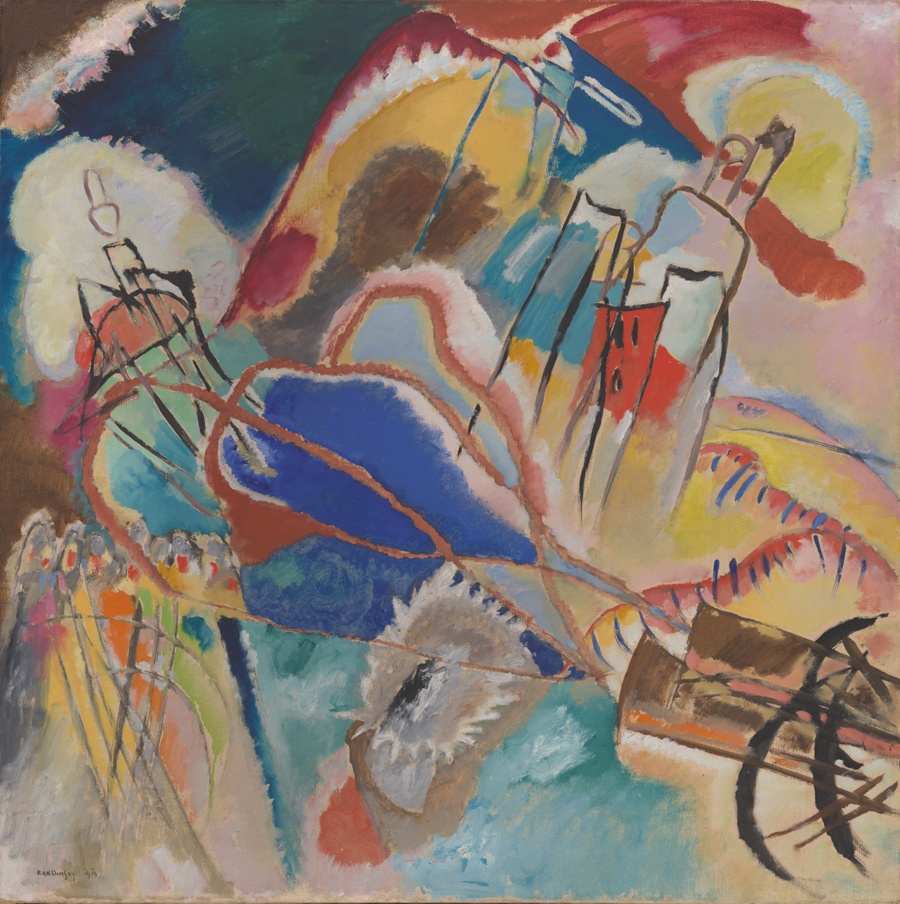
A Kandinsky composition can suggest motion and sound, while a Mondrian grid seeks tension through unequal intervals. Later color field work uses broad areas of hue. These approaches share an interest in form but differ in tempo and purpose. Improvisation No. 30 (Cannons) makes these choices visible in a particular object. Its own composition, medium, and subject offer a more useful test of the movement than a checklist of traits. Compare it with another work in this guide and the differences in scale or handling begin to matter as much as the resemblance.
Beyond a single origin story
Kandinsky linked color and line to expressive possibility. Mondrian sought a measured balance through reduction. Reading them together shows why the absence of a depicted object does not make all abstract images equivalent. Among the names readers may encounter are Wassily Kandinsky, Piet Mondrian. Such lists help us begin, yet they can imply that artists acted as a single mind. A closer view reveals individual training, friendships, rivalries, access, and ambition. Two works made in the same decade may disagree about what an image owes its viewer. That disagreement is not a problem for the history; it is evidence that the label names a live conversation. Follow one artist into another period and the edges of the category become clearer still.
Artists within Abstraction
Kandinsky argued that color and form could communicate without depicting a recognizable subject. His paintings moved from vivid landscapes toward increasingly independent shapes and lines. Lines and colors can suggest pressure, direction, or sound without illustrating a named object. His writing proposes analogies with music, though a painting need not be decoded like a score. Improvisation No. 30 (Cannons) gives that practice a concrete form. Kandinsky scatters energetic lines and color areas across the canvas. The title’s reference to cannons offers one route into the image, but its force comes from the movement of forms across the surface. Recognition and abstraction remain in conversation rather than resolving into one reading.
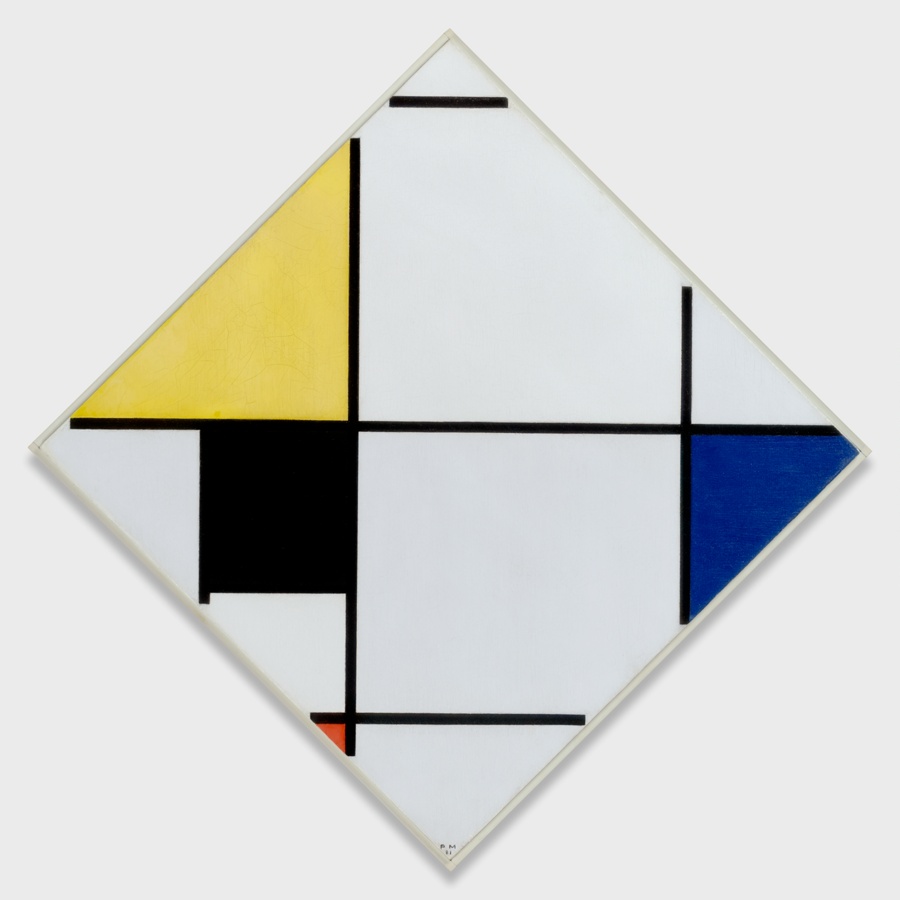
Mondrian simplified trees, dunes, and seascapes before arriving at compositions of black lines and colored rectangles. His mature paintings seek dynamic balance through the fewest possible elements. Black lines and colored rectangles are never simply filled-in geometry. Their unequal widths and intervals make balance feel negotiated rather than mechanically solved. Lozenge Composition with Yellow, Black, Blue, Red, and Gray gives that practice a concrete form. Mondrian turns the square on a point, making the canvas edge part of the picture’s rhythm. Black lines and unequal color areas resist a simple centered balance. The result is measured yet active: each interval changes the weight of the spaces around it.
Claims that abstraction is universal can ignore the specific cultures, materials, and institutions through which it developed. Viewers still bring learned habits to color and geometry, and artists make choices within those histories. The artists shown in this guide offer a starting point, not a complete roll call. The surviving objects and records have their own uneven histories: some were preserved and studied closely, while others disappeared from view. That imbalance is one reason to keep looking beyond a short list of celebrated names.
Abstraction in different materials
Canvas, print, textile, wall painting, and later digital media give line and color very different physical scales. A motif that works on paper may produce another experience across a room. Oil paint carried very different decisions for these artists. Kandinsky’s arcs and clusters ask the eye to travel in several directions; Mondrian’s lines turn the edge of the canvas into a participant in the balance. The size and surface of a particular work matter: a small digital view can make a rhythm seem simpler than it feels before the object. Compare an early landscape by each artist with a later work. The changes become visible as choices made over time, not a leap from representation to an empty geometry.
Landscape with Two Poplars is recorded as oil on canvas. Two poplars stand among strong bands of color and contour. Kandinsky keeps a visible landscape while pushing it toward a less literal arrangement. This particular object makes material decisions easier to see than a list of stylistic traits does. Follow its source record for the stated medium and dimensions, then return to the image to notice where that process leaves its mark. A movement takes on more than one form because people worked with different tools, surfaces, and intended audiences.
How Abstraction reached viewers
Abstract art reached viewers through small circles of artists, exhibitions, teaching, manifestos, and reproduction. Kandinsky’s painted improvisations and Mondrian’s measured grids could be discussed under one broad heading while creating very different encounters in a room. The size of a canvas and the relation between its edges and marks matter more than a small printed image can show. Later design culture spread abstract forms widely, sometimes separating them from the particular questions that first gave them force.
Questions behind the label
Claims that abstraction is universal can ignore the specific cultures, materials, and institutions through which it developed. Viewers still bring learned habits to color and geometry, and artists make choices within those histories. The term “abstract” can cover pictures that look nothing alike and emerged from different questions. It may also cause viewers to stop asking about material, place, and audience because no recognizable scene is shown. Look for the work of revision, the exact interval between shapes, and the way color alters a neighboring area. Those are observable decisions. They offer a firmer route into a picture than guessing that every shape stands for a hidden object or feeling.
Look closely with an actual work
Improvisation No. 30 (Cannons) offers one close-looking example. Kandinsky sets colored forms in motion while the title hints at cannons beneath the picture's abstract energy. Kandinsky scatters energetic lines and color areas across the canvas. The title’s reference to cannons offers one route into the image, but its force comes from the movement of forms across the surface. Recognition and abstraction remain in conversation rather than resolving into one reading. Place it beside Lozenge Composition with Yellow, Black, Blue, Red, and Gray. Mondrian balances a tilted square, colored blocks, and black lines with exact but lively asymmetry. Mondrian turns the square on a point, making the canvas edge part of the picture’s rhythm. Black lines and unequal color areas resist a simple centered balance. The result is measured yet active: each interval changes the weight of the spaces around it. Their source records give dates, media, and collections that can be checked. Those facts do not decide what either image means, but they keep the comparison tied to actual objects. Notice one visual decision that the two works share and one that belongs to only one artist. The result may support the movement name, complicate it, or do both at once.
What came after Abstraction
Its legacy extends through architecture, textiles, digital interfaces, and public art. A good first question is not “What is it supposed to be?” but “What relationships is this image making available to me?” Abstract forms later entered graphic design and everyday surroundings, sometimes far from the debates that shaped Kandinsky’s and Mondrian’s work. Reproduction can make a composition feel like a convenient pattern, though its original scale and surface change the encounter. A movement guide should keep these later uses in view without letting them replace the particular ambitions of the painters. Return to one canvas and ask what its marks do in that exact space.