Portraits are never simple records of appearance. Clothing, pose, setting, and light shape how a person is presented. The sitter may collaborate with the artist or resist the image being made.
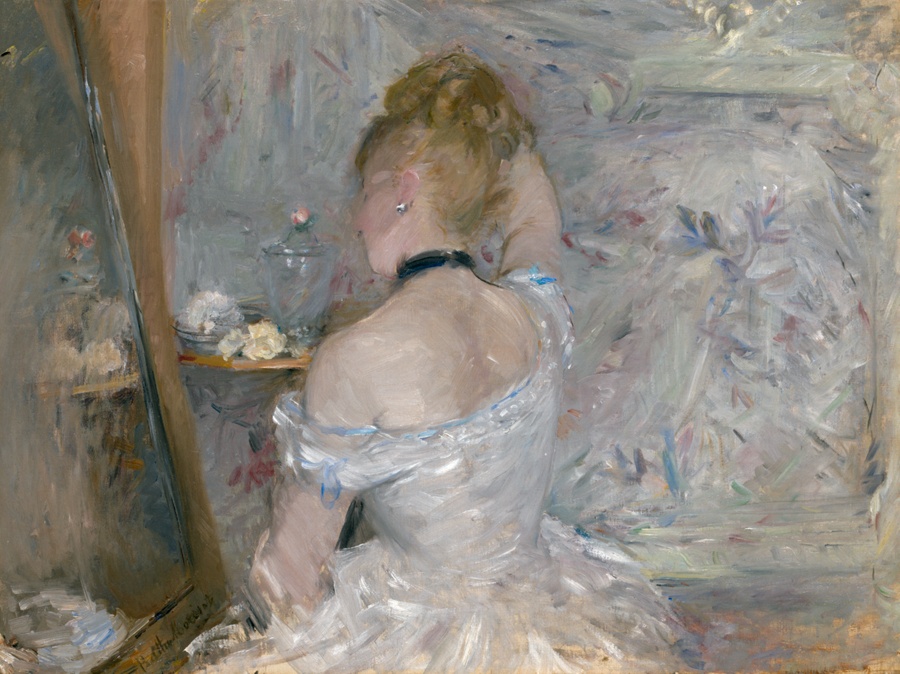
Leonardo gave portraiture a subtle psychological charge through expression and atmosphere. Klimt surrounded sitters with ornament that both reveals and conceals. Morisot used quick marks to make a figure seem present within a fleeting moment.
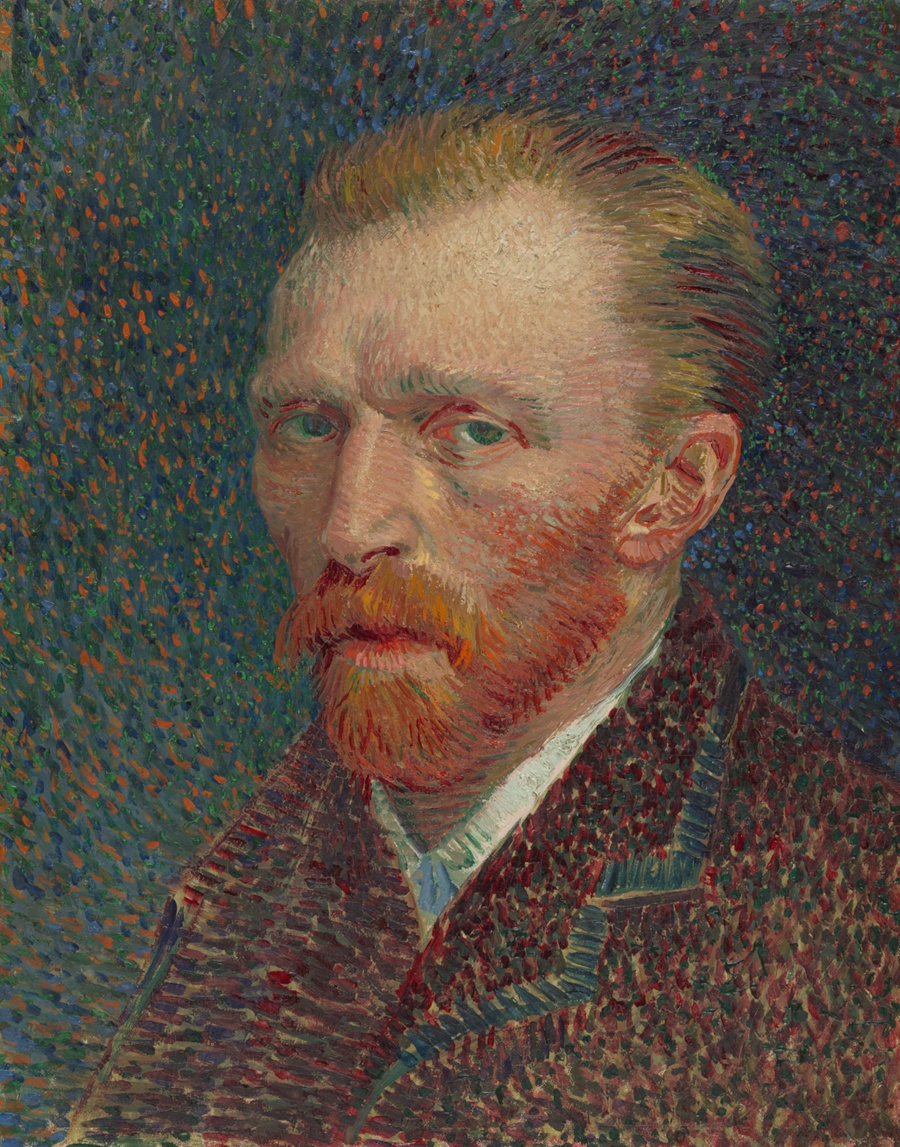
Self-portraits change the balance of power without removing performance. Morisot made a rare self-portrait while testing the limits of a painter’s public identity. Van Gogh studied his own features while testing color and brushwork.
A useful question for any portrait is not only “Who is this?” but “How does this picture ask me to meet them?” The answer often begins in the space between a face and its frame.
A face for someone to see
Portraiture is an agreement, negotiation, or conflict among sitter, maker, patron, and audience. A direct gaze may suggest confidence but can also be an instruction from a commissioner. Clothing and setting may describe status, aspiration, fashion, or a role being played.
A sitter’s name is a beginning, not an explanation. La Gioconda connects a face to Lisa Gherardini and her family, while the painting’s expression remains open to viewers. A self-portrait makes the artist the sitter, but it is still a made image with choices of pose, color, and address. Neither kind of picture gives unfiltered access to a mind. Documents can tell us who someone was; the surface tells us how an encounter with them was staged.
The artist as sitter
A self-portrait does not remove the problem of performance. Morisot places her own presence within visible brushwork; Van Gogh tests expression and color; Rembrandt repeatedly studied aging and light. Even when artist and sitter are the same person, the image is made for someone to see.
Compare Leonardo’s softened contours with the assertive marks of a Van Gogh self-portrait. Each face seems present, yet each asks the viewer to work differently. In one, transitions in light make the expression difficult to fix. In the other, visible brushwork and strong color keep the act of painting in view. Ask what each maker chose to emphasize before you decide what emotion the sitter “must” have felt. The image can be searching without being a confession.
Pose, patron, and audience
Try separating three questions: what can be observed about the person pictured, what the composition asks us to believe, and what external records can actually confirm. The gap between these answers is often where a portrait becomes most interesting.
Portraits have histories beyond the identity of a face. A commissioner could request a likeness for a household, public office, or family memory; an artist making a self-portrait could test both a technique and a public identity. Clothing, format, scale, and setting participate in that purpose. The surviving record may tell us the sitter’s name while leaving the terms of the sitting uncertain. Those limits are worth saying aloud before treating an expression as direct evidence of a private emotion.
Leonardo beside Van Gogh
Leonardo’s portraits and Van Gogh’s self-portraits ask different kinds of questions about a face. Leonardo makes an expression seem to shift as we look; Van Gogh uses visible marks and color to register a direct encounter with himself. Neither image is a transparent window into a person’s private thoughts. Each creates a form of public encounter, and each has acquired meanings through later reproduction.
Look at La Gioconda and a Van Gogh self-portrait. The sitter in one is identified through historical records; in the other artist and subject are the same person. Neither image grants direct access to thought. Follow Leonardo’s soft transitions around a face, then Van Gogh’s visible marks and color. Ask what each process lets the portrait suggest and what it cannot prove. The comparison leaves room for identity without reducing a person to one familiar expression.
Meet the person in the image
The face as a space for image making and identity. Portraits circulate through families, collections, reproductions, and public memory. That journey can make one face seem familiar while telling us little about the person’s daily life. Read the sitter information and the object record, then return to the position of the figure in the image. What is offered to us, and what remains private? The gap is part of the portrait’s life, whether artist and sitter are two people or one. Look too at the hands, clothing, and background: each can be chosen to shape the public meeting long after the sitting ends.