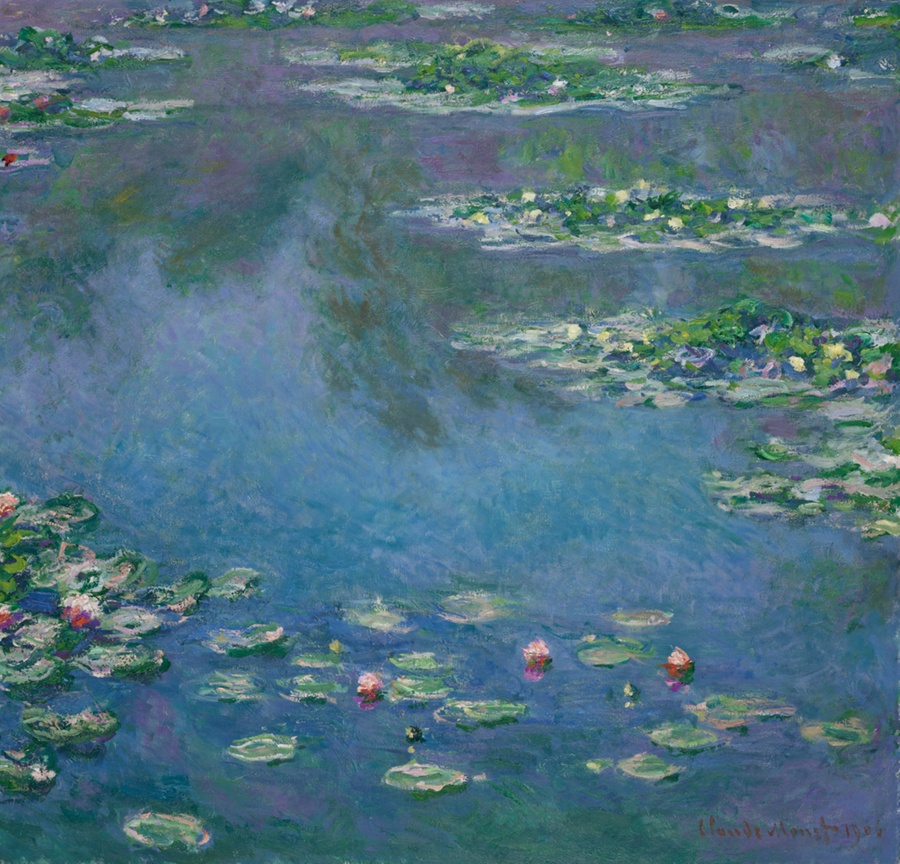
Landscape painting can make nature feel open, intimate, threatening, or owned. Friedrich’s mountains invite inward reflection, Turner’s storms dissolve certainty, and Monet’s pond becomes a sustained experiment in looking. The land in each work is more than scenery.
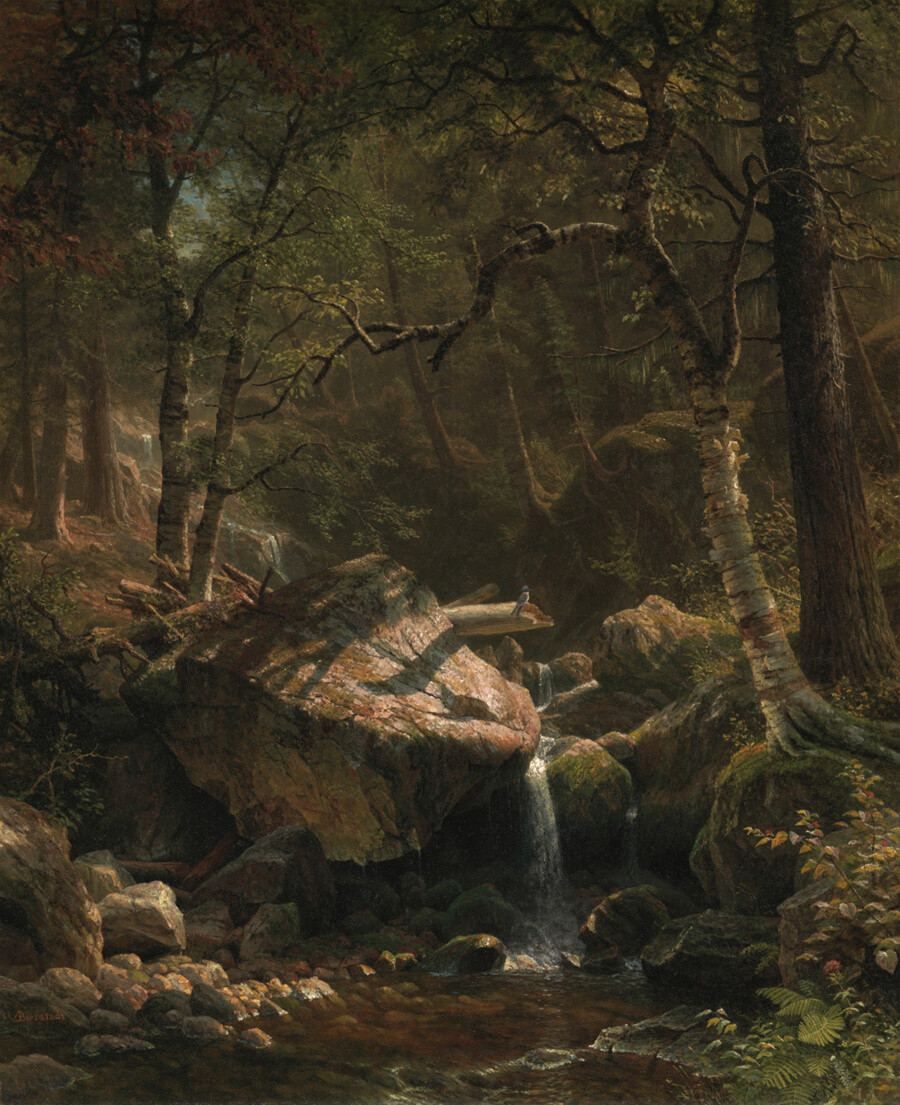
Nineteenth-century American landscapes were often presented as views of untouched wilderness. Many of those places were and are Indigenous homelands. Recognizing that history does not erase the paintings’ visual power; it makes their claims about place more precise.
Natural history images raise their own questions. Audubon’s birds are astonishingly composed, but the processes used to produce them involved collecting and killing specimens. A responsible reading can hold beauty and harm in the same frame.
Art helps us see environments, but it also reflects how people imagined their relationship to them. Asking what lies outside the frame is often the start of the most useful conversation.
Landscape is never empty
Landscape can hide decisions under the appearance of open space. A low horizon makes sky dominant; a foreground tree can frame a distant view; a missing road or settlement can make worked land seem untouched. These are choices about narrative, not just scenery.
A mountain view can seem empty even when the land has a long human history. That appearance may be part of the painting’s composition and part of the assumptions it brought to its first viewers. In natural history prints, a bird’s pose can make identification vivid while hiding the methods by which specimens were obtained. These questions do not cancel the pleasure of color or form. They remind us that every picture of nature has a maker, an audience, and a frame.
Beauty with a history
Bierstadt’s luminous western mountains are impressive constructions, but their image of wilderness must be read alongside Indigenous histories and settler expansion. Audubon’s precise birds likewise connect visual knowledge to the collection of specimens and to troubling parts of his life. Beauty and historical accountability can occupy the same view.
Turner’s Rain, Steam and Speed places industry inside the weather. Bierstadt often gives mountains and valleys a luminous scale that invites the eye to travel deep into the scene. Compare the human marks each lets you see, then ask what the frame excludes. A train is impossible to miss in one work; a history of Indigenous presence may be difficult to see in the other. That difference is a reason to study both the image and the place it claims to show.
Who and what lies outside?
Today environmental change gives older images another context, but we should not force contemporary questions into every original intention. Start by describing what the artist made and who first saw it. Then ask what the same picture might reveal to a viewer who knows more about land, labor, ecology, and ownership.
A landscape record can identify a place without explaining how a picture frames it. Nineteenth-century views of North America may appear to show untouched land while leaving Indigenous inhabitants out of sight. Natural history plates can celebrate living creatures while concealing the collecting methods behind a specimen. Asking about those absences does not cancel the visual achievement of a painting or print. It gives us a more complete account of the people and practices that shaped its view of nature.
Turner beside Bierstadt
Turner’s Rain, Steam and Speed places a train inside unstable weather, while Bierstadt’s mountain spectacles make distance and luminous scale feel immense. Both shape a relation between people and land, but one stages modern movement and the other can picture territory as open and inviting. The comparison makes clear why a landscape should be read as a composition and a historical claim at the same time.
Compare Turner’s Rain, Steam and Speed with a Bierstadt mountain scene. Follow the direction each picture gives your eye. Turner’s train and weather press movement into the view; Bierstadt’s scale and light can draw the eye toward distant land. Then ask what kind of human presence each includes and what it leaves beyond the frame. A concrete comparison of viewpoint, subject, and setting is more revealing than calling both pictures simply “landscape.”
A fuller view of nature
Landscape as beauty, memory, and contested history. Return to a landscape after reading the title and location in its source record. Is the named place recognizable, or has the artist reorganized it into a more dramatic encounter? A river can become a route for the eye, a mountain a symbol of distance, a patch of weather an event in itself. The work’s beauty remains, but it becomes easier to ask whose view of land it offers and whose experience stays outside the picture.