
The Coronation of the Virgin in its time
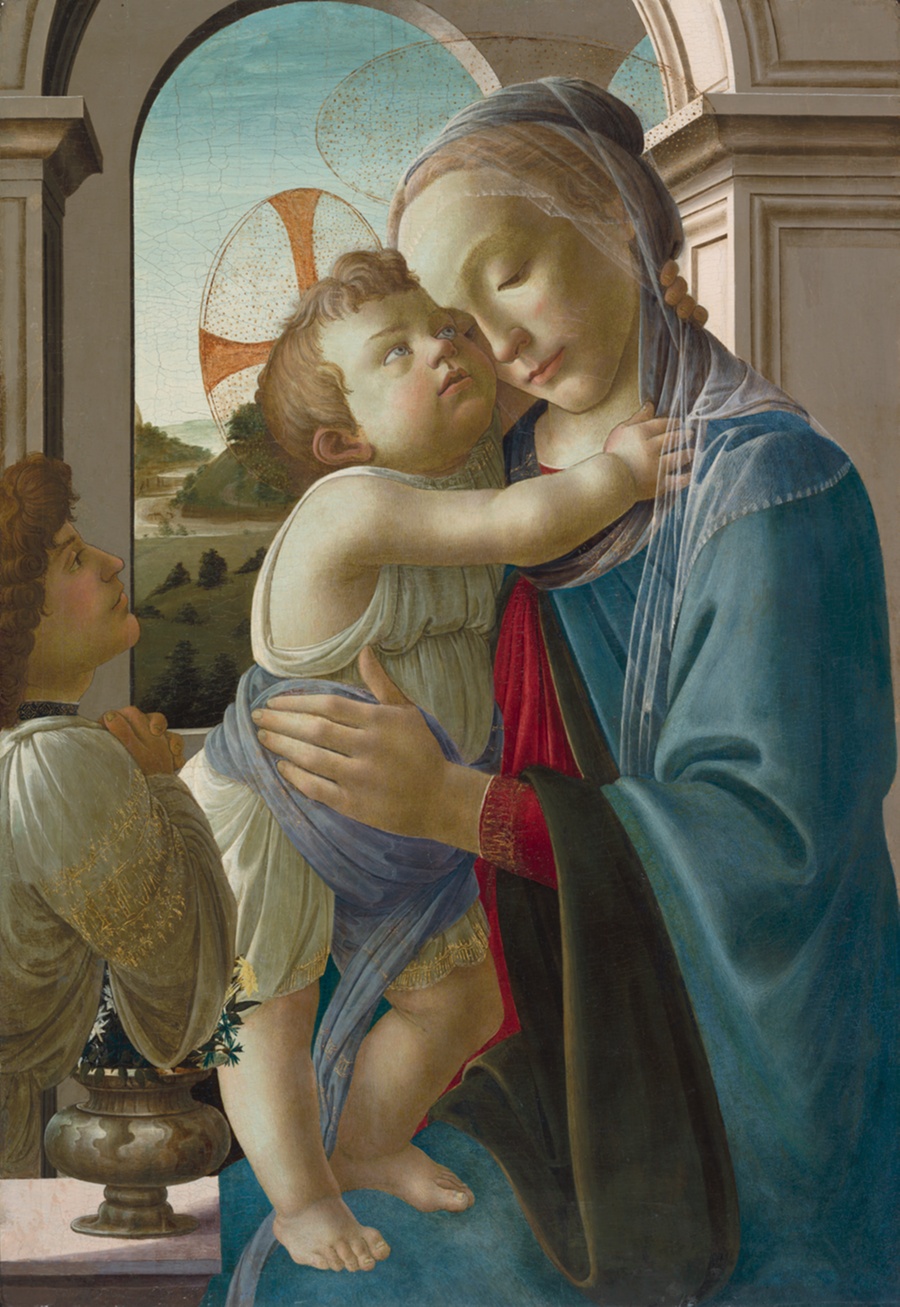
Botticelli stages the Virgin's coronation across an open composition, joining sacred narrative to carefully ordered figures. The Coronation of the Virgin is dated late 15th century and is held by The Metropolitan Museum of Art. The source record names it “The Coronation of the Virgin.” The record identifies The Coronation of the Virgin; the image itself invites a slower look at how its parts meet.
Where the eye settles
Figures gather beneath a broad architectural setting as the Virgin receives her crown. Botticelli orders a crowded sacred subject through scale and gesture. With The Coronation of the Virgin, the point of attention does not stay in one place. Follow a form to its edge and notice what seems to continue beyond it. That small movement can make the whole image feel newly arranged.
How it was made
The collection records The Coronation of the Virgin as tempera on canvas, transferred from wood. The medium recorded for The Coronation of the Virgin gives this image a physical scale and process. A screen can show its design, while the source record preserves what is known of the object itself. In The Coronation of the Virgin, the recorded material is part of the encounter: it affects the scale, marks, and finish that the original object can hold. Look again at the strongest visual accent in The Coronation of the Virgin. The linked record supplies dimensions and materials that help place that detail within the whole work.
Sandro Botticelli and this work
Primavera and The Birth of Venus turn classical material into images with no simple modern translation. Their figures occupy imaginative settings rather than documentary reconstructions of an ancient world. A crowded sacred event is ordered by scale, grouping, and gesture. Botticelli makes the eye travel through the assembled figures toward the act of crowning. The decisions in The Coronation of the Virgin belong to a particular moment in Sandro Botticelli’s career. The picture may look effortless at first; its organization asks how forms, marks, and empty areas were made to work together. Its subject, medium, and visible emphasis may seem consistent with other works, or they may reveal a different route. The choices in this image have a pace of their own. The pace of The Coronation of the Virgin deserves attention; another work by Sandro Botticelli may move the eye quite differently. The Coronation of the Virgin belongs to Sandro Botticelli’s longer practice, and the other works in this collection let you test what changed from one subject to another.
The world around The Coronation of the Virgin
The nineteenth-century revival of his reputation tells us as much about later viewers as about Florence. He is often called ethereal, but the pictures are also precise constructions of movement and surface. The Coronation of the Virgin has been seen under different conditions since late 15th century. Its first setting shaped its audience; the linked record documents the object as it is known today. Read the documented title and medium for The Coronation of the Virgin beside the image; the record can settle object details while leaving interpretation open.
Image and object record
The Metropolitan Museum of Art identifies The Coronation of the Virgin as a work by Sandro Botticelli from late 15th century and records its medium as tempera on canvas, transferred from wood. The collection credits the object to The Jules Bache Collection, 1949. Follow the linked object record for its catalogue entry and any further notes on its history.