Madonna and Child with Two Angels in its time
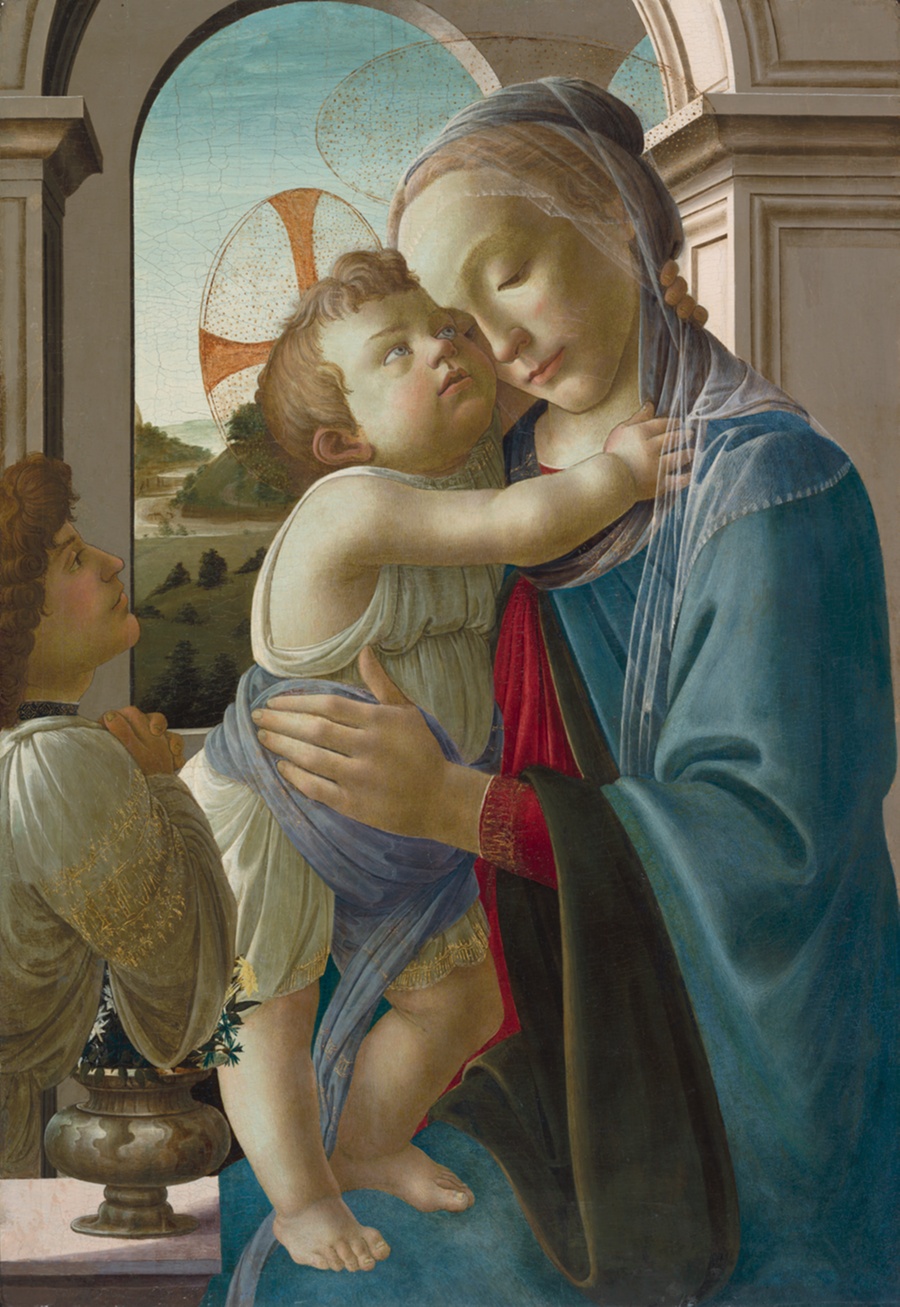
Botticelli gathers the Madonna, child, and two angels into a compact devotional image shaped by contour and gesture. Madonna and Child with Two Angels is dated late 15th century and is held by The Metropolitan Museum of Art. The source record names it “Madonna and Child with Two Angels.” With Madonna and Child with Two Angels, the catalogue provides the facts of the object; the visual relationships carry the experience further.
How the picture holds together
The Madonna and child are brought close to two angels within a rounded format. Botticelli joins tenderness to a deliberate rhythm of heads and hands. The arrangement in Madonna and Child with Two Angels is purposeful even where it feels informal. Compare where the strongest marks gather with the quieter ground around them. That relationship gives the subject its visual weight.
The surface of the work
The collection records Madonna and Child with Two Angels as tempera on wood. Line does unusually heavy work in his paintings. Hair, hands, drapery, and the borders of figures establish a graceful rhythm even where convincing depth is less important than poetic clarity. The listed materials give Madonna and Child with Two Angels a physical history beyond its familiar digital image, including a support, surface, and scale. Look between the image of Madonna and Child with Two Angels and its object record. Each answers different questions about appearance, material, and scale.
Sandro Botticelli and this work
The Birth of Venus and Primavera draw on classical stories, but their power lies in the tension between ideal beauty and earthly feeling. His reputation faded after his death and revived in the nineteenth century, when artists and writers responded to the dreamlike quality of his work. Heads and hands make a close rhythm around the central child. Botticelli gives a familiar devotional subject a particular tenderness through the arrangement of bodies. For Sandro Botticelli, making Madonna and Child with Two Angels meant choosing among possible viewpoints, marks, and degrees of finish. Even when two objects share a subject, they need not share the same emphasis. Another image by the same maker may use a related method toward another end, or change the method altogether. The present work has its own conditions of making, documented in the record linked beside it. A biography becomes more convincing when actual objects are allowed to disagree with a tidy summary. No single image can contain Sandro Botticelli’s career. Madonna and Child with Two Angels is a vivid place to begin, with other works nearby to complicate the view.
The world around Madonna and Child with Two Angels
The source places Madonna and Child with Two Angels in late 15th century. Compare that historical point with the way the work is presented now; its meaning can shift as settings and viewers change. Madonna and Child with Two Angels carries a date, late 15th century, but it has also had a later life. Each collection, display, or reproduction offers another meeting with the same historical object. The linked source keeps Madonna and Child with Two Angels tied to a particular object while you continue exploring what its image makes visible.
Image and object record
The Metropolitan Museum of Art identifies Madonna and Child with Two Angels as a work by Sandro Botticelli from late 15th century and records its medium as tempera on wood. The collection credits the object to H. O. Havemeyer Collection, Bequest of Mrs. H. O. Havemeyer, 1929. Follow the linked object record for its catalogue entry and any further notes on its history.