Study of a Young Woman in its time
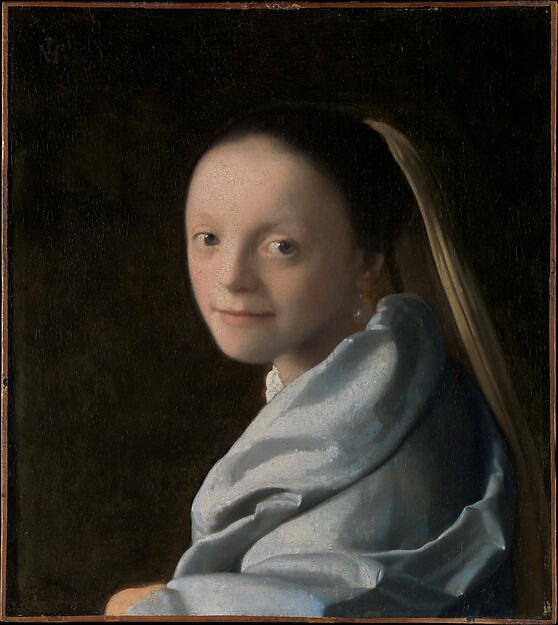
Vermeer makes a young woman's face the center of a study in light, expression, and quiet attention. Study of a Young Woman is dated ca. 1665–67 and is held by The Metropolitan Museum of Art. The source record names it “Study of a Young Woman.” The listed facts locate Study of a Young Woman in history, while its visible choices give the viewer something to discover directly.
The choices in the image
The young woman's face is caught in soft light against a dark setting. Vermeer withholds a full narrative and lets expression and illumination lead the encounter. The strength of Study of a Young Woman is partly in what it asks us to connect. A gesture, shape, or patch of color can answer another elsewhere in the image. Trace one such connection before deciding what the scene means.
What the medium can tell us
The collection records Study of a Young Woman as oil on canvas. Window light, carefully placed objects, and restrained geometry let apparently quiet scenes unfold slowly. A wall, a table, or a map can be as active in the composition as a person. Looking at Study of a Young Woman as an object means asking what the listed materials allow the artist to revise, repeat, or leave visible. Return to the image of Study of a Young Woman for the arrangement of forms, then use the source link to learn what kind of object carries them.
Johannes Vermeer and this work
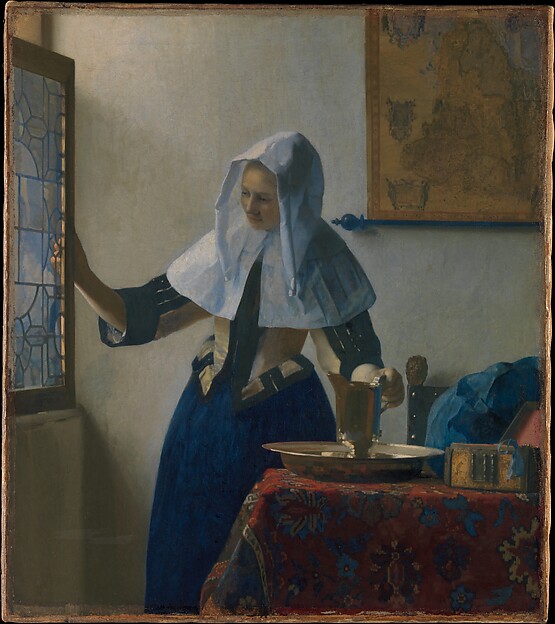
He worked in Delft and was respected during his life, though his name later slipped from prominence. Rediscovered in the nineteenth century, he is now admired for the balance of structure and intimacy in works such as Girl with a Pearl Earring and The Milkmaid. The dark setting concentrates attention on the turning face. Vermeer lets illumination lead the meeting while leaving the young woman’s fuller story beyond the image. Looking at Study of a Young Woman within Johannes Vermeer’s larger body of work can be useful, but the relationship runs in both directions. For Johannes Vermeer, a visual effect was never an abstract signature floating free of materials and purpose. Its subject, medium, and visible emphasis may seem consistent with other works, or they may reveal a different route. Then follow another work by the artist and see whether a similar concern survives a change of subject. An artist’s story gains detail from works like Study of a Young Woman rather than supplying a ready explanation for them. The choices visible in Study of a Young Woman make one part of Johannes Vermeer’s career tangible without reducing that career to a single signature look.
The world around Study of a Young Woman
Made in ca. 1665–67, Study of a Young Woman has passed into a later world of collections and reproductions. Reading its record alongside the picture helps hold those different encounters together. The world of ca. 1665–67 was the first setting for Study of a Young Woman. Its later life in collections and reproductions has changed how easily, and how often, people see it. The image of Study of a Young Woman and its source record belong together: one offers a close view, the other identifies the object and its material.
Image and object record
The Metropolitan Museum of Art identifies Study of a Young Woman as a work by Johannes Vermeer from ca. 1665–67 and records its medium as oil on canvas. The collection credits the object to Gift of Mr. and Mrs. Charles Wrightsman, in memory of Theodore Rousseau Jr., 1979. Follow the linked object record for its catalogue entry and any further notes on its history.