Allegory of the Catholic Faith in its time
Vermeer fills an interior with symbolic objects and a central figure, turning religious allegory into a precisely arranged room. Allegory of the Catholic Faith is dated ca. 1670–72 and is held by The Metropolitan Museum of Art. The source record names it “Allegory of the Catholic Faith.” A title and date can orient us to Allegory of the Catholic Faith, but neither replaces the experience of following its forms across the image.
What appears at first glance
Symbolic objects crowd the room around a central figure. Vermeer uses the careful structure of an interior to make an allegory visible without giving it a single simple reading. In Allegory of the Catholic Faith, a minor detail can change the balance of the larger view. Let your eye move from its busiest place toward a quieter passage, then return. The route is part of the work’s design.
Paint, paper, and process
The collection records Allegory of the Catholic Faith as oil on canvas. What appears in Allegory of the Catholic Faith began on a specific support. Its material description and dimensions offer clues about the artist’s process and the work’s intended scale. For Allegory of the Catholic Faith, the collection’s medium label is a clue to the work of the hand and to the surface that first carried the image. On a screen, Allegory of the Catholic Faith has a convenient size. Its actual dimensions and support belong to the source record linked beside the work.
Johannes Vermeer and this work
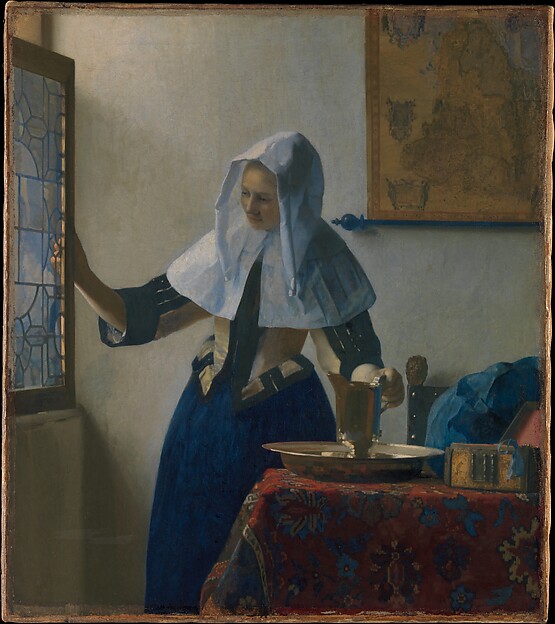
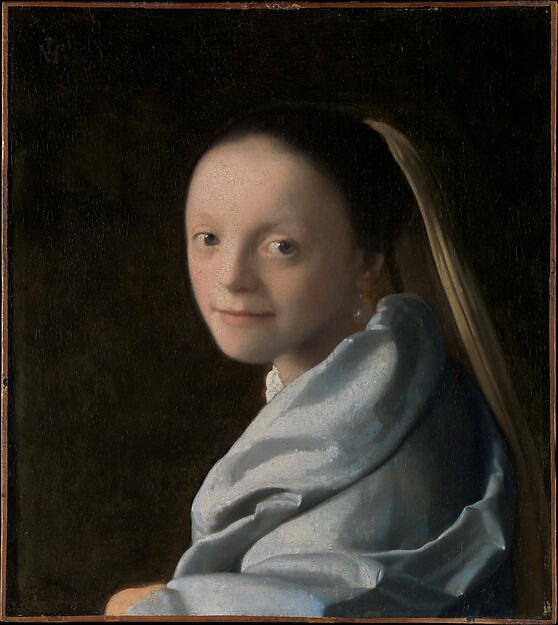
The Milkmaid and Girl with a Pearl Earring invite different forms of attention: one concentrates on work and material, the other on a turning face whose identity is uncertain. Objects gather around the figure with meanings that call for reading, but they also occupy a carefully measured room. Vermeer lets allegory and domestic space remain visible at once. The source identifies Allegory of the Catholic Faith as one work in a changing practice. Its surface and arrangement hold decisions made for this image alone. Another image by the same maker may use a related method toward another end, or change the method altogether. Notice which visual problem seems newly urgent here, and which one the artist has approached before. Its differences from nearby works are worth noticing; they restore a little of the uncertainty and invention within the practice. Seen with Johannes Vermeer’s other works, Allegory of the Catholic Faith shows how one maker could return to a concern while changing material or scale.
The world around Allegory of the Catholic Faith
Rediscovery altered his status long after his death. The modern image of a solitary genius should be balanced against the household, marketplace, and visual culture of seventeenth-century Delft. Allegory of the Catholic Faith began as an object in ca. 1670–72, made for viewers with their own habits and expectations. Today its collection record offers a route back to that material history. For Allegory of the Catholic Faith, use the collection link to check date and medium before returning to the visual choices made on the surface.
Image and object record
The Metropolitan Museum of Art identifies Allegory of the Catholic Faith as a work by Johannes Vermeer from ca. 1670–72 and records its medium as oil on canvas. The collection credits the object to The Friedsam Collection, Bequest of Michael Friedsam, 1931. Follow the linked object record for its catalogue entry and any further notes on its history.