The Love Potion in its time
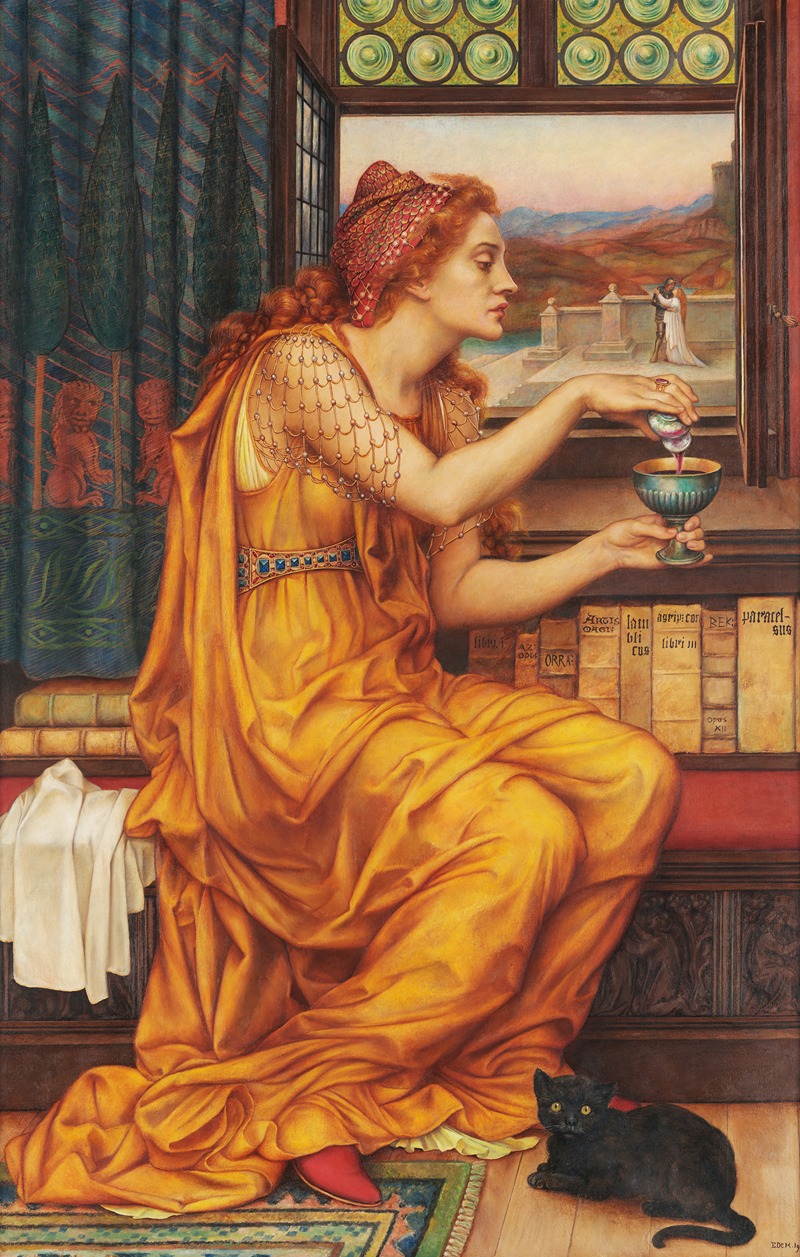
De Morgan places a woman with a potion among rich color and symbolic objects, turning an interior into a scene of desire and uncertainty. The Love Potion is dated 1903 and is held by De Morgan Collection. The source record names it “The Love Potion.” Knowing where The Love Potion belongs helps; it also leaves open the question of how the maker organized what we see.
Where the eye settles
The seated figure works with a vessel as color and objects fill the room around her. De Morgan makes the potion part of a larger question about desire, agency, and transformation. With The Love Potion, the point of attention does not stay in one place. Follow a form to its edge and notice what seems to continue beyond it. That small movement can make the whole image feel newly arranged.
What the medium can tell us
The collection records The Love Potion as oil on canvas. The medium recorded for The Love Potion gives this image a physical scale and process. A screen can show its design, while the source record preserves what is known of the object itself. The material description for The Love Potion matters because an image seen at screen size can conceal how it was first made and handled. The image of The Love Potion invites another look at its arrangement; its collection entry gives the material description and further details about the work.
Evelyn De Morgan and this work
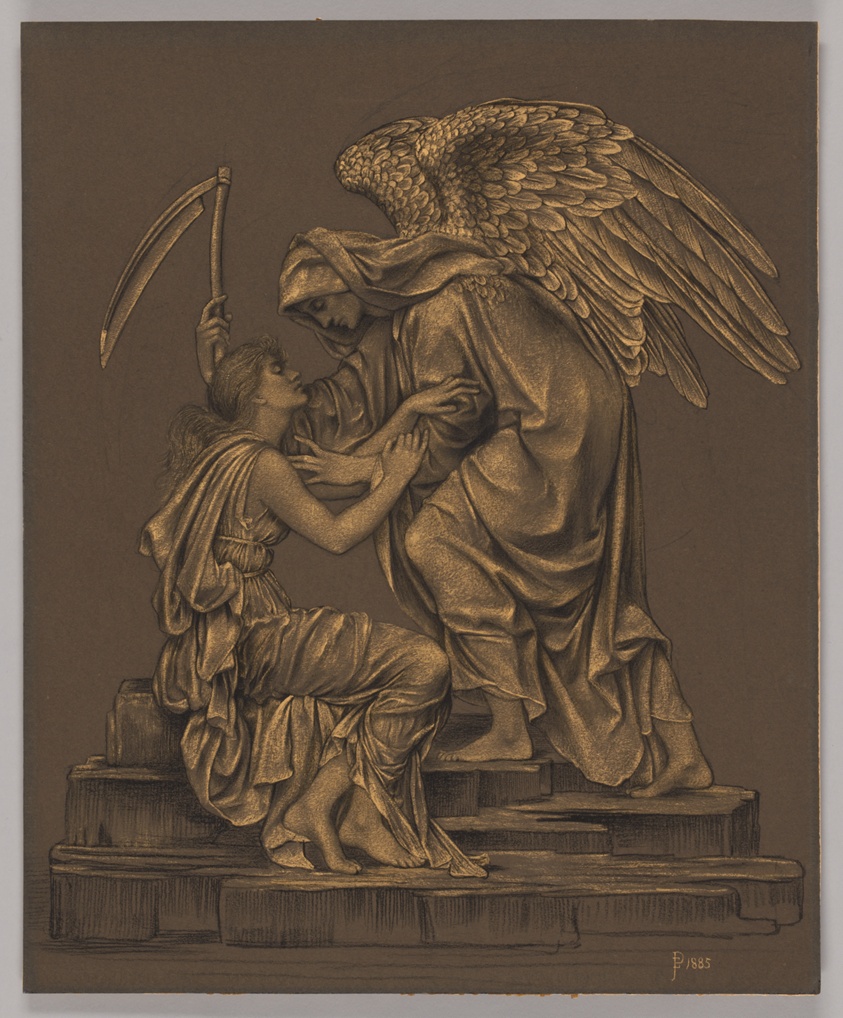
The Angel of Death is a drawing with gold paint rather than a finished oil painting. Its seated woman, winged figure, and scythe make a meeting with mortality visible through touch and posture. The potion is a small object within a room full of color and signs. De Morgan uses the seated figure to keep questions of desire and agency present within the allegory. The decisions in The Love Potion belong to a particular moment in Evelyn De Morgan’s career. A subject can be revisited without producing the same picture twice: scale, material, and audience all alter the problem. Its subject, medium, and visible emphasis may seem consistent with other works, or they may reveal a different route. Notice which visual problem seems newly urgent here, and which one the artist has approached before. Treating each object as a fresh decision makes room for change, experiment, and the practical conditions under which an artist worked. For Evelyn De Morgan, The Love Potion was one particular solution among many. A second work can show which decisions were revisited and which were left behind.
The world around The Love Potion
Her work is now receiving fuller attention within histories that once treated the later Pre-Raphaelite world mainly through male artists. The recovery changes the questions asked of the period. A viewer first meeting The Love Potion in 1903 may have known its subject and setting differently. That distance is one reason to keep both the image and its documented record in view. A record helps place The Love Potion in a collection. The details you notice in the image can then lead to more precise questions.
Image and object record
De Morgan Collection identifies The Love Potion as a work by Evelyn De Morgan from 1903 and records its medium as oil on canvas. The collection credits the object to De Morgan Foundation, P_EDM_0035. Follow the linked object record for its catalogue entry and any further notes on its history.