The Girl by the Window in its time
Munch places a solitary girl near a window, using an interior to explore distance between a figure and the outside world. The Girl by the Window is dated 1893 and is held by Art Institute of Chicago. The source record names it “The Girl by the Window.” For The Girl by the Window, the collection label is a starting point. The work’s arrangement asks for time beyond the facts of its title.
How the picture holds together
The girl stands near a window but seems held within a dim room. Munch makes the boundary between interior and outside world emotionally charged. The subject named in The Girl by the Window is only one part of the encounter. Edges, intervals, and changes of emphasis control how much time the viewer spends in each area of the work.
Paint, paper, and process
The collection records The Girl by the Window as oil on canvas. A wavering line or compressed space can make a setting feel unsettled. In printmaking, Munch used the resistance of a plate, stone, or block as part of the image rather than merely transferring a painted idea. The medium named for The Girl by the Window tells us about a physical object, including the surface on which its composition first took shape. A closer view of The Girl by the Window may reveal decisions missed at first glance. The collection record helps place those decisions on a particular surface and scale.
Edvard Munch and this work
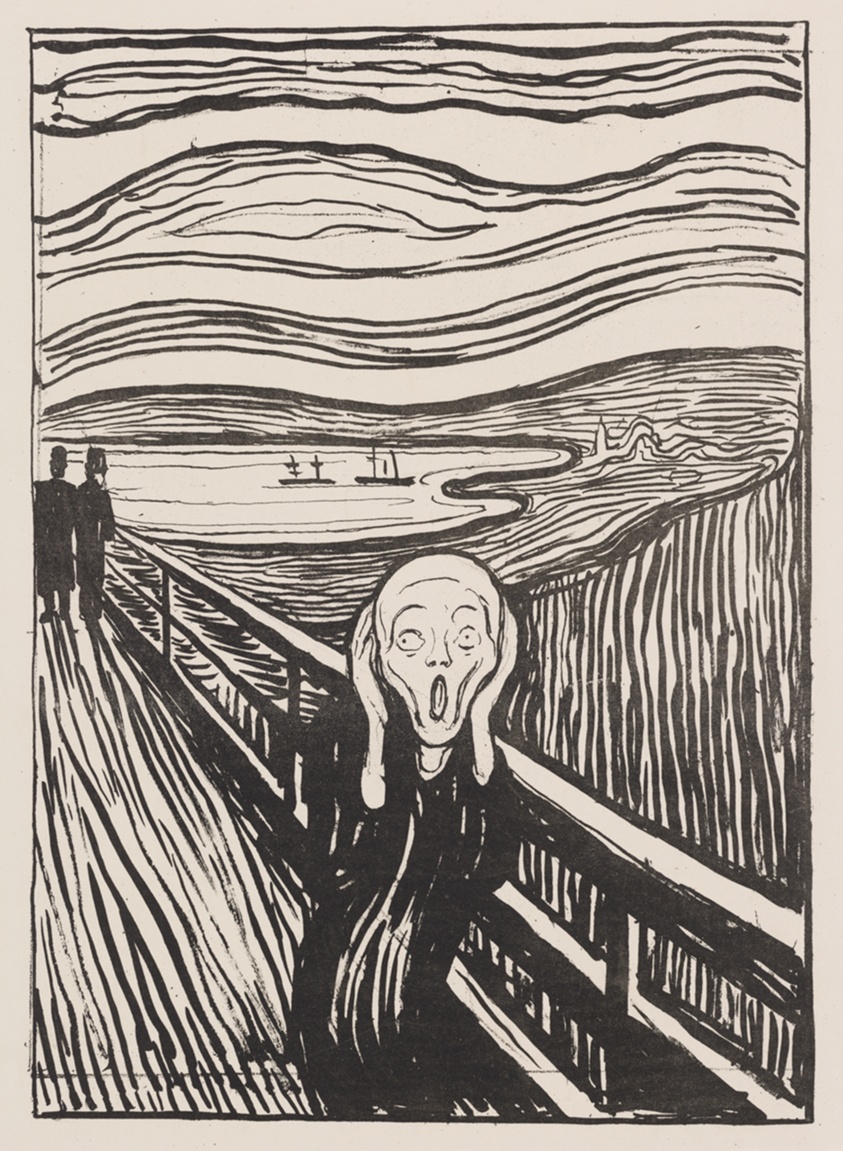
Munch returned to the same composition in different media, changing what a subject could express through color, line, and texture. His print of The Scream shows that the familiar image is not a single painting: it is an idea worked through distinct objects. His achievement is broader than a symbol of fear, and it asks how a public image can carry private feeling. The window marks a possible opening, yet the girl remains held in the dim room. Munch makes a boundary in space carry an emotional charge without giving us a full narrative. The Girl by the Window sits among other attempts, commissions, or studies made during Edvard Munch’s working life. Art rarely feels inevitable from the maker’s side. Another image by the same maker may use a related method toward another end, or change the method altogether. Then follow another work by the artist and see whether a similar concern survives a change of subject. The pace of The Girl by the Window deserves attention; another work by Edvard Munch may move the eye quite differently. Set The Girl by the Window beside another work by Edvard Munch; the comparison can reveal a recurring interest handled through a different image.
The world around The Girl by the Window
The source places The Girl by the Window in 1893. Compare that historical point with the way the work is presented now; its meaning can shift as settings and viewers change. For The Girl by the Window, the date 1893 brings the image back into a specific career. The source record anchors the object while later viewers bring new questions to it. The linked entry for The Girl by the Window gives verifiable object facts. Its composition still asks questions that a catalogue cannot answer by itself.
Image and object record
Art Institute of Chicago identifies The Girl by the Window as a work by Edvard Munch from 1893 and records its medium as oil on canvas. The collection credits the object to Searle Family Trust and Goldabelle McComb Finn endowments; Charles H. and Mary F. S. Worcester Collection. Follow the linked object record for its catalogue entry and any further notes on its history.