
The Denial of Saint Peter in its time
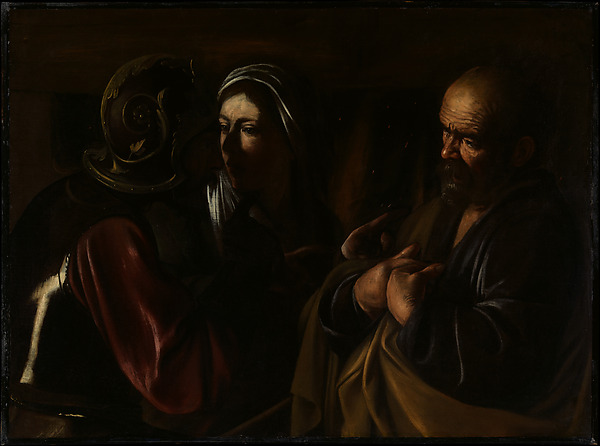
Caravaggio places Peter's denial in a dark, compressed scene where pointing hands and selective light carry the drama. The Denial of Saint Peter is dated 1610 and is held by The Metropolitan Museum of Art. The source record names it “The Denial of Saint Peter.” For The Denial of Saint Peter, the collection label is a starting point. The work’s arrangement asks for time beyond the facts of its title.
Inside the composition
Hands identify and deny Peter amid darkness and selective light. Caravaggio keeps the action close, so a biblical narrative is felt as an immediate human choice. A first glance at The Denial of Saint Peter may be drawn to its subject. Look again at the spaces around that subject. Their proportions and pauses give the visible forms a particular pace.
The material object
The collection records The Denial of Saint Peter as oil on canvas. He built drama with a limited cast, tightly cropped action, and light that falls selectively. The worn and ordinary bodies matter because they refuse to keep sacred history safely distant. The medium named for The Denial of Saint Peter tells us about a physical object, including the surface on which its composition first took shape. A closer view of The Denial of Saint Peter may reveal decisions missed at first glance. The collection record helps place those decisions on a particular surface and scale.
Caravaggio and this work
His dramatic contrast of illumination and darkness shaped painters across Europe. The turbulence of his life often dominates his legend, but the paintings deserve close attention for their staging: each gesture and beam of light guides the viewer through a human event. Pointing hands can carry an accusation before a viewer reads any written account of Peter. Caravaggio’s tight darkness keeps the moral pressure close to the figures. For Caravaggio, The Denial of Saint Peter brought a subject into contact with a chosen material. A subject can be revisited without producing the same picture twice: scale, material, and audience all alter the problem. Another image by the same maker may use a related method toward another end, or change the method altogether. Another work from the same career may answer those questions differently. A career story should follow actual pictures and the changes between them, not a legend of inevitable progress. Set The Denial of Saint Peter beside another work by Caravaggio; the comparison can reveal a recurring interest handled through a different image.
The world around The Denial of Saint Peter
The date 1610 places The Denial of Saint Peter within a particular career and set of viewers. The source link supplies the documented object details; the image still keeps some of that encounter open. For The Denial of Saint Peter, the date 1610 brings the image back into a specific career. The source record anchors the object while later viewers bring new questions to it. The linked entry for The Denial of Saint Peter gives verifiable object facts. Its composition still asks questions that a catalogue cannot answer by itself.
Image and object record
The Metropolitan Museum of Art identifies The Denial of Saint Peter as a work by Caravaggio from 1610 and records its medium as oil on canvas. The collection credits the object to Gift of Herman and Lila Shickman, and Purchase, Lila Acheson Wallace Gift, 1997. Follow the linked object record for its catalogue entry and any further notes on its history.

