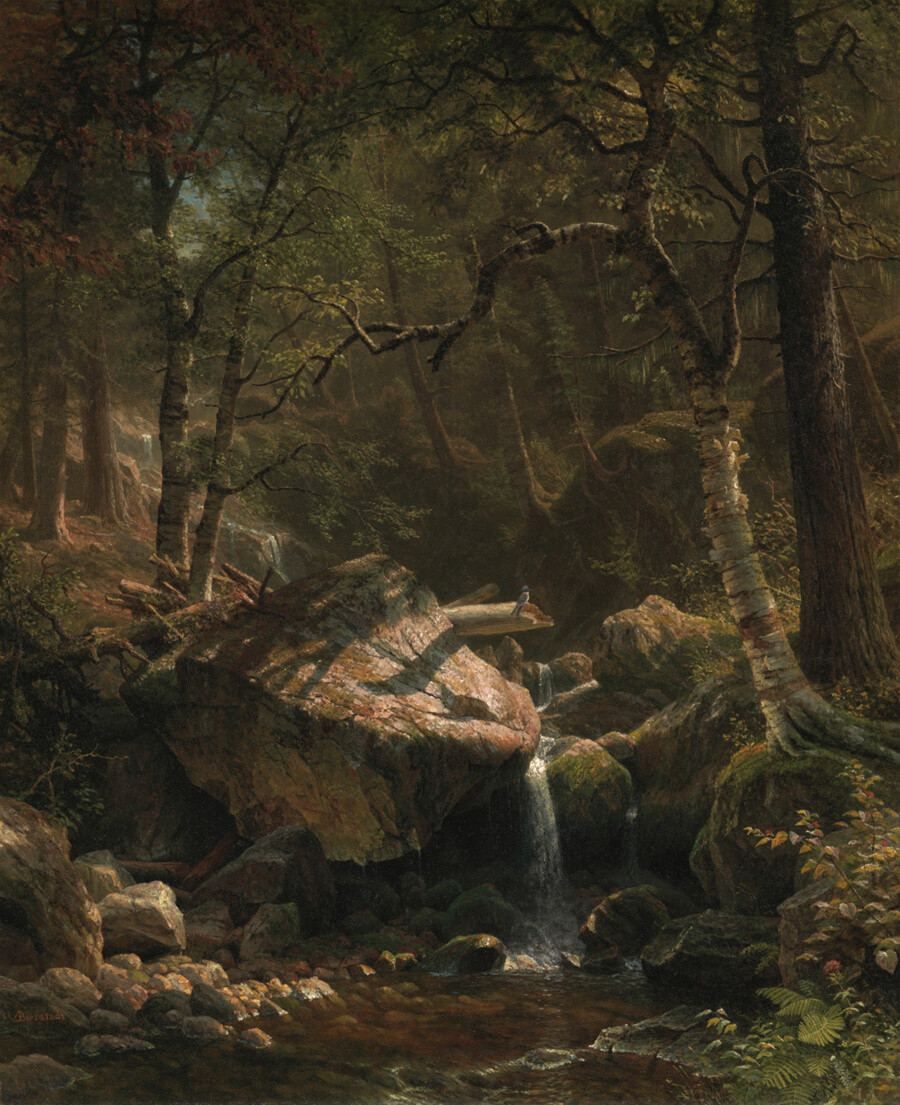

Merced River, Yosemite Valley in its time
Bierstadt turns Yosemite's river and cliffs into a broad composition, inviting a view of landscape at monumental scale. Merced River, Yosemite Valley is dated 1866 and is held by The Metropolitan Museum of Art. The source record names it “Merced River, Yosemite Valley.” The source tells us which object this is. Looking at Merced River, Yosemite Valley reveals decisions that no short catalogue line could contain.
How the picture holds together
The Merced River leads into Yosemite Valley between cliffs and open sky. Bierstadt makes the scale of the land a central part of the painted experience. The subject named in Merced River, Yosemite Valley is only one part of the encounter. Edges, intervals, and changes of emphasis control how much time the viewer spends in each area of the work.
How it was made
The collection records Merced River, Yosemite Valley as oil on canvas. With Merced River, Yosemite Valley, the source’s medium label points to a process as well as a finished image. Surface, scale, and handling can change what close looking reveals. In Merced River, Yosemite Valley, process and appearance meet; the materials in the record help explain what kind of surface carried these choices. Compare Merced River, Yosemite Valley with another work by the artist. Its medium and size can help explain why the two works meet the eye differently.
Albert Bierstadt and this work
Among the Sierra Nevada, California turns a mountain landscape into an immense, luminous stage. Its visual pleasure sits beside the history of settler expansion. The river guides the eye between cliffs and toward open sky. Bierstadt’s view makes a route through the valley while its apparent openness invites questions about the history of the land. Merced River, Yosemite Valley sits among other attempts, commissions, or studies made during Albert Bierstadt’s working life. That combination matters more than a quick description of the artist’s usual style. Another image by the same maker may use a related method toward another end, or change the method altogether. Follow the linked works rather than relying on one celebrated image. Treating each object as a fresh decision makes room for change, experiment, and the practical conditions under which an artist worked. The other works linked from Albert Bierstadt’s profile give Merced River, Yosemite Valley a useful company: their differences make this image more specific.
The world around Merced River, Yosemite Valley
Indigenous peoples were often minimized or absent from visions of supposedly empty wilderness. Reading the paintings today means holding aesthetic ambition and that omission together. The date attached to Merced River, Yosemite Valley, 1866, is more than a period marker. It places the work among the people and circumstances in which its first audience could encounter it. With Merced River, Yosemite Valley, the source entry anchors attribution and materials; it does not settle every possible reading of the work.
Image and object record
The Metropolitan Museum of Art identifies Merced River, Yosemite Valley as a work by Albert Bierstadt from 1866 and records its medium as oil on canvas. The collection credits the object to Gift of the sons of William Paton, 1909. Follow the linked object record for its catalogue entry and any further notes on its history.