A late beginning
Van Gogh began painting seriously in his late twenties. Supported emotionally and financially by his brother Theo, he moved from the dark earth tones of Dutch rural scenes toward the intense color he encountered in Paris and southern France. Vincent van Gogh (1853–1890) worked in Netherlands and France. Van Gogh came to painting after other jobs and serious study. Paris exposed him to new color, Japanese prints, and fellow artists; Arles offered a setting for a hoped-for community of painters. A life is easier to understand when its objects stay close. The linked works let Vincent van Gogh’s choices appear in several forms, not only in a familiar story.
Color, line, and pressure
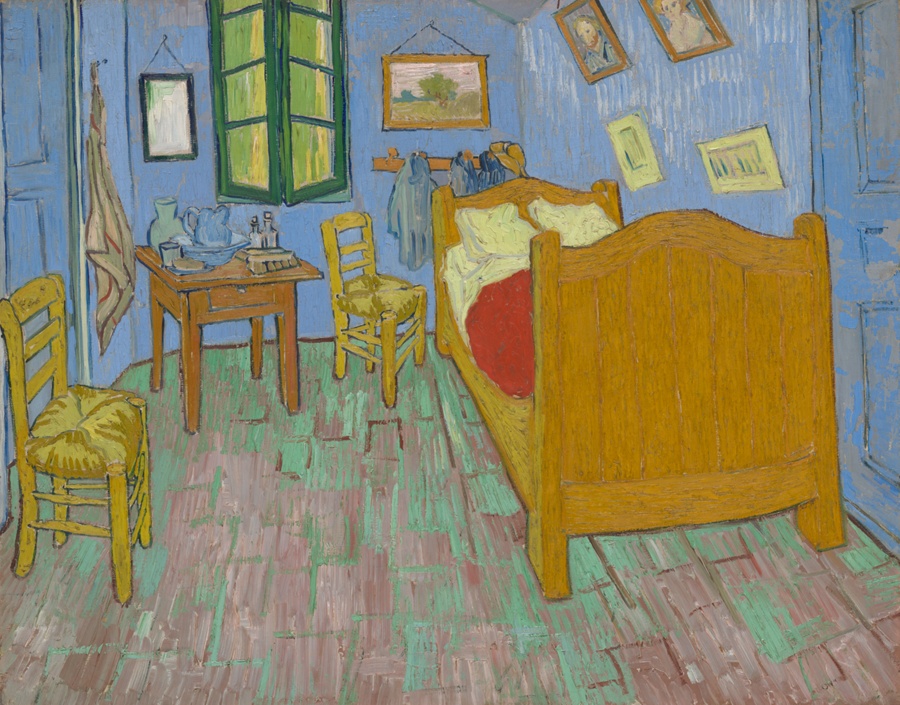
Brush direction, thick paint, and sharpened color make familiar forms feel active. His letters show how carefully he planned motifs and combinations rather than painting only by impulse. The method is visible in The Bedroom, but it is worth looking at the other linked objects before calling it a fixed style. Vincent van Gogh had room to revise a familiar solution.
Rooms, fields, and faces
The Sunflowers and the bedroom at Arles turn ordinary surroundings into statements about hospitality and place. Later cypresses and night skies make movement visible through the surface itself. Look at the projects through the material objects that survive. The Bedroom records one moment of making, not a complete account of Vincent van Gogh’s intention. Its subject and visible form can be set beside the other works on this page. One may ask for close private attention; another may have been made to address a broader audience. Those conditions make the differences meaningful, even when a shared hand or concern remains easy to recognize.
Post-Impressionism and its limits
Vincent van Gogh is associated with Post-Impressionism. Artists after Impressionism pushed its experiments in different directions. Cézanne built structure through color, Seurat systematized marks, and Van Gogh intensified line and hue. The label was coined later, so it describes a set of connected departures rather than a single organized group. Use the movement as a route into Vincent van Gogh’s world, then allow The Bedroom to complicate the route. The date and medium attach the work to a real moment of making. Its subject and arrangement may answer a shared question in a way no other artist chose. This is how a broad term can serve close looking without replacing it.
A closer look at The Bedroom
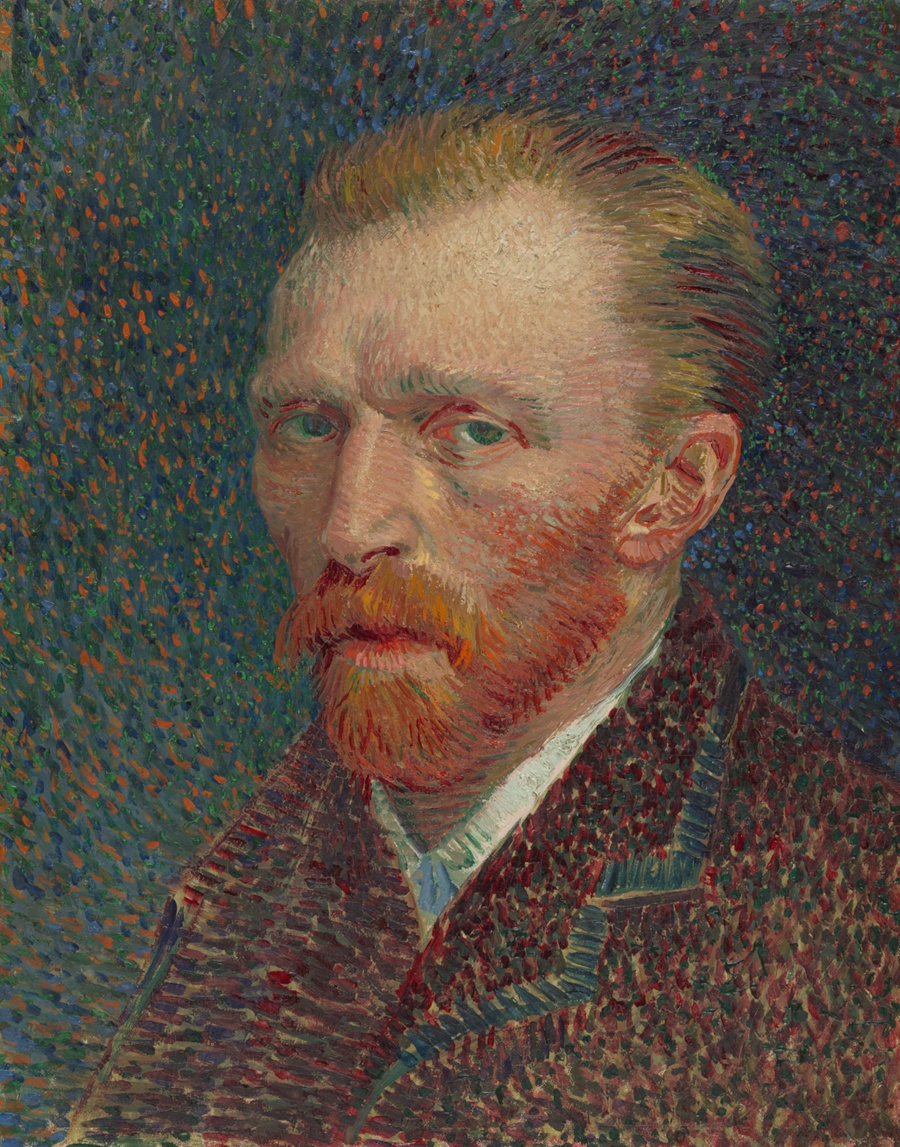
Van Gogh paints his Arles room with direct color and tilted space, making an ordinary interior intensely personal. Van Gogh simplifies the bedroom into strong color and tilted planes. Bed, chairs, and pictures are ordinary possessions, yet their arrangement gives the room an expressive rhythm. The image offers an idea of rest while its painted structure remains animated and deliberately unsettled. Now set it beside Self-Portrait. Van Gogh faces the viewer in a portrait shaped by direct color, visible marks, and close self-scrutiny. Van Gogh uses his own face as a place to test color, line, and the pressure of the brush. The likeness matters, but so does the visible act of painting. A self-portrait is a constructed meeting with the artist, not an unfiltered record of private feeling. Both works are linked below this profile, with their own object records and images. They reward comparison because they show Vincent van Gogh making different decisions, sometimes with a different material, even when a familiar concern carries across the two.
The artist beyond the myth
In Arles and Saint-Rémy, he made ordinary subjects—chairs, bedrooms, orchards, cypresses, stars—feel charged with movement. His mental illness is part of his history, but it should not flatten his art into a symptom. He studied other painters, planned series, and worked with striking discipline. The huge influence of his paintings grew after his death. His illness deserves humane attention, but it does not explain every mark. The myth of the isolated, unrecognized genius obscures collaboration, study, and the role of his brother Theo. A third work, The Poet's Garden, complicates any account built from a single celebrated picture. Van Gogh turns a garden into a dense pattern of paths, foliage, and light, giving an ordinary setting expressive force. Trees and paths divide the garden into fields of strong color. Van Gogh turns a cultivated outdoor space into a composition with its own pace and direction. Fame draws attention to certain pictures, but this additional object widens the view. Vincent van Gogh’s work remains open to new comparisons as collections and records are studied.
The Bedroom and The Poet’s Garden turn places he knew into strong patterns of color and direction. His Self-Portrait brings that visible handling of paint to a face. None is a direct transcript of private feeling, although all can feel intensely personal. Reading the three together lets the work of arranging a room, a path, or a likeness come forward before the mythology around Van Gogh takes over.
Explore Post-Impressionism ↗