Venetian Glass Workers in its time
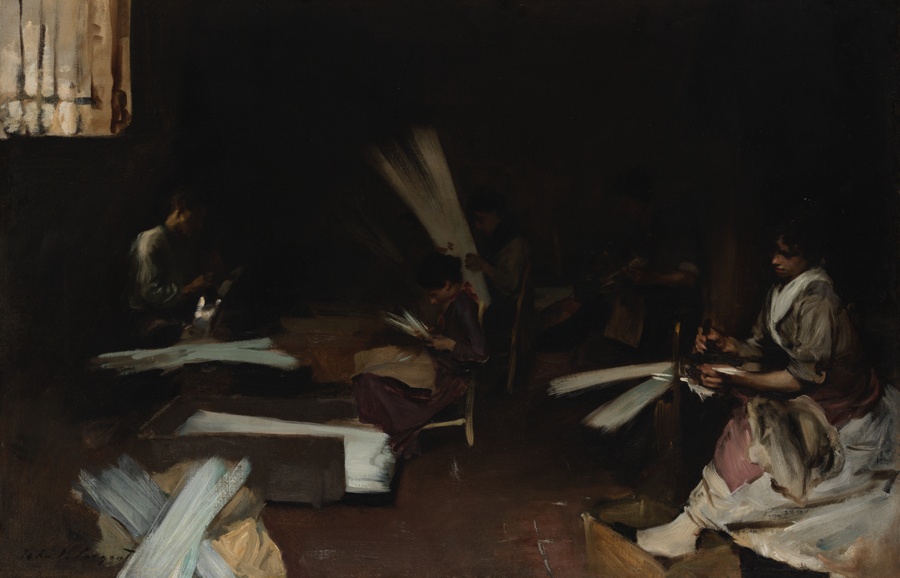
Sargent locates glass workers within the darkness of a Venetian workshop, setting their labor apart from his better-known commissioned portraits. Venetian Glass Workers is dated 1880–82 and is held by Art Institute of Chicago. The source record names it “Venetian Glass Workers.” These details make Venetian Glass Workers traceable to a collection, and they leave room for a closer encounter with the image.
The choices in the image
The workshop is largely dark, yet the pale glass and light clothing make the workers visible at separate stations. Sargent leaves large areas only lightly described, allowing the eye to register activity without turning each person into a posed portrait. It is a view of making as well as of atmosphere. The strength of Venetian Glass Workers is partly in what it asks us to connect. A gesture, shape, or patch of color can answer another elsewhere in the image. Trace one such connection before deciding what the scene means.
The material object
The collection records Venetian Glass Workers as oil on canvas. The medium of Venetian Glass Workers belongs in the story because a drawing, print, and painting offer different routes from a maker’s hand to a viewer. The linked record names this one precisely. The source record for Venetian Glass Workers preserves the medium as well as the subject. Both matter when looking closely at an historical object. The image of Venetian Glass Workers can be enlarged and revisited here. The linked record keeps that view connected to a particular historical object.
John Singer Sargent and this work
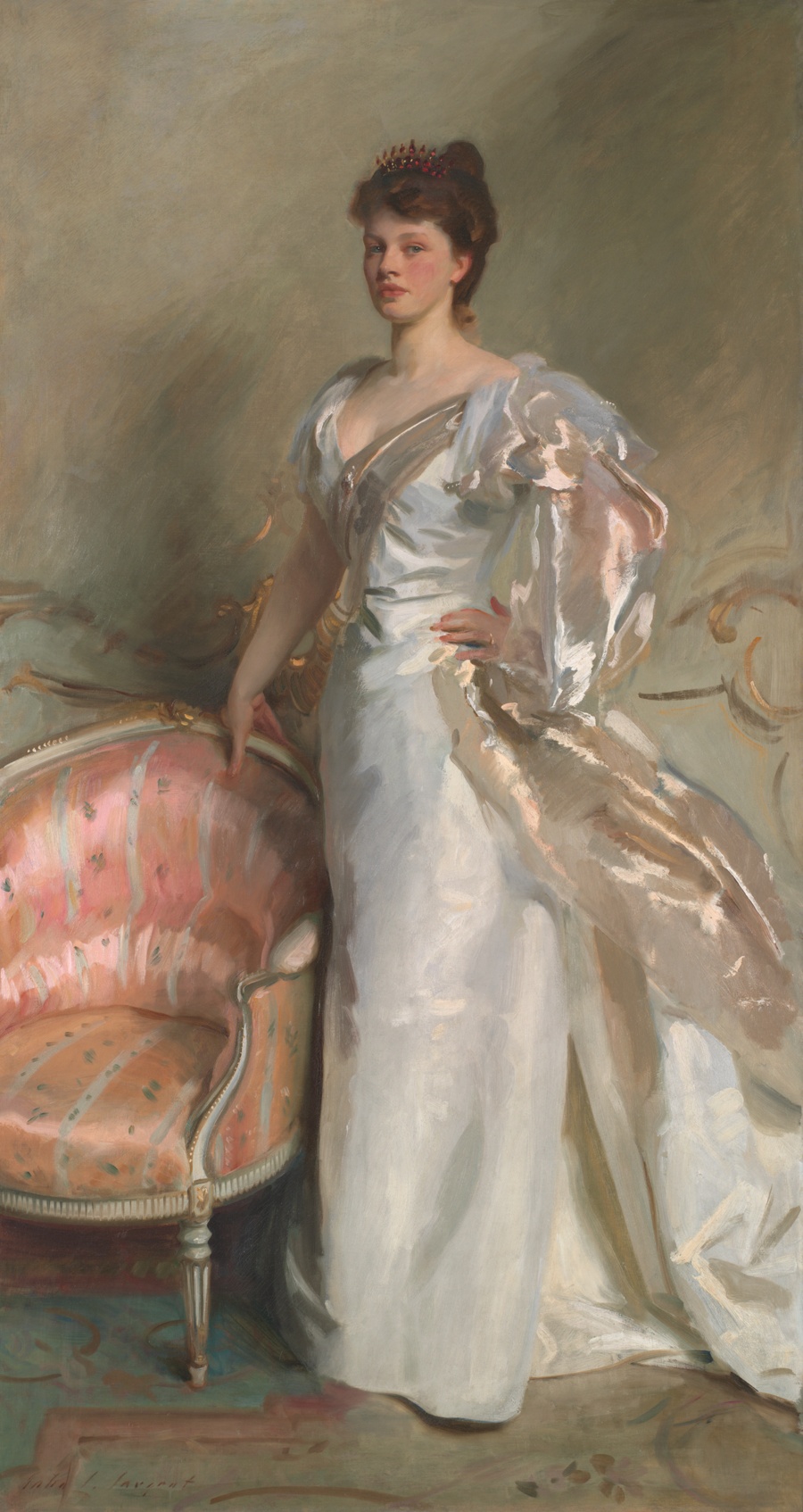
Born in Florence to American parents, John Singer Sargent trained in Paris and built a career across Europe and the United States. His commissioned portraits brought acclaim, but travel, watercolor, murals, and scenes of working life occupied him as well. His practice moved between social performance and quick observation. Sargent leaves much of the workshop dark while pale glass and clothing catch the light. The workers remain active in the scene rather than becoming formal sitters, showing another side of his skill with fleeting observation. Looking at Venetian Glass Workers within John Singer Sargent’s larger body of work can be useful, but the relationship runs in both directions. Even when two objects share a subject, they need not share the same emphasis. Its subject, medium, and visible emphasis may seem consistent with other works, or they may reveal a different route. Then follow another work by the artist and see whether a similar concern survives a change of subject. A career story should follow actual pictures and the changes between them, not a legend of inevitable progress. Venetian Glass Workers carries its own subject and process. Following John Singer Sargent into another work makes the wider practice easier to see.
The world around Venetian Glass Workers
Sargent’s itinerant childhood and Paris training preceded a transatlantic career. Commissions made him a sought-after portraitist, while travel and informal work gave him subjects beyond the society sitters who secured his reputation. In 1880–82, Venetian Glass Workers belonged to a world of particular makers, patrons, buyers, or readers. The record can identify the object even where those encounters are harder to recover. The collection facts attached to Venetian Glass Workers are worth following, especially where the image leaves its original setting hard to recover.
Image and object record
Art Institute of Chicago identifies Venetian Glass Workers as a work by John Singer Sargent from 1880–82 and records its medium as oil on canvas. The collection credits the object to Mr. and Mrs. Martin A. Ryerson Collection. Follow the linked object record for its catalogue entry and any further notes on its history.