Mrs. George Swinton in its time
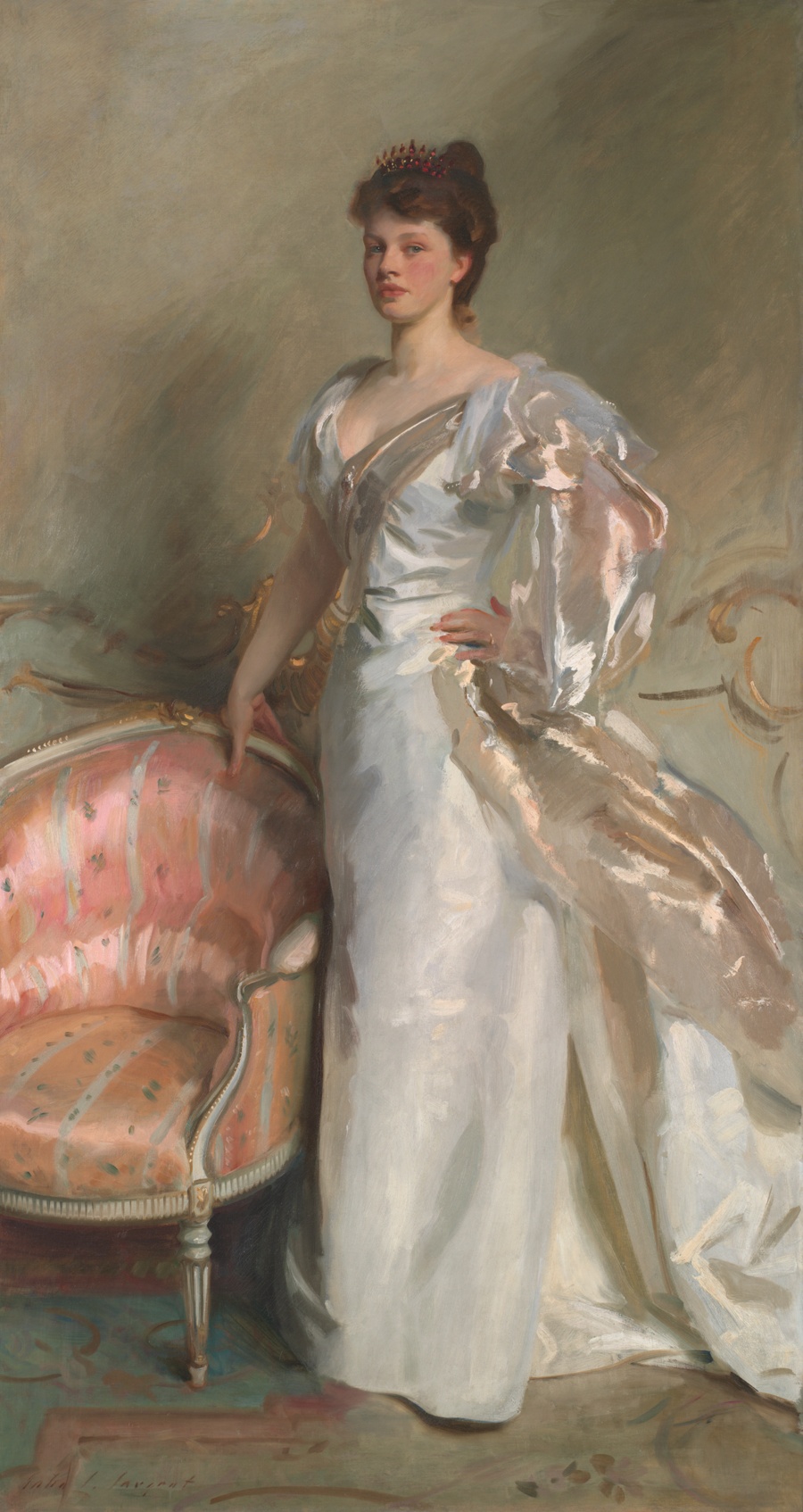
Sargent uses pose, fabric, and scale to stage a society portrait while retaining the liveliness of a person before him. Mrs. George Swinton is dated 1897 and is held by Art Institute of Chicago. The source record names it “Mrs. George Swinton (Elizabeth Ebsworth).” Knowing where Mrs. George Swinton belongs helps; it also leaves open the question of how the maker organized what we see.
The choices in the image
The sitter's dress, pose, and surrounding objects give the portrait a public scale. Sargent's brushwork keeps the carefully staged image alert to the presence of a real person. Pause at the threshold between subject and setting in Mrs. George Swinton. The two may be closely joined or held apart. That decision tells us something about how the maker wanted this scene to be encountered.
The material object
The collection records Mrs. George Swinton as oil on canvas. The medium of Mrs. George Swinton belongs in the story because a drawing, print, and painting offer different routes from a maker’s hand to a viewer. The linked record names this one precisely. The material description for Mrs. George Swinton matters because an image seen at screen size can conceal how it was first made and handled. The image of Mrs. George Swinton invites another look at its arrangement; its collection entry gives the material description and further details about the work.
John Singer Sargent and this work
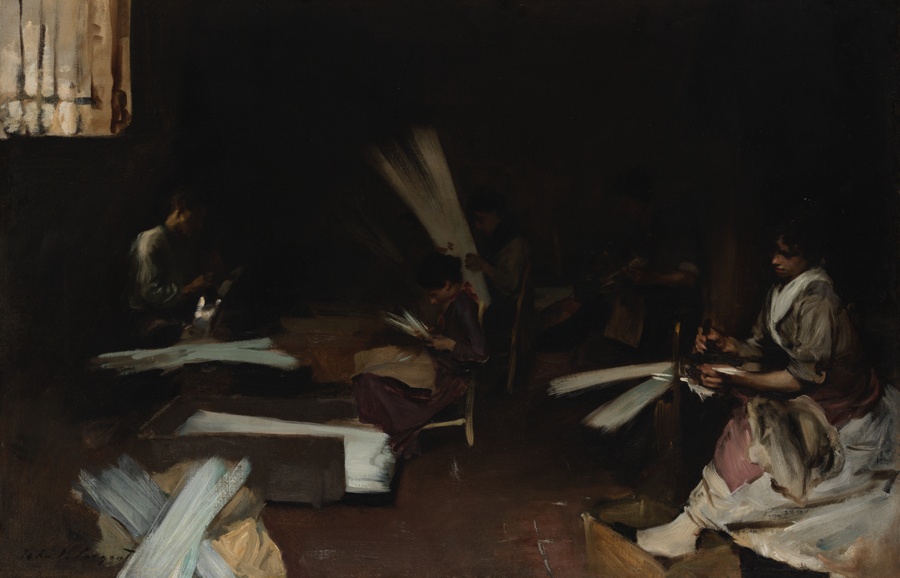
Venetian Glass Workers places several people and long pale forms within a workshop. Its attention to labor contrasts with the public performance expected from an elite portrait. Dress and setting give this portrait a public scale, while the sitter’s pose keeps it centered on one person. Sargent holds display and presence together in the brushwork. What John Singer Sargent chose to make visible in Mrs. George Swinton is only one part of a longer career, but it is a part worth examining on its own terms. Mrs. George Swinton is valuable precisely because it gives that broad name a specific subject and set of visual choices. Its subject, medium, and visible emphasis may seem consistent with other works, or they may reveal a different route. Follow the linked works rather than relying on one celebrated image. Its differences from nearby works are worth noticing; they restore a little of the uncertainty and invention within the practice. For John Singer Sargent, Mrs. George Swinton was one particular solution among many. A second work can show which decisions were revisited and which were left behind.
The world around Mrs. George Swinton
Recent scholarship has complicated a once narrow image of Sargent as a painter of luxury. His varied subjects, working relationships, and decisions about who becomes visible deserve study together. A viewer first meeting Mrs. George Swinton in 1897 may have known its subject and setting differently. That distance is one reason to keep both the image and its documented record in view. A record helps place Mrs. George Swinton in a collection. The details you notice in the image can then lead to more precise questions.
Image and object record
Art Institute of Chicago identifies Mrs. George Swinton as a work by John Singer Sargent from 1897 and records its medium as oil on canvas. The collection credits the object to Wirt D. Walker Collection. Follow the linked object record for its catalogue entry and any further notes on its history.