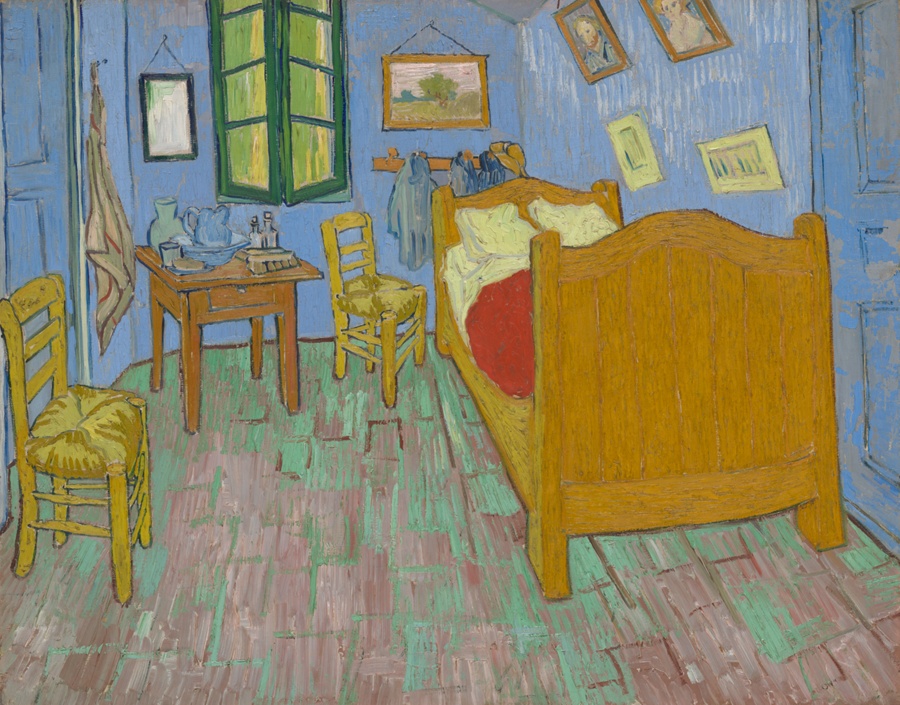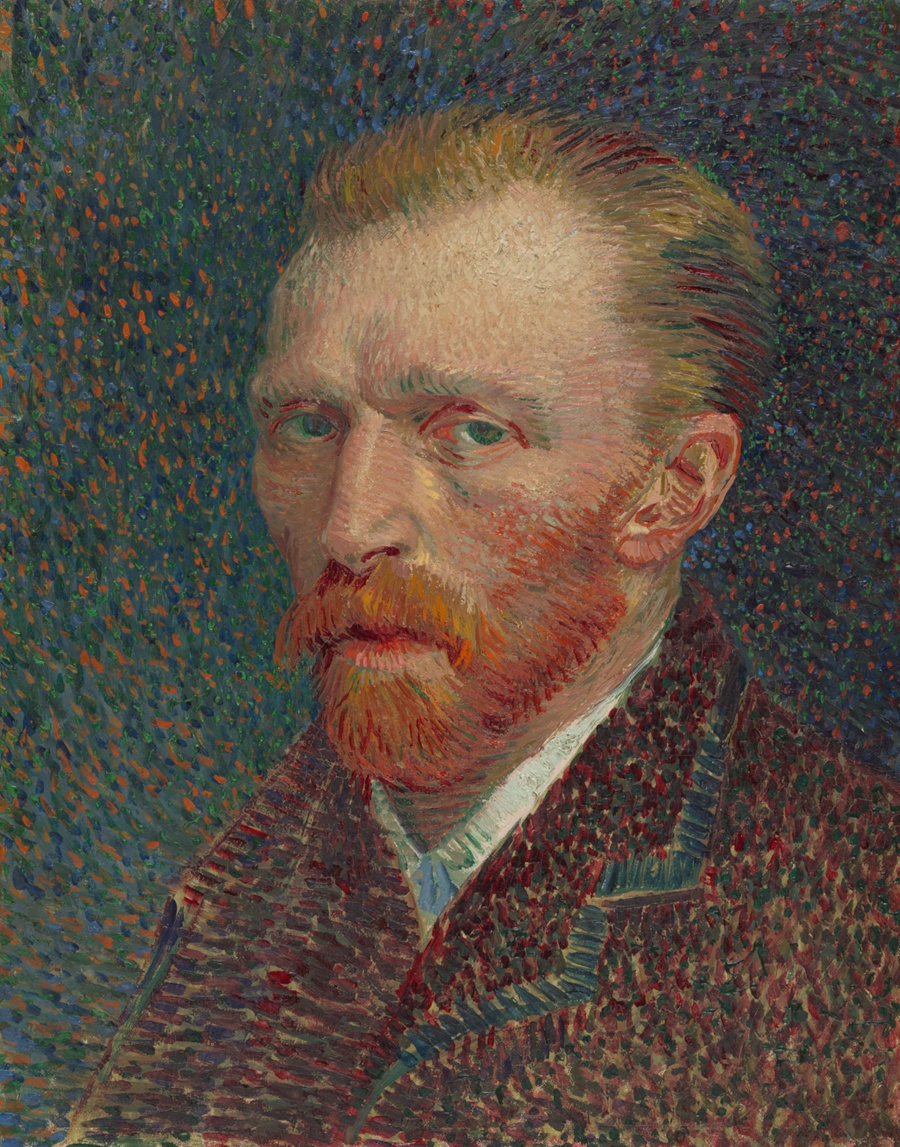
A vase of sunflowers sounds like a cheerful subject. Van Gogh's London painting is more complicated: some heads blaze, some sag, and a few have already gone to seed. He put them all in a room he hoped to share with another artist. The result feels like a welcome that knows good company never lasts forever.
A bouquet with a deadline
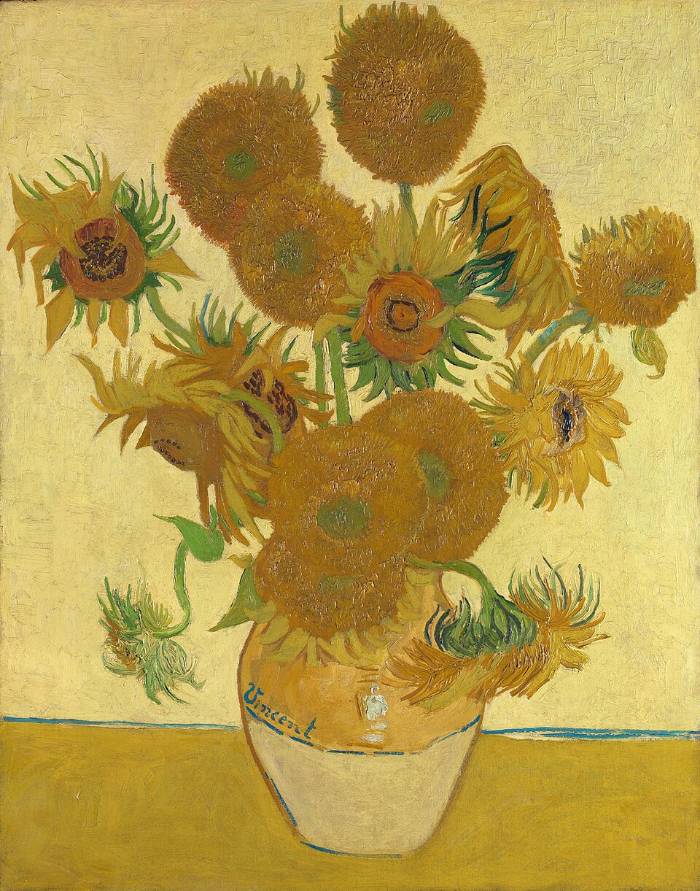
Van Gogh painted this version in Arles in 1888 while preparing the Yellow House for Paul Gauguin's visit. He imagined the house as a place where artists could work together. Sunflowers were part of that plan, both a subject to paint and a decoration for Gauguin's room. The invitation did not promise a calm future: the two men would quarrel bitterly. Yet it would be unfair to read every petal as an omen. When Van Gogh painted the flowers, he was also building something hopeful.
The National Gallery's canvas is one of several sunflower paintings, not the only authentic image behind a flood of postcards. This vase holds fifteen heads at different stages of growth and decline. They do not pose as a florist's perfect bunch. They lean, fray, crowd one another, and occupy the picture with the awkward confidence of living things.
How many yellows can you see?
Van Gogh set yellow petals against a yellow wall and a yellowish table. That sounds like a recipe for a flat picture, but close looking reveals lemon, ochre, gold, and greenish notes pushing against one another. Dark centers interrupt the warmth. Blue letters on the vase give the eye a brief cool stop. The limited palette makes small differences do unusually hard work.
Paint behaves almost like a second bouquet. Thick ridges catch light where a brush or loaded tool has left pigment standing proud of the canvas. Elsewhere a thin passage lets the surface breathe. The flowers seem to have both an image and a skin. A print can show their arrangement, but in front of the painting the physical paint keeps reminding us that somebody made these blooms by hand.
The flowers do not agree on an age
One sunflower faces out like a bright disk; another hangs its head; still others resemble rough seed cases more than the tidy flowers a child might draw. Van Gogh did not arrange the vase into a before-and-after diagram. All the stages share the same afternoon of looking. That is why the painting can feel abundant and mortal at once, without becoming a simple sermon on decay.
A still life is sometimes treated as a pause between supposedly more ambitious subjects. Here the subject offered a way to experiment rapidly with color, texture, and repetition. It also carried a social purpose. Van Gogh's sunflowers belonged to a real room and a hoped-for friendship, even as they became paintings that could travel far beyond both.
Fame can flatten a flower
This picture entered the National Gallery in 1924 and is now among its most recognizable works. Familiarity can turn it into a logo for artistic passion, or into a shorthand for Van Gogh's suffering. Neither shortcut helps much with the canvas itself. His careful orchestration of yellow, the varying weight of the blooms, and the patterned paint speak of planning and skill as well as feeling.
Try following a single stem from the lip of the vase to its head. The path may bend behind another flower, vanish, and reappear. The bouquet is not an inventory. Its parts form a busy community of lines, each asking for a little time. That is an especially fitting achievement for a painting conceived as a welcome to another maker.
What remains after the visit
The friendship with Gauguin did not become the lasting artists' household Van Gogh hoped for. The painting outlived that disappointment and became something other people could enter. Its warmth is real; so is its knowledge of change. Stand with it long enough and the cheerful vase turns into a record of attention paid to things that will not stay still.