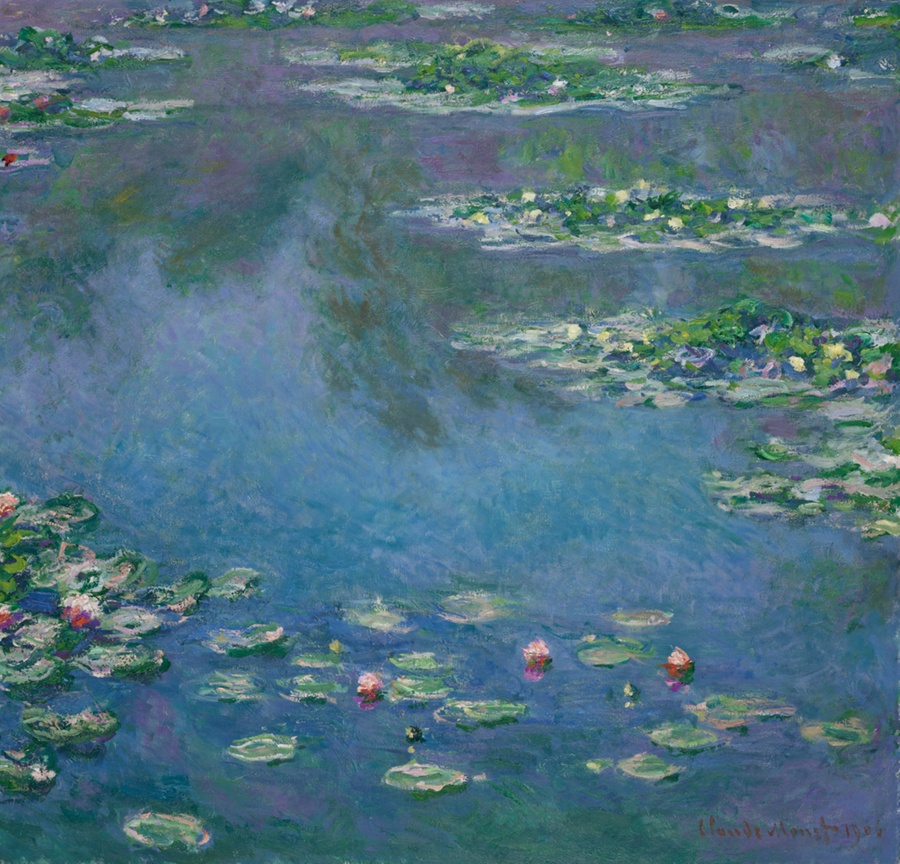
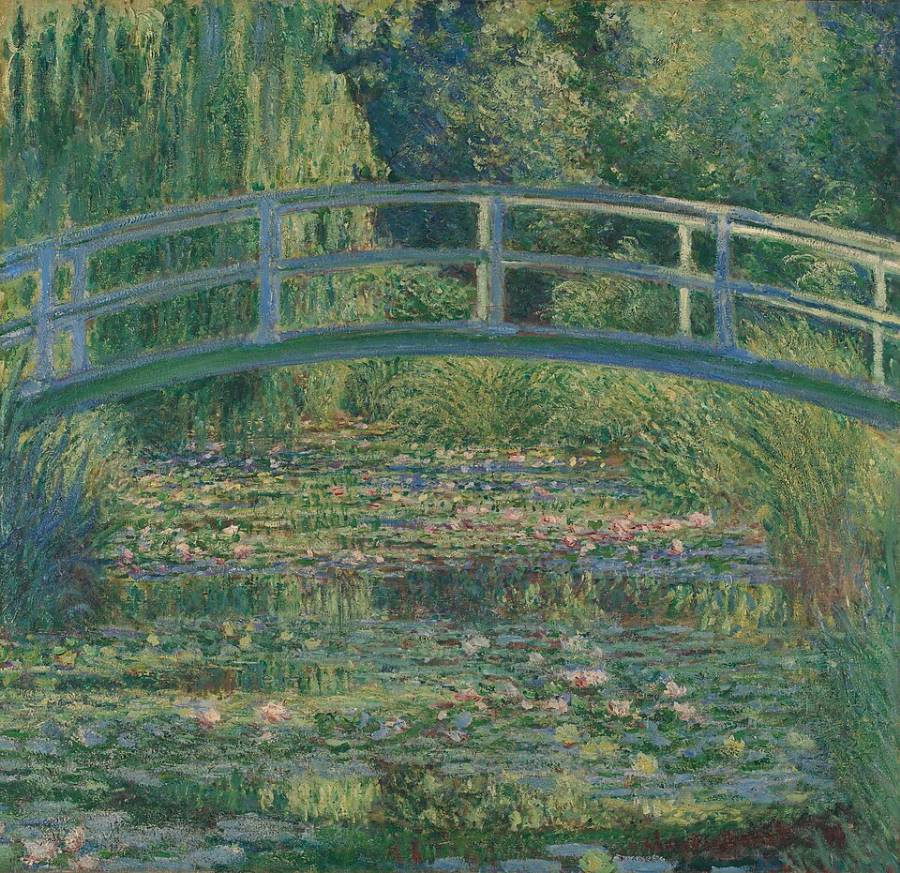
Monet built the garden, filled the pond, placed the bridge, and then painted the view as though he had discovered it by chance. The Water-Lily Pond makes that little paradox delightful. The more natural the tangle seems, the more carefully the scene has been arranged, both in the garden and on the canvas.
A garden made to be looked at
At Giverny, Monet developed a water garden beginning in the 1890s. He diverted water, planted lilies, and tended an environment that gave him changing subjects year after year. A Japanese-style bridge crossed the pond. In this 1899 painting the bridge's arch offers a clear shape, while leaves and reflections make almost everything around it restless.
This was no untouched wilderness. Gardeners helped maintain the place, and the plantings required decisions and labor. Remembering that does not make the picture less beautiful. It makes its beauty more specific: Monet was painting a landscape he helped create and could revise, a subject at once outdoors and deeply personal.
Where does the water begin?
The bridge gives us a horizon of sorts, but there is little firm ground. Foliage hangs down from above; green reflections rise from below; lily pads spread across the middle. As the eye tries to separate plant from reflection, the surface keeps returning a new answer. Monet uses the pond to make looking feel less certain than a conventional garden view.
From a distance the arch pulls the composition together. Up close, passages of green, blue, and pale light loosen into individual marks. The bridge is solid enough to cross in life, yet in paint it belongs to the same shifting light as the water beneath it. That tension gives the picture its particular energy.
A series is not a duplicate
Monet painted the bridge and pond repeatedly. It can be tempting to treat the canvases as interchangeable views of a famous place, but repetition was his way of testing change. Light, growth, weather, and the painter's own choices altered the subject each time. The National Gallery's version, with the bridge close to the upper edge and the water filling so much of the view, presses us toward the pond itself.
Its title sounds simple: a pond with lilies. Yet the painting does not offer a tidy inventory of flowers. Some lily pads are distinct, some blur into a field of color, and the reflected sky can be easier to feel than to locate. Monet asks us to watch how a named thing becomes difficult to pin down in actual light.
The work behind an easy afternoon
A painting of a garden is often sold as pure rest. Here rest is a result of work. Monet managed the grounds and returned to the subject through many sessions. He had spent decades studying what light did to haystacks, buildings, and rivers; at Giverny he could bring that inquiry home. The pond was both a refuge and a demanding studio without walls.
The National Gallery bought this canvas in 1927. In a museum, it may hang far from the damp air and changing seasons of Giverny, but its shifting marks still ask the viewer to spend time. No single glance can hold bridge, leaves, lilies, and reflections in place.
Come back to the bridge
Try looking only at the arch, then only at the water directly below it. The first gives you a route across; the second makes distance uncertain. Monet keeps both experiences in the same painting. The garden was designed, but the view remains open to discovery whenever someone stops long enough to see it change.