View of Lucerne in its time
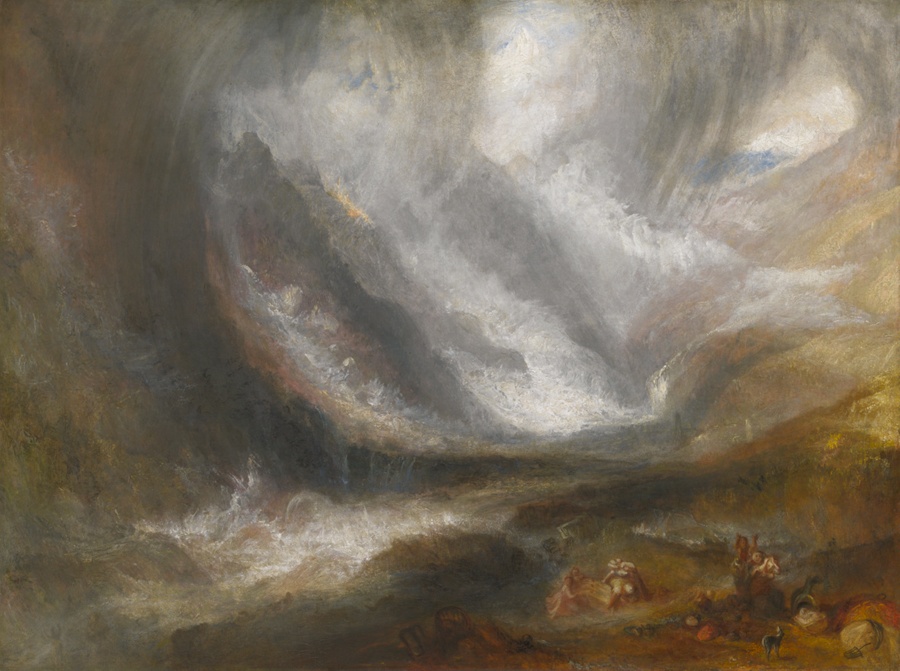
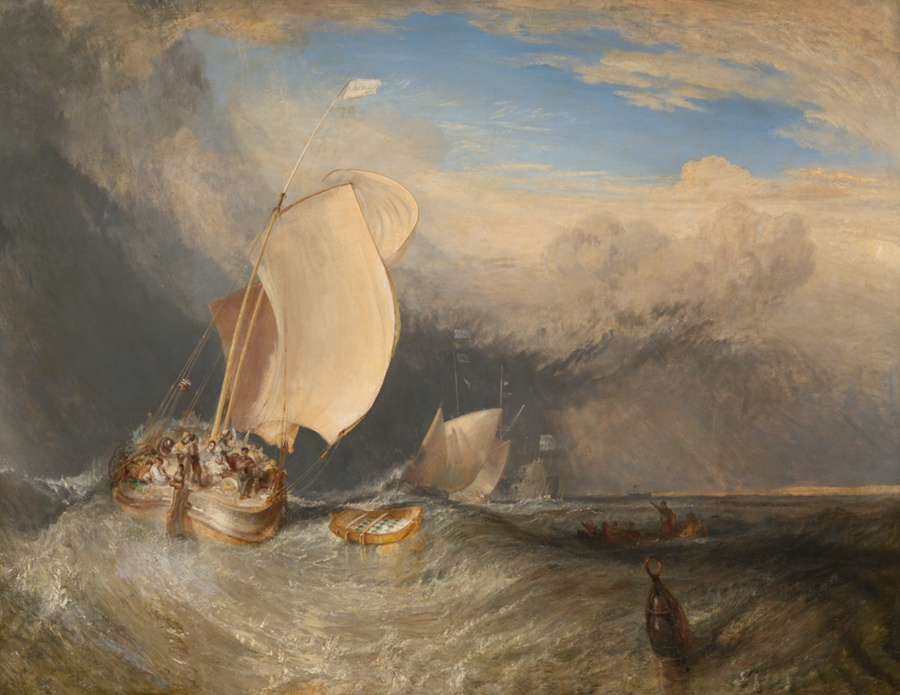
Turner builds a view of Lucerne through transparent watercolor and scraped highlights, making light and distance central to the scene. View of Lucerne is dated 1840/41 and is held by Art Institute of Chicago. The source record names it “View of Lucerne.” A title and date can orient us to View of Lucerne, but neither replaces the experience of following its forms across the image.
Inside the composition
Watercolor gives the lake, distant buildings, and atmosphere different degrees of definition. Turner lets broad washes carry distance while sharper passages keep the view tied to a particular place. Follow one repeated shape or direction across View of Lucerne. Even when the forms differ, their relation can make the picture feel held together. This rhythm is easy to miss if you look only for a story.
The material object
The collection records View of Lucerne as watercolor, with scraping on white wove paper. In View of Lucerne, materials help determine how marks could be laid down and how the result met its first viewers. The collection entry describes the surface on which those choices were made. For View of Lucerne, the collection’s medium label is a clue to the work of the hand and to the surface that first carried the image. On a screen, View of Lucerne has a convenient size. Its actual dimensions and support belong to the source record linked beside the work.
J. M. W. Turner and this work
Rain, Steam and Speed places a locomotive within a turbulent field of weather and movement. His sea pictures likewise make human engineering feel vulnerable to larger forces. Turner allows washes to carry the distant atmosphere while scraped passages bring small areas forward. The view of Lucerne is therefore also a demonstration of how watercolor can divide attention between place and light. No single work can summarize J. M. W. Turner. Art rarely feels inevitable from the maker’s side. Another image by the same maker may use a related method toward another end, or change the method altogether. Those shifts are easier to recognize when the works are treated as objects with dates and materials. A biography becomes more convincing when actual objects are allowed to disagree with a tidy summary. Seen with J. M. W. Turner’s other works, View of Lucerne shows how one maker could return to a concern while changing material or scale.
The world around View of Lucerne
Calling the late paintings abstract can be useful, but it can also erase the rivers, storms, fires, and technological changes that prompted them. View of Lucerne began as an object in 1840/41, made for viewers with their own habits and expectations. Today its collection record offers a route back to that material history. For View of Lucerne, use the collection link to check date and medium before returning to the visual choices made on the surface.
Image and object record
Art Institute of Chicago identifies View of Lucerne as a work by J. M. W. Turner from 1840/41 and records its medium as watercolor, with scraping on white wove paper. The collection credits the object to Gift of Miss Margaret Mower in memory of her mother, Mrs. Elsa Durand Mower. Follow the linked object record for its catalogue entry and any further notes on its history.