
Woman before an Aquarium in its time
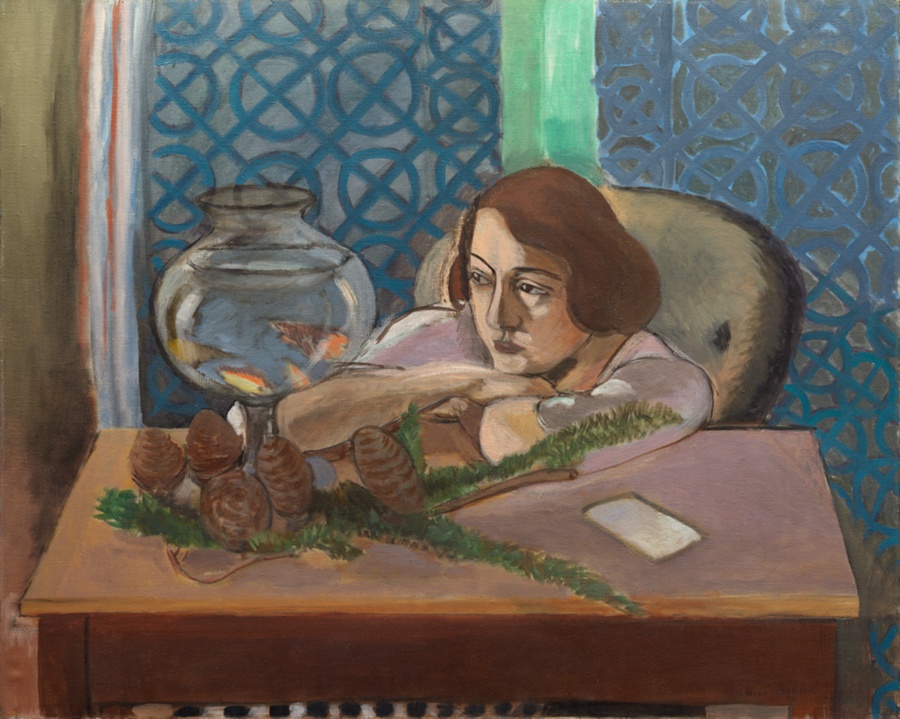
Matisse places a woman before an aquarium, setting domestic objects and brilliant color into a tightly arranged interior. Woman before an Aquarium is dated 1921–23 and is held by Art Institute of Chicago. The source record names it “Woman before an Aquarium.” A title and date can orient us to Woman before an Aquarium, but neither replaces the experience of following its forms across the image.
How the picture holds together
The woman, aquarium, and objects on the table share a compact field of color. Matisse lets each form alter the balance of its neighbors. The arrangement in Woman before an Aquarium is purposeful even where it feels informal. Compare where the strongest marks gather with the quieter ground around them. That relationship gives the subject its visual weight.
What the medium can tell us
The collection records Woman before an Aquarium as oil on canvas. Strong color can create the architecture of a room without describing every shadow. Pattern, contour, and open space work together rather than competing for realism. For Woman before an Aquarium, the collection’s medium label is a clue to the work of the hand and to the surface that first carried the image. On a screen, Woman before an Aquarium has a convenient size. Its actual dimensions and support belong to the source record linked beside the work.
Henri Matisse and this work
Late in life, physical limitations led him toward cut-paper works of astonishing clarity. Rather than a retreat from painting, these shapes extended his lifelong search for rhythm, balance, and intensity. The aquarium is an object in the room and a frame within the painting. Matisse makes the woman, vessel, and nearby objects change one another through color and position. For Henri Matisse, making Woman before an Aquarium meant choosing among possible viewpoints, marks, and degrees of finish. The career gives context to the object; the object can also complicate the familiar account of the career. Another image by the same maker may use a related method toward another end, or change the method altogether. Follow the linked works rather than relying on one celebrated image. A career story should follow actual pictures and the changes between them, not a legend of inevitable progress. Seen with Henri Matisse’s other works, Woman before an Aquarium shows how one maker could return to a concern while changing material or scale.
The world around Woman before an Aquarium
The source places Woman before an Aquarium in 1921–23. Compare that historical point with the way the work is presented now; its meaning can shift as settings and viewers change. Woman before an Aquarium began as an object in 1921–23, made for viewers with their own habits and expectations. Today its collection record offers a route back to that material history. For Woman before an Aquarium, use the collection link to check date and medium before returning to the visual choices made on the surface.
Image and object record
Art Institute of Chicago identifies Woman before an Aquarium as a work by Henri Matisse from 1921–23 and records its medium as oil on canvas. The collection credits the object to Helen Birch Bartlett Memorial Collection. Follow the linked object record for its catalogue entry and any further notes on its history.

