Study for Bathers at Asnières in its time
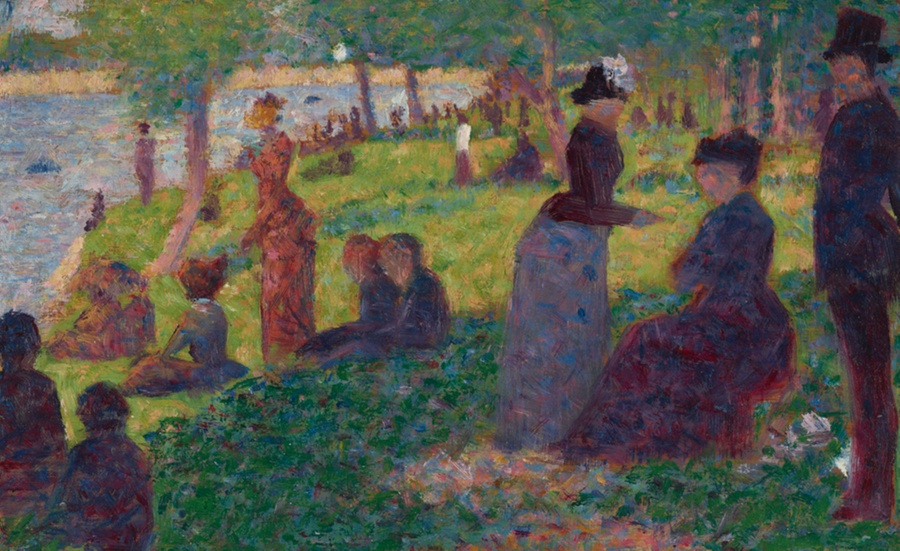
Seurat prepares his riverside scene through a small oil study, where figures and color relationships remain actively in formation. Study for Bathers at Asnières is dated 1883 and is held by Art Institute of Chicago. The source record names it “Final Study for "Bathers at Asnières".” These details make Study for Bathers at Asnières traceable to a collection, and they leave room for a closer encounter with the image.
Where the eye settles
People at the river remain provisional within a small oil study. Seurat is testing how bodies, water, and distant banks might be organized before a larger painting fixes their relationships. In Study for Bathers at Asnières, compare the most firmly defined passage with one left open. The contrast can be a way to direct attention, or a trace of the artist testing how much description the image needs.
What the medium can tell us
The collection records Study for Bathers at Asnières as oil on panel. The medium recorded for Study for Bathers at Asnières gives this image a physical scale and process. A screen can show its design, while the source record preserves what is known of the object itself. The source record for Study for Bathers at Asnières preserves the medium as well as the subject. Both matter when looking closely at an historical object. The image of Study for Bathers at Asnières can be enlarged and revisited here. The linked record keeps that view connected to a particular historical object.
Georges Seurat and this work
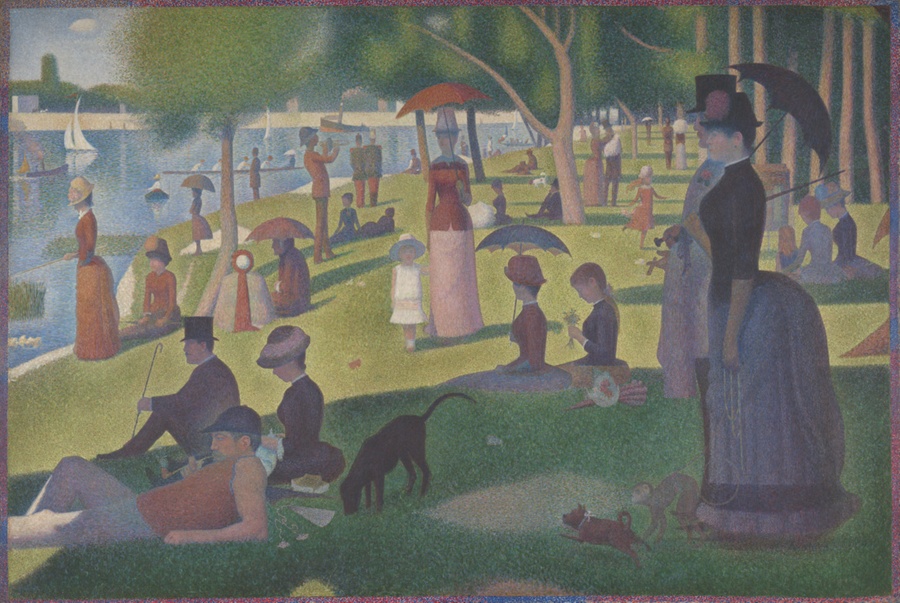
A Sunday Afternoon on the Island of La Grande Jatte gathers many people into one scene while making their social distance palpable. Its famous surface rewards both close inspection and a step back. The study lets bodies and bank remain provisional. Seurat is testing relationships that a larger picture will organize differently, so the small panel has a lively purpose of its own. The questions raised by Study for Bathers at Asnières may also appear elsewhere in Georges Seurat’s work, but the material object cannot be replaced by that comparison. Art rarely feels inevitable from the maker’s side. Its subject, medium, and visible emphasis may seem consistent with other works, or they may reveal a different route. The choices in this image have a pace of their own. Its differences from nearby works are worth noticing; they restore a little of the uncertainty and invention within the practice. Study for Bathers at Asnières carries its own subject and process. Following Georges Seurat into another work makes the wider practice easier to see.
The world around Study for Bathers at Asnières
His short career still changed ideas about method and color. The later label Neo-Impressionism recognizes a disciplined alternative to the quick impression often associated with the earlier group. In 1883, Study for Bathers at Asnières belonged to a world of particular makers, patrons, buyers, or readers. The record can identify the object even where those encounters are harder to recover. The collection facts attached to Study for Bathers at Asnières are worth following, especially where the image leaves its original setting hard to recover.
Image and object record
Art Institute of Chicago identifies Study for Bathers at Asnières as a work by Georges Seurat from 1883 and records its medium as oil on panel. The collection credits the object to Gift of the Adele R. Levy Fund, Inc.. Follow the linked object record for its catalogue entry and any further notes on its history.